Showing posts with label The Manhattan Projects. Show all posts

Wednesday, 10 June 2015

So I Read The Manhattan Projects Volume 5

A 250 word (or less) review of The Manhattan Projects fifthcollection
by Jonathan Hickman, Nick Pitarra, Jordie Bellaire, and Rus Wooton; Image Comics


The Manhattan Projects is an ongoing comic. To read a review of Vol. 1 go here.

As a real-life scientists I find The Manhattan Projects an insulting and unrealistic smear job, but as a comic reader I find it to be andelightfully entertaining comic. While The Manhattan Projects might be a hideous caricature of Science, the one thing it gets right is that it's always about what comes next. Real, ethical Scientists are always pushing, trying to find that next idea or thing that will benefit humankind. Volume 5 of The Manhattan Projects is also a quest for what comes next: the mission to save poor Laika, the lost space exploring dog; the struggles to co-opt the US government; the tension with the alien force behind the Soviet Government; and a multiverse safari. It is a fresh take on Mad Science and a great continuation of what has come before in The Manhattan Projects. It's as hilarious, weird, inappropriate, and chillingly believable as the true history the comic parallels. As a comic reader I highly recommend it. As a Scientist I have to point out a factual error: the Einsteins conclude that a dirigible monster shot with incendiary rounds cannot hold Noble gasses since it did not burn. This is wrong because Noble gasses are so named for their chemically inert nature, due to their full valence orbitals, and cannot oxidize and burn. Their results instead indicate that the dirigible beasts DO contain Noble gasses. I expect better accuracy from my Mad Science Exploitation comics. C'mon guys.

Word count: 241

Post by Michael Bround

Previously:

Wednesday, 10 December 2014

So I Read The Manhattan Projects Vol. 4

Or a 250 word (or less) review of The Manhattan Projects Vol. 4
by Jonathan Hickman, Nick Pitarra, Jordie Bellaire, Rus Wooton, Ryan Browne; Image Comics


This review will contain *SPOILERS*. For a clean review go here.

I'm a Scientist and as such I think Science is the key to the future of humanity and I'll have you know that I fi.... fuck it. I'll be honest, Science is just really cool. I get to go to work everyday and do really cool stuff like electrocute still beating genetically engineered heart cells to figure out how they work. And that is awesome. I might have good, lofty intentions, but at the end of the day I love this shit because Science is fun. And so fucking cool. So maybe those assholes making The Manhattan Projects might be on to something. In Volume 4 we see more of the madness side of Mad Science as cannibalistic Oppenheimer's Science coup comes to a dramatic conclusion, the civil war in Oppenheimer's mind rages on, and we finally learn what happened to the real Einstein. This issue is really the culmination of a lot of The Manhattan Projects up to this point and it really pays off in shocking and excessively violent ways. It's also the launching point for another promising new chapter (paradigm) of Science. Bad. The Manhattan Projects might portray all of my friends and colleagues as fucking monsters, but at the very least it gets that Science is awesome.

Disclaimer: I don't actually think that Team TMP are assholes. That was for dramatic effect.

Disclaimer: I take my job as Scientist very seriously. Don't show this to my boss.

Word count: 241

Post by Michael Bround, PhD Candidate 


Previously:

Monday, 19 May 2014

Deep Sequencing: The Bomb

Or the moment that destroyed me and its historical context in The Manhattan Projects: Volume One
By Jonathan Hickman, Nick Pitarra, and Jordie Bellaire; Image Comics


Before The Manhattan Projects took a sharp turn to completely fantastical, gruesome Mad Science, it briefly flirted with the real life history of The Manhattan Project and the development and deployment of the Atomic Bomb. The chapter of Volume One, The Bomb, which tells an alternate story of bombing Hiroshima, is one of the most tense, arresting single issues of comics I have ever read: the way it plays with true history and the bizarre carnival mirror of the comic is profound and horrifying and a thought provoking look at the intersection between Science/Technology and Society/Politics. (You really ought to read it; if I were teaching a Philosophy of Science class I'd make my students read it.) That said, there is a single moment in tThe Bomb that is so rip-out-your-heart perfect that I still think about it more than a year after reading it. And I would like to explain why.

This post will have *SPOILERS* for Manhattan Projects: Volume One. Be warned.


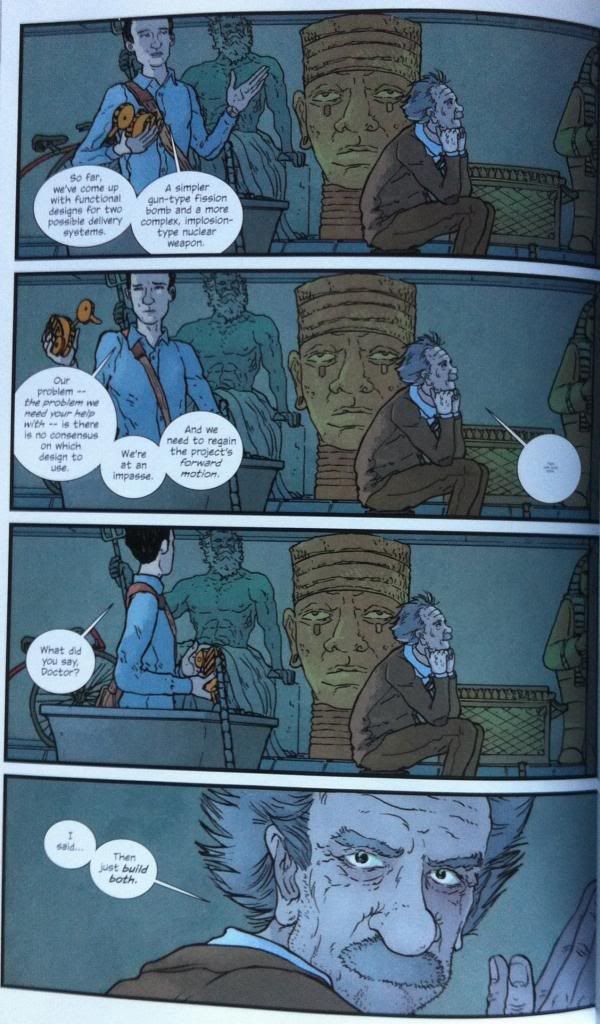
In this sequence amoral-mirror-Richard Feynman goes to evil-parallel-universe-doppleganger-Albert Einstein with the engineering question of whether the Manhattan Projects should focus on constructing a relatively simple "gun-type" nuclear fission bomb, or a more complex "implosion-type" device. The part of this that resounds with me and absolutely guts me, is that not-Einstein replies simply that they should "just build both".

Which is just so completely fucking, oh my god brilliant and awful and perfect.

Because the real-life Manhattan Projects really did build both.

The thing about nuclear bombs is that they are perversely simple. For a nuclear fission explosion, all you need is enough stuff, a sufficiently massive lump of high purity fissionable material will undergo a runaway nuclear chain reaction and explode. So all a nuclear fission device is, is a machine that takes  a chunk of radioactive material which is too small to have this exponentially growing nuclear reaction and pushes it over the mass threshold needed to explode. The simplest way to do this is to hold two chunks of fissionable material apart, and then rapidly stick them together to make a big enough chunk to blow up. And this is literally what a gun-type device is.

The real challenge of nuclear bombs is the fuel for the explosion. Naturally occurring high quality fissionable material is exceedingly rare, and even then the most reactive isotopes have to be painstakingly separated from slightly more common less or un-reactive isotopes. Many of the better nuclear fuels are not naturally occuring in sizeable amounts and have to be produced in labs, usually using other nuclear reactors. (Incidentally a bunch of super important medical isotopes are becoming increasingly rare as many countries shut down their reactors.) So the real life history of The Manhattan Project is shaped by the history of the production and availability of high quality radioactive isotopes.

Initially, the project lacked sufficient pure radioisotopes of any kind of fuel to build any type of bomb. However, the project did have access to naturally occurring Uranium from a variety of mines and over time developed the a technique to separate desirable Uranium-235 from the inert, majority Uranium-238. This meant that The Manhattan Project had the capability to construct an enriched-Uranium nuclear device. Because the The Manhattan Project was in a rush to build atomic weapons to use in the war, they opted to keep it simple, and build a gun-type device that shoots a small chunk of U-235 into a larger chunk to set off an explosion.  This is the first bomb they built called the Thin Man and later, The Little Boy.

However, during development of this first bomb, a new, better fuel source, Plutonium, became available. While The Manhattan Project was developing the bomb, another portion of the project was developing nuclear reactors. Some nuclear reactors make, as a byproduct of fission, plutonium, which is a higher energy fissionable material and so useful amounts of Plutonium became available to The Manhattan Projects. (Science brag: Ive held a warm sphere of lead lined Plutonium in real life.) However, Plutonium did have one other problem: it was too reactive to be used in a gun-type device. A gun-type Plutonium device would "fizzle" by tearing itself apart before a significant amount of the bombs fuel could be reacted, and so the device would lead to a much smaller explosion. And so the real-life Manhattan Project was forced by engineering reasons to develop an implosion style device that basically crushed a ball of Plutonium into a dense enough ball to set off an exponentially growing nuclear reaction and explosion. Trinity and The Fat Man were this type of bomb.

The thing is, this device was, by comparison to the gun-type device, super complicated so The Manhattan Project was not willing to suspend the development of the simpler Uranium gun-type device. So in the end, they built both a gun-type bomb and an implosion-type bomb.

And then they fucking used both.

The bomb the US dropped on Hiroshima Japan was The Little Boy, a uranium gun-type device. The bomb they dropped on Nagasaki three days later was Fat Man, a plutonium implosion-type device. In real life, they built both types of bomb and USED both types of bomb. 

And that is at once a perfectly logical, practical Science and Engineering decision and excruciatingly horrifying.


With this real life context, this line by evil-Einstein is just so perfect and so completely awful. This moment encapsulates the mercenary practicality of the decision to develop both devices, the near sociopathic disregard for the consequences of this choice, and the inevitable finality of this decision. It's a carnival mirror reflection of the frigid, inhuman extremes of Science and Engineering. 

And so it sticks with me.

Previously:
The Manhattan Projects: Volume 1
The Manhattan Projects: Volume 2

Friday, 21 March 2014

Deep Sequencing: Red-shift, Blue-shift

Or how binary colour schemes are used in The Manhattan Projects Volume 3
by Jonathan Hickman, Nick Pitarra, and Jordie Bellaire, Image Comics


The Manhattan Projects beyond being inane, hilarious, and shockingly horrifying is also a really pretty and visually interesting comic. Obviously, Nick Pitarra, the penciller of the series deserves a lot of the credit for how great the comic looks: his designs and effectively tell the story and enhance the tension or comedy of every scene. But I think part of the magic of The Manhattan projects is the colouring by Jordie Bellaire. I'm particularly interested in the way she colours flashbacks and mental sequences. So here is a look at her use of weird blues and weird reds in The Manhattan Projects: Vol. 3

There will be mild *SPOILERS* for The Manhattan Projects. Proceed with caution and PPC*

(* PPC = Personal Protective Clothing, it's lab jargon for goggles and lab coats and respirators etc...)


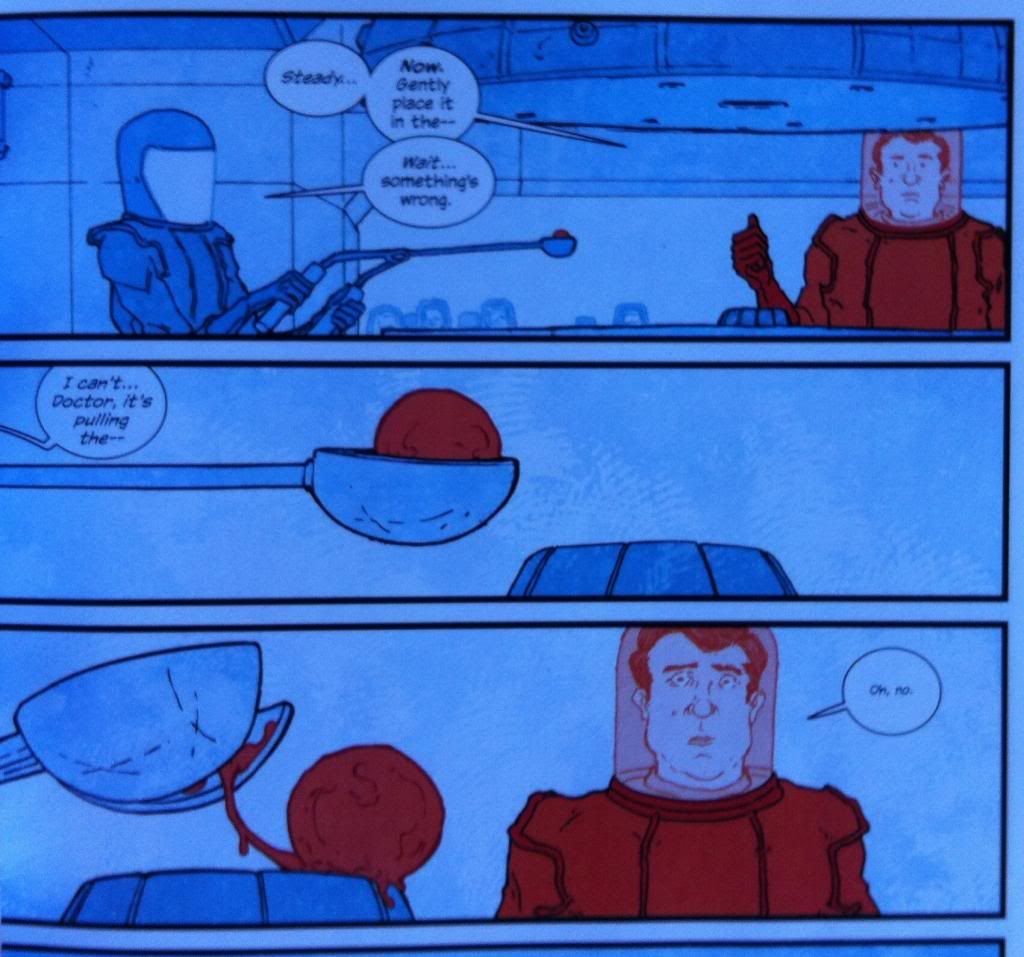
The hook of The Manhattan Projects flashback sequences is the contrast between the Blue and Red colours. They are absolutely the colours of madness and Science: these are two very unnatural colours, a kind of textured bright blue, crackling with electricity and Bunsen flames, and a vaguely neon red, glowing like some kind of mutant blood. Neither colour feels entirely real, enhancing the fantastic, afronte-to-nature-ness of The Manhattan Projects, while the yawning contrast between the two extremes is just pure dreamscape insanity. I love it.

Beyond the interesting colour selection, the use of un-Blue and un-Red is also pretty fascinating. In the above sequence, the red and blue are used to emphasize Daghlian in his red containment suit and the glob of presumably plutonium that would change his life forever. It's a pretty simple approach to highlighting key elements, but it absolutely razor focuses the readers attention to the key elements in the composition.


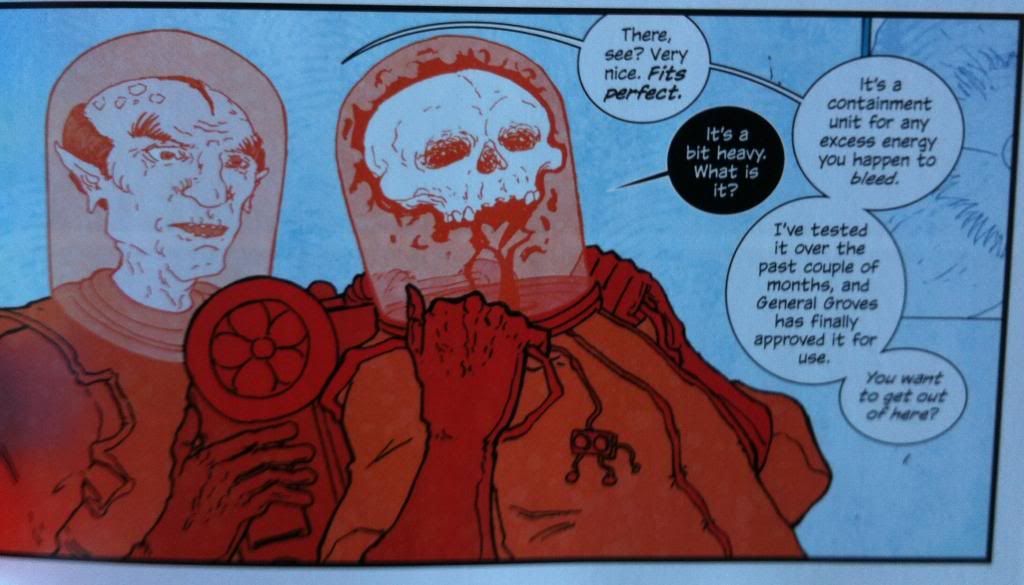
The un-Red and un-Blue is also used to elegantly highlight the isolation of radiation-monster Daghlian after his accident. By colouring him in the angry, unnatural red and every other human in the blue colour, Bellaire manages to perfectly capture the loneliness, and almost literal alienation of Daghlian from the human world now that he is a walking radioactive disaster. It's great comics.

(Also, note that in this sequence Enrico Fermi is in the above panel coloured in blue. This is going to be important in the second.)


In the same way that colour is used to emphasize the isolation of Daghlian, it's also used to show the end of it. Where previously Fermi was coloured as blue, while Daghlian was coloured red, now, with the gift of the radiation containment backpack thing, Fermi is also coloured red. This colouring really helps establish that Daghlian has now found a kindred spirit and is no longer alone. It also helps cement how important the friendship with Fermi is to Daghlian which is a warm human moment and also great set up for Fermi's eventual betrayal.


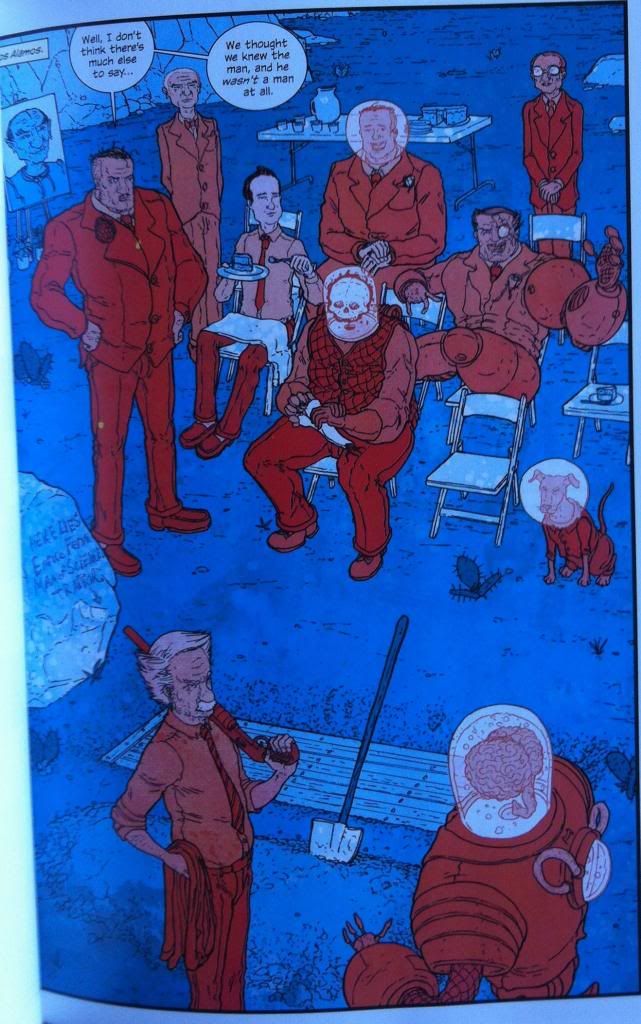
The red and blue colouring is also used at the funeral of Fermi to establish demarcations. In this case, it really helps establish that the deceased, traitorous Fermi has been cast out of The Manhattan Projects. All of the members in good standing of The Manhattan Projects are coloured in un-red while Fermi's casket, headstone, and photo (in the top left) are all coloured blue. This manages to simultaneously emphasize that Fermi is no longer one of the team (he is no longer coloured red) and that he is no longer alive (his elements are coloured in the same blue as the chairs and shovels and cake). 


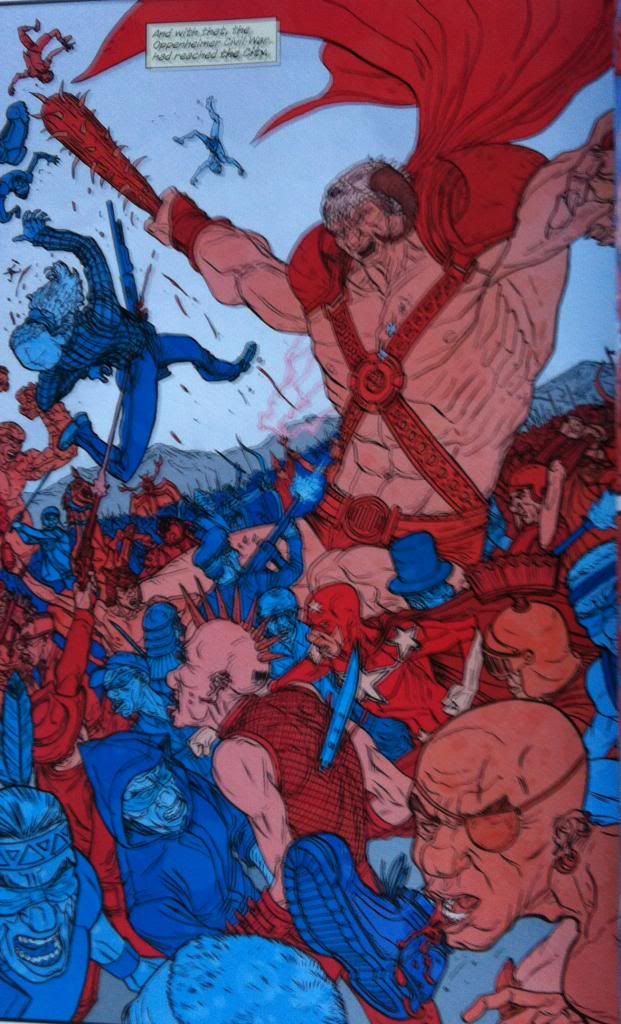
The un-red and un-blue colouring strategy is also during the War of the Oppenheimers in which the cannibalistic Joseph Oppenheimer and the consumed Robert Oppenheimer fight a war for the control of The Oppenhemer's mind. It's very much a war of ideas and imagination fought with metaphors and proxy Oppenheimers co-opted by either primary Oppenheimer. Which is a pretty trippy collection of ideas. However, the colouring keeps it straight forward to look at: the armies of Robert and coloured blue, while the armies of Joseph are coloured red. So visually the whole insane mess is distilled the very understandable red-vs-blue. It's a simple approach, but is stunningly effective.


Previously:

Wednesday, 19 March 2014

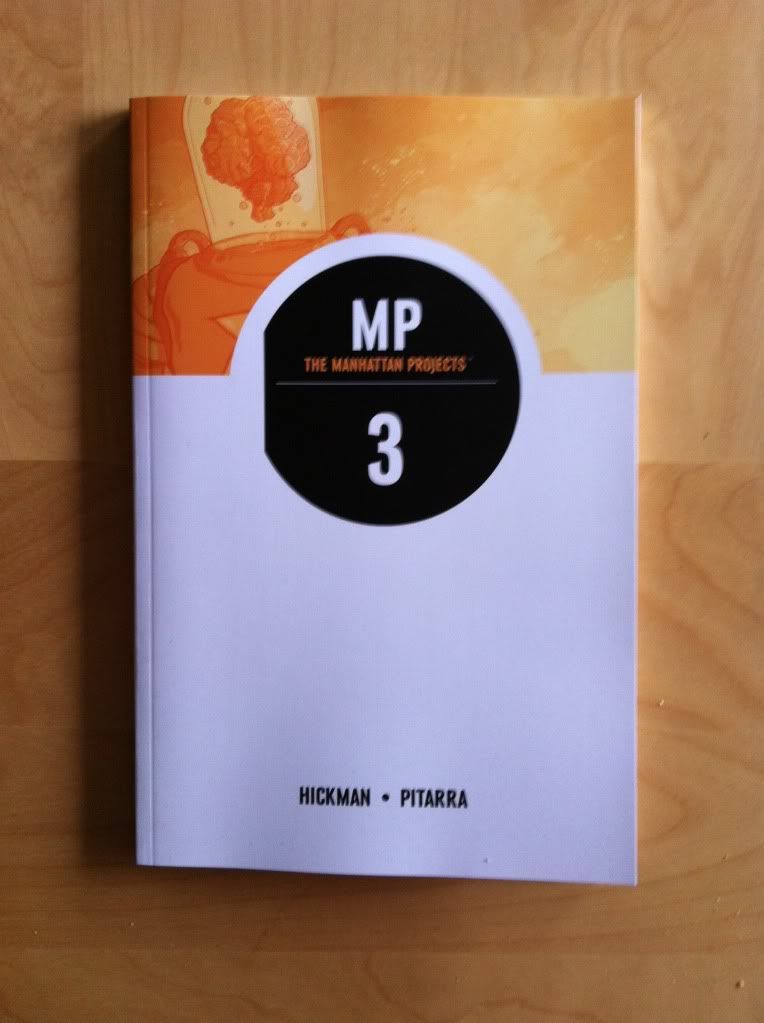
So I Read The Manhattan Projects Vol. 3

A 250 word (or less) review of the third Manhattan Projects collection.
By Jonathan Hickman, Nick Pitarra, and Jordie Bellaire; Image Comics


I am a professional Scientist. I believe in the power of Science as a lever to improve human life and elevate humanity to something better. I research cures for diseases and I sacrifice my time, financial security, and how interesting I am at parties on the altar of Science. I am a good person trying to do good things. The Manhattan Projects thinks I'm a goddamn monstrous asshole. And I love it.  The Manhattan Projects is a comic about how the real life geniuses of The Manhattan Projects are a bunch of ruthless, sociopathic geniuses performing terrible acts of Science because they can. The third volume of the comic focuses on the inevitable murderous betrayal that occurs during all Scientific collaborations. The thing about volume 3 is that it really embodies the mad in Mad Science. One of the things about madness that I've always found chilling is how quickly it can shift from something weird and harmless into something fucking terrifying. And third volume of the Manhattan Projects has really thrown itself into the terrifying. It is a very smart, very chilling comic that builds on the ongoing story and pays off a lot of the ongoing plotlines. Volume 3 also cuts out the safety net and increases the stakes of series going forward: the house that Science built is on unsound, faintly radioactive footings. So, despite the toxic things The Manhattan Projects Vol. 3 has to say about me and my colleagues, it is really worth checking out.


Word count: 250


Previously:

Wednesday, 28 August 2013

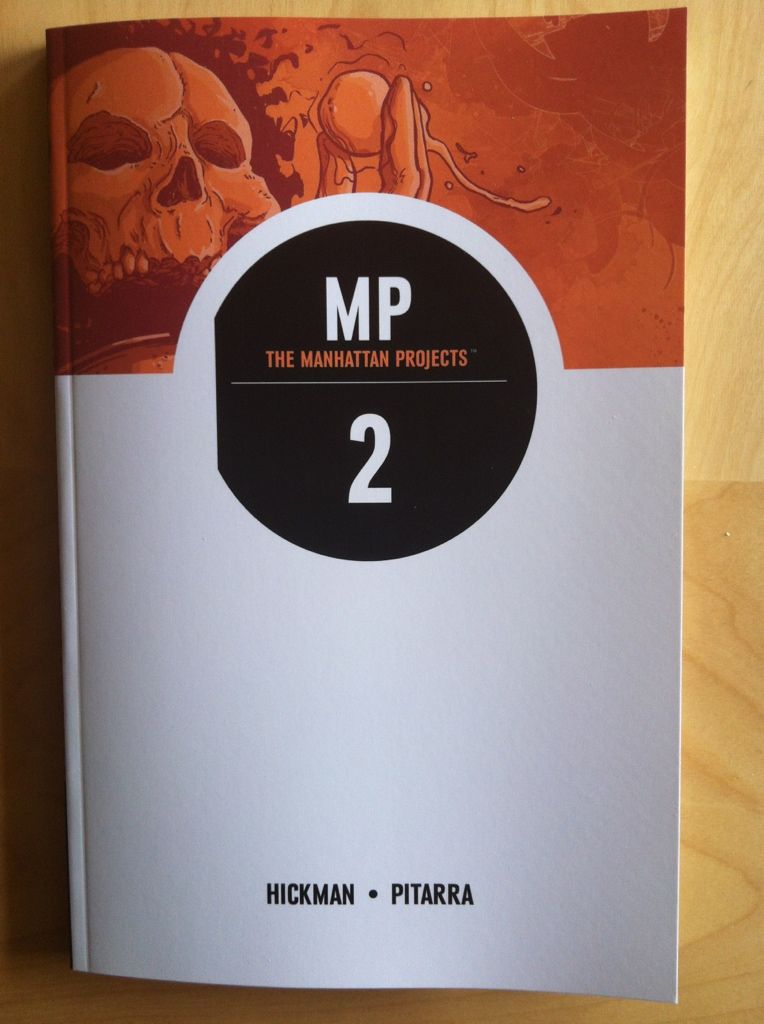
So I Read The Manhattan Projects: Volume 2

A 250 word (or less) review of the second collection of The Manhattan Projects
By Jonathan Hickman, Nick Pitarra, and Jordie Bellaire ; Image Comics 


I am a professional Scientist. My research department was founded by an actual member of The Manhattan Project. (Dr. Douglas Harold Copp, look him up.) As such I should be deeply offended by The Manhattan Projects, a comic that implies that the brilliant Scientists of the real life Manhattan Project are a bunch of cannibalistic, murdering, amoral sociopaths performing the Maddest of Sciences. A comic that is deeply insulting to my heroes and my vocation. But, once again, despite myself, I absolutely LOVE this comic. In The Manhattan Projects: Volume 2, the Scientists of The Manhattan Projects encounter their Mad counterparts from the Soviet Union: another secret Science project rife with Nazi prisoner/rocket Scientists, brutalist automatons, squid-aliens from the Tunguska Event, talking Space Dogs, and Communist brains. And instead of fighting the Red Menace, The Manhattan Projects do something ingenious, something that offends the secret cabal of the True world government and leads to a power struggle for the Earth itself. It's more worryingly insane fun from Jonathan Hickman that walks that perfect line of aching sincerity and eyebrow-shrugging fun, which is drawn with the crazy, playful line of Nick Pitarra and coloured with the psychedelic fever hues of Jordie Bellaire. Basically, The Manhattan Projects: Volume 2 is more Bad Science done right. It’s deeply insulting to Scientists, but damn if it isn’t incredible fun.


Word count: 225

Previously:

Friday, 5 April 2013

Variety Is The Spice of Comics Pt. 3: Getting Your Friend's Hooked.

Or how variety in comics is amazing and generally a good idea.

I spend a disproportionate amount of time trying to get friends to try reading comics. Most of this stems from the fact that I really, really enjoy reading comics and want to share that experience with the people I care about (as any good geek should). Part of this is maybe also motivated by the fact that I don't really have any comic friends, so it would be cool to convert a friend or two. But on a far more mercenary level, I think convincing a friend to read, and to maybe even buy comics is important for comics as an industry.


Comics, as we try to avoid thinking about, are a commodity. Comics creators are a kind of artisan that produce a specialized commodity for a niche consumer. Publishing companies, some merely facets of giant multinational media empires, act as merchant/distributors and bring the commodity to a retailer (a comic shop/bookstore/web ap/whatever) who then sells the product to consumers. As much as creators, publishers, and retailers are all important cogs in the comics machine, there would not be a comics industry without consumers. (I mean, I'm sure some people would still make and share comics they made for fun... but business-driven professional comics require someone to eventually buy them.) To a certain extent, the pool of comics consumers, the market for the weird, amazing commodity that is comics, dictates how much comics can viably be made and supports the people that actually make the things we care about.


In that light, bringing in new comics readers increases the size of the comics market and, as such, increases the amount of money available to comics which thereby increases the amount of comics that can/will be produced and the amount of money that eventually reaches creators (who are great).  I know that in the years since a friend of mine slipped me a disk of bootleg comics in an Integral Calculus class I have spent THOUSANDS of dollars on comics and as such I have contributed to the continuance and manufacture of more comics. The way I figure it, every friend of mine I can convince to read and purchase comics represents money that is being fed into the comic machine that would otherwise not be there.


(And yes, my friends often liken me to a drug dealer.)


So back to convincing my friends and loved ones to try reading comics. I have found that most people are not interested in reading superhero comics. It's not that Superhero comics are stigmatized, really, it's that they are a known (or presumed to be known) quantity. Everyone thinks they know what Superhero comics are and has an opinion concerning whether or not they would like to read them. (And I would argue that everyone who is interested in reading superhero comics basically already is, and if they aren't, it isn't very hard for them to change that.) As a result, I have found that the trick to convincing people to try reading comics is to present them with the kind of smart, mature, well-written and beautifully drawn non-superhero comics that most people don't know or appreciate exist.


Almost universally, I have found that Y The Last Man is a perfect first comic to spring on the kind of people I am friends with. The comic has a very accessible and addictive script: it has a compelling central mystery and rolls out a relentless series of cliff hangers that keeps readers glued to the series. Moreover from a writing perspective, the comic manages to present extremely well realized, likeable characters, a snappy sense of humour, and a maturity and level of discourse that civilians are frequently surprised to find in comics. Paired with this is really accessible art: on the one hand it looks nice and services the story well and on the other it has a low panel count in conventional layouts and really doesn't experiment too much. Y The Last Man is also kind of the perfect length for a first comic reading experience. It's not so long that new readers burn out, but still long enough that they get to experience a fair amount of comics before reaching the end. Basically, Y The Last Man is a perfect storm of comics for new people. 


That said, in my experience everyone has a different taste in media and wants slightly different things from the experience of it. Part of what makes Y The Last Man such a powerful gateway comic, beyond its execution, is that it manages to straddle a lot of genres and emotional responses simultaneously. Everyone I have ever lent it to has enjoyed it, but frequently for slightly different reasons... and from those responses come critical information about what comes next. And this is where variety (and hence the title of this blog entry) comes in.

(That didn't take a long time to get to at all...)

One of the more successful comic conversions I've had is a coworker I'll call subject A (one that has actually resulted in a comics purchase!). With  this person I started with Phonogram which yielded pay dirt with The Singles Club but not Rue Britannia (which was too myopic for her). I then leant her Y The Last Man which she DEVOURED as fast as I would lend it to her. She then tried and enjoyed Scott Pilgrim, the output of Faith Erin Hicks, and Chew. She finally tried Julia Wertz's The Infinite Wait and Other Stories and was blown away and went and bought her first comic in Drinking at the Movies (well second comic, she gift-exchange-stole The Manhattan Projects: Science  Bad. at our work Xmas party). She is currently slowly working her way through the Runaways and Octopus Pie (which she quite enjoys). Basically, she likes fun, humorous  not super-intense comics that she can relate to.


A similar success story comes from a guy on my soccer teams... who I will call Subject 2. He too devoured Y The Last Man when I leant it to him. From there I tried giving him Chew... which he thought was too ridiculous and silly. So I leant him Criminal, which he apparently likes a lot and is slowly reading in fits and starts. While I am still figuring out what Subject 2 is really into, it seems he likes intense, realistic, page-turning comics.


Which is all proof that not everyone wants to read the same kind of comics. Moreover, it is evidence that the people who are not interested in Superhero comics immediately may be interested in other comics, and that finding what comics they like is mostly a matter of finding what genre of fiction they enjoy. And this is where variety comes in: the more KINDS of comics that are being made, the more likely a new reader will be able to find a comic that fits their media needs exactly (or the more likely I will find that perfect comic to force on my friends). 


To take this idea a step further, maybe the way we can expand the audience, and therefore the market, for comics is not by making better and better and better superhero comics, but by making ALL KINDS of different comics. That way everyone can find the comic they want to read. And who knows? Maybe that will lead to them trying a comic. 


And then another.


And another.


Previously:
Variety is the Spice of Comics Pt. 1: Pony Up
Variety is the Spice of Comics Pt. 2: Year in Review

Wednesday, 28 November 2012

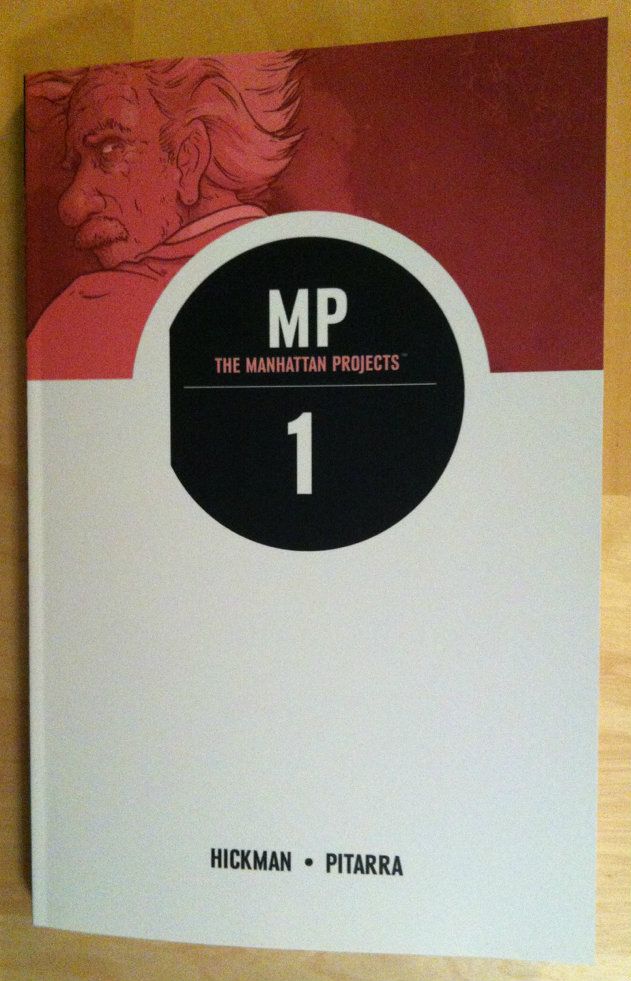
So I Read The Manhattan Projects: Volume 1


A 250 word (or less) review of the first volume of The Manhattan Projects.
By Jonathan Hickman and Nick Pitarra, Image Comics


There is nothing in comics, or fiction in general, that aggravates me as much as the trope that scientists are amoral misanthropes who only care about advancing their Science without regard to consequences or ethics. It’s lazy, played out, and untrue.1 I’m pretty sick of it. The Manhattan Projects: Volume 1 is the first collected edition of an ongoing series about amoral misanthrope scientists using the development of the atomic bomb as a cover story for a kaleidoscope of Mad Science. The comic sees beloved real life scientists, such as Feynman, Einstein, and Oppenheimer, portrayed as villains driven to do terrible things in the name of Science. So The Manhattan Projects is basically a perfect storm of my most hated comic stereotype taken to the extreme. The thing is I kind of LOVE IT. A lot of this can be chalked up to execution: this book is awesome! Hickman’s script is smart, warped, funny, and deranged and Pitarra’s artwork is chaotic and detailed and expressive and vaguely... wrong. I think Volume 1 is also helped by being somewhat tongue-in-cheek. Despite having gravitas and some profoundly heavy and dramatic moments, the book is very transparent about being an exaggerated work of fiction. I also really appreciate that the book doesn’t get bogged down trying to logically rationalize its Mad Science because, honestly, that would just be distracting and ancillary to the story. Despite myself, The Manhattan Projects: Volume 1 is a Mad Science exploitation comic I can heartily recommend.

Word count: 248

1: Full disclosure: I am a Scientist by profession. Also: I own both Feynman autobiographies.


Previously:
So I Read The Nightly News
So I Read The Red Wing
So I Read Transhumanism
So I Read Pax Romana