by Rutu Modan; Drawn and Quaterly and by Matt Fraction, David Aja, Matt Hollingsworth, and Chris Eliopoulos, Marvel Comics

Telephonic communication is a weird thing. It's a technology that let's you communicate, as if by magic, with another human at some great distance. With cell phones, this kind of awesome power to communicate at impossible, global distances becomes completely portable. I can literally speak with someone anywhere in the world with a thing I carry around in my pocket. And this is so commonplace everyday that it has more or less ceased to be remarkable. Which is mad!
Anyway, I bring all of this up because I think telephonic communication posses special challenges to sequential art storytelling because making a phone conversation look and feel cool in comics seems hard. Or at least it's seldom done in a way that really resonates with me.
I think the crux of the issue is that people speaking to each other, talking heads, can make for boring comics. How interesting is it to watch two people yakking at one another in a book where people can fly in space? Phone conversations are even worse, because they separate the characters and remove even the simple drama of them interacting and the visual interest of the characters playing off one another. Telephonics makes talking heads into talking head and talking head. And how can that be interesting?
Well, I think there are great examples of how smart storytelling can make phone conversations really visually interesting and emotionally effective.

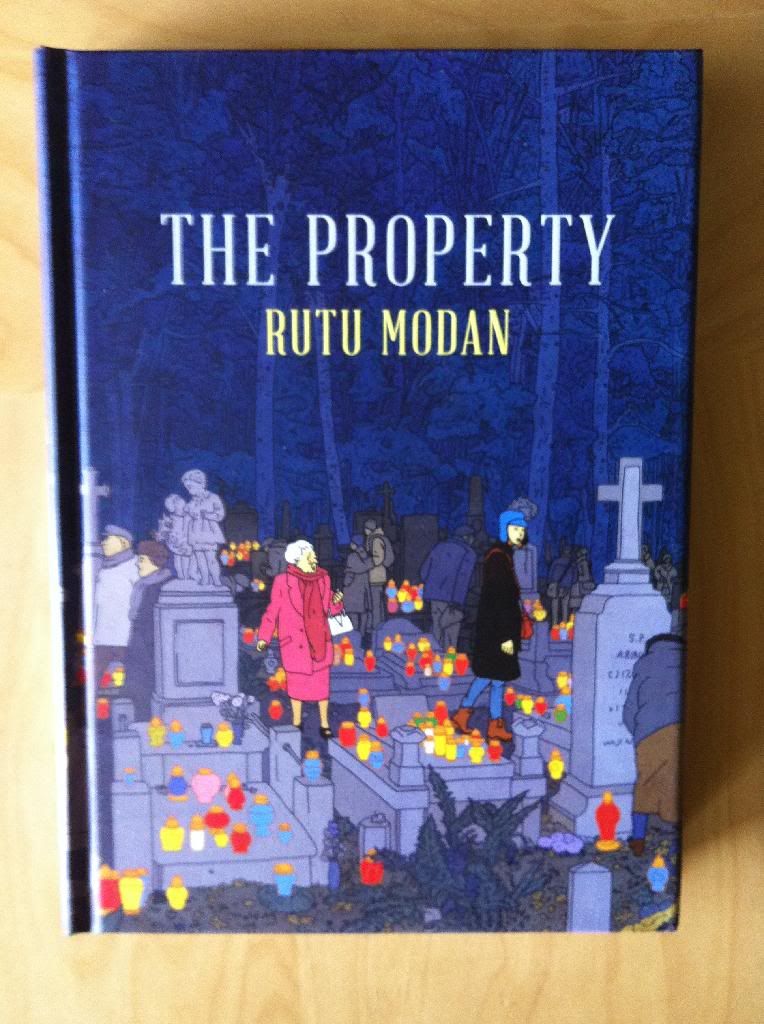
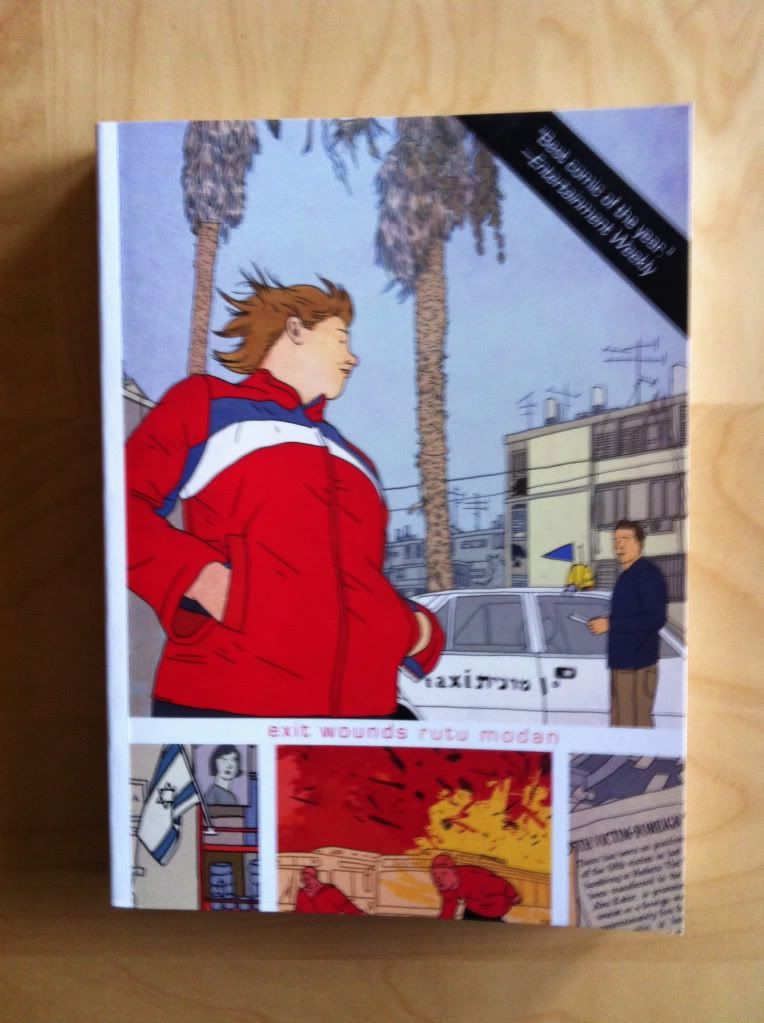
Rutu Modan draws comics about relationships. If you wanted to be dismissive of it (and why would you?) you could describe her output as a studies in talking head comics. And yet, Exit Wounds and The Property are really, really engrossing comics. Relatable stories and great, vivid characters are key elements, but so is the stripped down, beautifully minimalist art of Rutu Modan. Every moment in these comics are just presented with such simple clarity that they are kind of perfect. I'm not sure exactly how to articulate Modan's approach other than to say it's like good design: it's simple, yet exactly what it needs to be to work perfectly in every instance.
Her approach to phone conversations is a great example of this. Modan uses a simple six panel grid and splits the page between the two speakers, one in Israel and one in New York City, such that every word of dialogue in the conversation is drawn with the person saying it. This makes it super clear who is saying what and let's us see the characters react and even play off each other as if they are in the same room. And yet, the clear demarcation of the page into Poland-zone and Israel-zone emphasizes the physical, and for plot reasons, emotional separation between the two characters. Which collectively gives us the drama of the conversation and the weight of the distance of the call. It's emblematic of the simple, yet perfect layouts of Rutu Modan, and just a great clean example of how to make a phone feel interesting and engaging in a simple way.

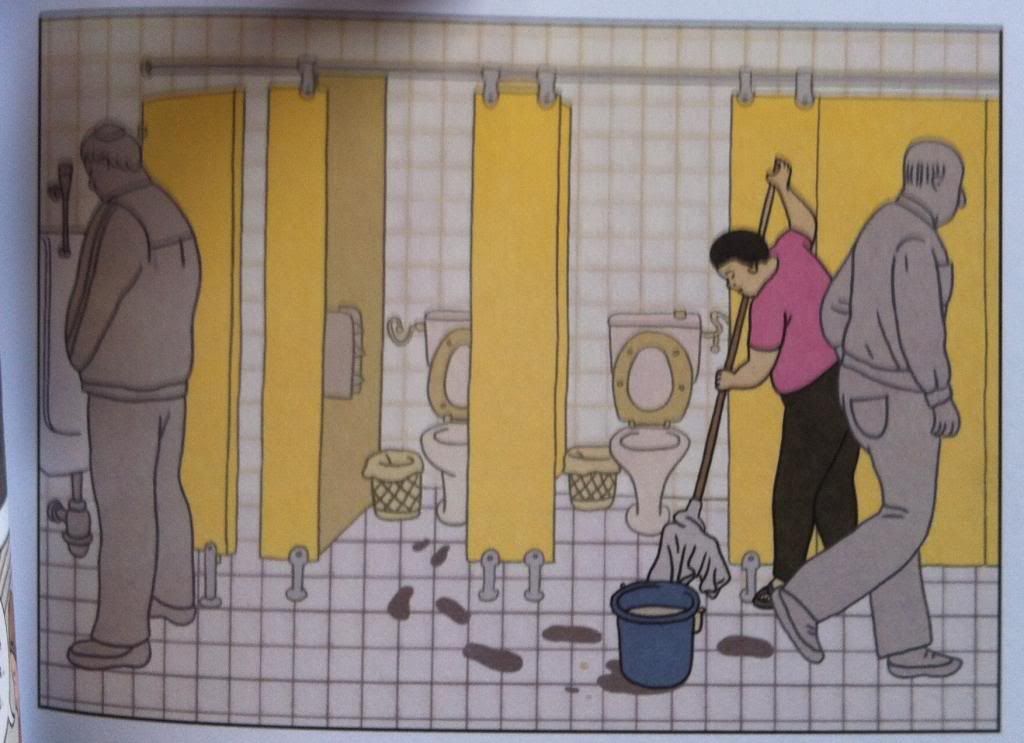
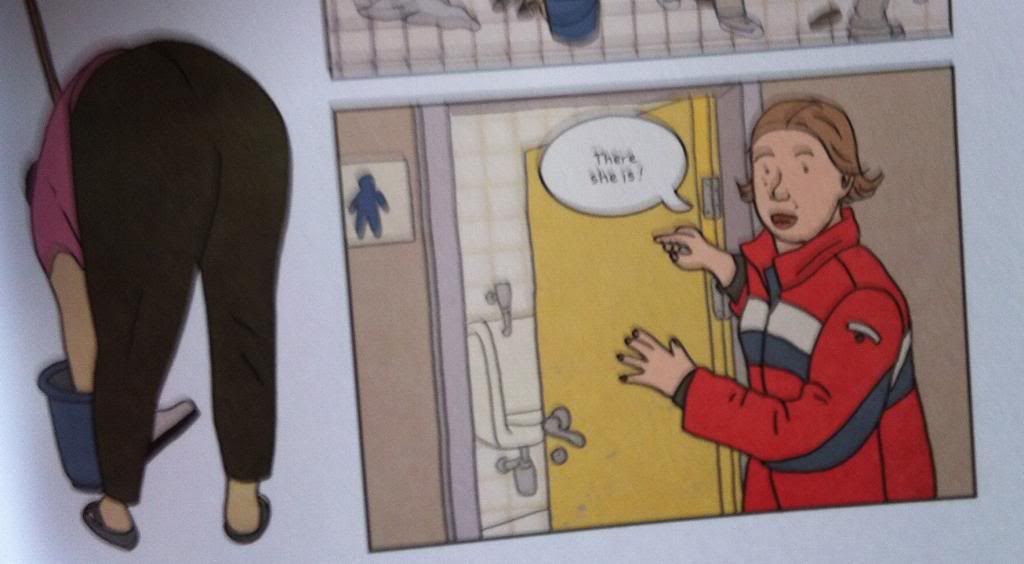
Here is another really great example of a two different approaches to phone conversations happening simultaneously. Down the left side of the page, Mica, one of the characters is on the phone with her family's lawyer in a very stripped down series of panels. For the purpose of the story we only really care about her reactions as some dissapointing than interesting news is delivered to her. The lack of background and tightness of the panels emphasize how focussed on the conversation she is and the incomplete nature of her information. Meanwhile the right side of the page shows a conversation between a troublesome interloper and her aunt where they discuss some great news (which ironically is being debunked in the left-side panels). This one is a long distance call with the dude popping into the panel being in the same room as Mica in Poland and the woman being in Israel. I love the goofy way the two play off each other and the wonderful contrast between their shenanigans and the more serious conversation on the left of the page. The right panels are also great in that they show how telephonics can bring people at great distances together, as if they are in the same room. Which is also pretty fun.

On the other end of the spectrum, we have a phone conversation from Hawkeye #3. This layout uses 24 tight panels arranged in an apparently chaotic cloud. Yet, by moving from the top left of the page, through the grid of small panels and finally into the bottom right corner there is a clear progression of events. This layout is really great because it effectively does the opposite of the Rutu Modan pages above: it muddles everything together in a whirlpool of conversation. Clint's panels intersperse with Kates, maybe Clint gets a few in a row, and now Kate barges into the conversation. We see tight shots of faces, that emote as the camera-angle of our perspective swirls a little. And this inherent chaos beautifully captures all of the emotional chaos of the scene. We see through layout the difficulty the two Hawkeyes have in communicating, the conflicting emotions that do not really sync up. It's miscommunication captured through layout complexity.
Someone way, way more perceptive than me was able to gather from this page that Clint may be, or may have once been hard of hearing. And the fact that this was a thing that could be gleaned or built into a layout is something that still blows my mind.
Anyway, there is clearly no single right way to draw phone communication, but when it's done well it can as interesting as any other character interaction. I think maybe if there is one lesson to be taken from these, it's that maybe a lot can be gained by focussing on the conversation and call instead of putting the focus on a character moving through a setting. I mean, clearly there are situations where it is best to use a phone conversation to establish setting and move things forward, but the phone calls in comics that really stick with me are all focused character affairs.