Showing posts with label Sound Advice. Show all posts

Thursday, 5 February 2015

Sound Adivice: Captain Marvel Volume 1.1

Captain Marvel Volume 1: In Pursuit of Flight
Kelly Sue DeConnick, Dexter Soy, Emma Rios, Jordie Bellaire, Clayton Cowles; Marvel Comics


So, you’ve heard Marvel is producing a film called Captain Marvel in 2018 and want to know where to start reading about this hero?  You have come to the right place.

Captain Marvel is Carol Danvers, a former USAF pilot, current Avenger, and my all-time favorite super hero. I feel like it’s only fair to tell you before we move on: I have an ongoing Carol Danvers Situation, capital S necessary. There is a bias in this post, and the bias is that I think Carol Danvers is actually THE BEST.

Marvel Studios’ recent Phase 3 announcement brought us the news that a Captain Marvel film  will be hitting the big screen in July of 2018. I’m completely floored by the news, but for many people, the announcement bought questions about who this character is, why she should be the character to land the Marvel Cinematic Universe’s first female-led title, and why this matters. With In Pursuit of Flight, collecting issues 1-6 of Kelly Sue DeConnick’s 2012 run of Captain Marvel, we see many of the story elements that have me excited for the hero Carol Danvers to gain a wider audience.

As I talk though these points, *SPOILERS* will arise, so continue at your own risk.

------

1. She looks like a female superhero should look.

Carol Danvers looks strong and powerful without surrendering her femininity. Jamie McKelvie’s redesigned uniform drew me to Captain Marvel in the first place—here we have a woman fighting in a flight suit instead of a bathing suit, wearing something that fans refer to more frequently as Carol’s “uniform” than her “costume.” Though a costume change may seem like a small thing, consider my own comics experience—thought I’ve been reading comic books since I was a kid in the late 1990’s, the look of a superhero was never intriguing enough for me to pick up a book until Carol’s Captain Marvel uniform hit the stands in 2012.

The art of In Pursuit of Flight supports this strength. Dexter Soy, who provides the art for the first part of this trade, is a favorite artist of mine because of how powerful Carol looks, and how dynamic his world feels on the page.


Emma Rios, who provides art for the second portion of the trade, brings a completely different style, one in which Carol has never looked more ethereal and magical.


Both artists avoid exploitive poses or costumes, and both are masters at showing emotion in their drawing.

2. Carol Danvers is confident about who she is and what her strengths are.

For all that this book touches on the question of names and titles and how those concepts impact our identity, Carol is very clear about who she is—She’s an Avenger. First and foremost, Carol Danvers is fighting to protect, save, and to serve, because that is what heroes do. She also clearly knows that she’s good at it—Her dialogue during fight scenes is some of the best I’ve read, because Carol is very aware that she excels at punching and blasting. Her confidence borders right on the edge of cockiness, and it’s a sort of confidence I think we see very rarely from female super heroes. “These girls have never seen anything like this in their lives,” she narrates as she begins to face down some powerful alien tech. “I’m an Avenger…we call this Tuesday.”

This is not, I should point out, to say that Carol Danvers isn’t smart. All the time she is reacting in the moment, she’s also putting together the pieces of what’s going on, considering her plan, and adjusting as new information arises. The USAF veteran is also a tactician, one who often adapts her plans on the fly, even if she sometimes does so recklessly, disregarding her own safety.

3. Her weaknesses are just as familiar to her.

The central plot of In Pursuit of Flight circles around a time travel adventure that sees Carol dropped unexpectedly into the era of WWII. She realizes this when she runs into the Banshee Squadron, an all-women group of WWII pilots, and realizing the potential of altering history Carol fully acknowledges that she has no idea what she should be doing. Though I’m usually not one for time travel plots, this one calls itself out early on. Time travel is a compelling problem for Carol to face, because it isn’t one she can't easily fight head on.


4. Carol maintains interpersonal relationships with other women.

For some reason, varied relationships between female characters can be hard to come by in comics. In just the first volume, we see a number of these relationships in Carol’s life, such as a supportive friendship with Jessica Drew, Spider-Woman, a friendship with Tracy, a older friend and former coworker who Carol is supporting through a fight with cancer, and even her relationship with Helen Cobb, clearly someone Carol views as a hero or mentor, and later, when the time travel plot brings Carol together with Helen’s young self, as competition. We see Carol relate to the Banshee Squadron as a fellow soldier and as a leader, as well. As a medium, comics can sometimes forget that friendships can cross generations, and that relationships have a huge spectrum of variation, In Pursuit of Flight remembers.

5. She considers the value of legacy.

First we see it at the start of our story, when Carol has to decide if she’s going to take on the mantle of Captain Marvel. It’s clear that part of her is worried it somehow lessens Mar-Vell’s legacy for her to do so—and part of her clearly wants the power and history of that legacy to become part of her own story. We see it again when Helen Cobb leaves Carol her plane in her will—Carol’s first act is to set off to prove that Helen Cobb’s flight record is accurate.

The whole of this arc of Carol’s story also considers a broader legacy—that of the women that came before her. The Banshees are our first reminder, couched in this fictional world, of a very real sexism experienced by women throughout history – women could not be pilots in the armed forces in WWII, so women much like the Banshee Squadron served in civilian support roles, even though they often were putting their lives on the line just as much as enlisted forces.  They thought of themselves as soldiers, even if no one else would recognize them as such.


Our second reminder comes with another jump to the 1960s, where the women pilots of Mercury 13 are facing down the injustice of a system that won’t allow them to pursue a NASA training program. Their hopes are dashed by their gender and their era, and it’s heartbreaking to witness these women’s devastation for both the reader and for Carol.


This story is absolutely about the legacy of women such as the Banshees and the Mercury 13 left for women who came after, an unashamedly feminist statement about how important it is for us to remember and honor their struggle for equality. DeConnick does her best to honor them in story, and Carol clearly recognizes how these women helped pave the way for her own service and the pursuit of her own dreams to fly.

6. For as much as legacy is valued, Carol sees the importance of continuing to move forward.

It’s a letter from Helen that is the final push Carol needs to take the title of Captain Marvel. “Helen would punch holes in the sky,” she reasons to herself, sitting at the edge of space thinking about her place in the world. When in the final arc of the book, she finds herself in a position to reset, to remove the weight of legacy, Carol can see the value of who she is, and when the moment comes, she rushes right in because someone needs saving, and that is what heroes do. Not only is this who she is, but it’s who she wants to be.


Carol’s story is one of continuing to dream and to push forward. She encourages it in others and expects it of herself. “You and me’ve always been like this,” Helen writes in her letter. “Always dreaming. Of higher, further, faster, more. The Lord put us here to punch holes in the sky, and when a soul is born with that kind of purpose, it’ll damn sure find a way.”

------

In Pursuit of Flight is the beginning of Carol Danvers’ tenure as Captain Marvel, and is as much about the shift in how she names herself as it is about the time travel shenanigans and fighting bad guys. The volume features an adventurous plot and a cast of characters to be marvelled at. The dialogue is snappy and engaging, a balance between being believable and sounding exactly like what a super hero would say.  I can, at the same time, relate to Carol’s relationships and wish I could have abilities as awesome as hers. It’s a fantastic volume if you’re new to super hero comics, or if you’re just looking for a new hero to love.

And Carol Danvers? I believe this list is just a few of the many reasons Carol Danvers as Captain Marvel has resonated with so many people. Carol is everything I want in a hero: she’s strong and confident. She lifts up and encourages those around her, but still banters playfully with her friends. While she’s facing down a challenge, she knows her strengths and her weaknesses, and isn’t afraid to own that there are some things that are not her forte. She’s both confident and questioning, strong and soft.  She flies fast, kicks ass, and looks fly as hell while she’s doing it.

I often describe Captain Marvel as the book I wish someone could have handed to 12-year-old me, but the truth is I need to hear what she has to say even now, on a pretty much daily basis. I needed a hero like this at 8 and 12 and 16 and 19 and even now at 26. When she’s on the big screen in 2018, girls won’t have to wait until they’re an adult to see a hero they want to be.


Fly. Be bold. Honor those that came before you, but never stop pushing for your own dreams. Punch holes in the sky.

Post by Jennifer DePrey

Previously:

Friday, 24 October 2014

Sound Advice: Rat Queens Vol. 1

Advisement on Rat Queens: Sass and Sorcery
by Kurtis J. Wiebe and Roc Upchurch, Image Comics


Rat Queens is a title that was recommended to me by a number of comic-reading friends well before I ever considered picking up an issue. Their enthusiastic, shouted recommendations had me picking up a copy during a sale at my favorite store, where even the owner ringing up my purchase said to me “Call us when you finish that, you’re going to want more.” I devoured Rat Queens over the course of 2 days, and by the end of the trade I was mad at myself because this book was so great and I wasn’t already reading it.

Rat Queens Vol 1 Feels like an amorphous combination of straight up paperback fantasy adventure story and what I think of as trashy “chick lit”—the sort of book that I read for pure enjoyment, with no goal of educational or literary enrichment (This is not a bad thing—reading is sometimes quite legitimately about escapism). The story of Rat Queens is well-versed and grounded in the tradition of fantasy/adventure tales, but so fun and funny that it feels like it should be a guilty pleasure. It’s also unapologetically foul-mouthed and bloody, which I appreciate from my fantasy tales.

This book is straight-up fun to read.

But if you haven’t read it, assume some mild *SPOILERS* below.


This book had been described to me by numerous friends as a fantasy story if fantasy stories happened with the same dialogue as a Dungeons and Dragons campaign.  As I read through it, I was surprised with how accurate this description was—I had heard this said about the book so many times that I kept expecting to turn the page and be confronted with the tabletop game controlling the Rat Queens, but it never happened.

Rat Queens is almost the antithesis of trying too hard—the book flows, with casual dialogue, a quick-paced and easy to follow plot, and characters that are entertaining and relatable, while remaining interesting. In all of the best ways, reading Rat Queens fells akin to watching a well-done sitcom—I’m laughing, I care about the characters, and I want to keep exploring more. 

Wiebe and Upchurch do a fantastic job balancing this fun style with the hallmarks of a fantasy tale. Our heroines fight, swear, revel, drink, and fight some more.  The embark upon a quest, encounter a mystery, and must work together with people and groups outside of their own to confront a problem. For all that the story arc feels almost comfortingly familiar to this long time fantasy reader, Rat Queens is a breath of fresh air. The Queens are self-aware enough to give credit to others for great lines said in battle, or mock fantasy-world stereotypes, such as the good sight of elves, embracing the best fantasy tropes without feeling weighted down by them.


 One of the things Rat Queens does incredibly well is the causal, free dialogue, peppered with a large number of jokes. The choice to use modern language and slang is one of the elements of the story that had me flipping pages and rooting for our characters – If I was fighting monsters, my vocabulary would be much closer to that of the Queens than of those fantasy novels I grew up on. The Rat Queens and company are foul-mouthed in the way you would expect a person to be when faced with an army of trolls.


 The interesting supporting characters also play into my enjoyment of this story – The Rat Queens themselves are interesting and becoming more and  more multifaceted as the story goes  on, but I’m just as charmed by the Sawyer, the captain of the guard, by the other bands of adventures (The Four Daves make me smile all the way through), and even by the band of trolls the Queens eventually fight. I want to know more about our main quartet of heroes, but I also really want to spend more time with these awesome supporting characters.


Wiebe and Upchurch should also get some real credit for a book with consistently diverse representation. I noticed this immediately with our four main characters, women of different body types and ethnicity, but as I read I also noticed it in the background—the setting is populated by characters with a range of skin colors and body types. We also see some representation of diverse sexual orientation and religious beliefs and ideologies, though this is a harder type of diversity to represent in a visual medium. I did find that occasionally this can feel a bit forced—Dee and Betty talking about Dee’s religious beliefs while working to infiltrate a guild office comes to mind – but intent is there, and the heart of the story is in the right place.

Rat Queens will be staying on my list as a book I follow in trades. Volume One is a solid opening arc, a full story that leaves tendrils of further story to be explored in future installments. I want to know more about the characters, sure, but more than anything else, I want to spend more time in the world Wiebe & Upchurch have created—a diverse fantasyland populated by foul-mouthed, bad-ass adventurers. There is always space in my life for a read that gets me turning pages and leaves me smiling. I’ve already begun to shout my own loud, enthusiastic recommendations at friends.

Post by Jennifer DePrey

Previously:


Monday, 20 October 2014

Sound Advice: Sex Criminals Vol. 1

Advisement on Sex Criminals Volume 1: One Weird Trip
by Matt Fraction and Chip Zdarsky; Image Comics


First, a disclaimer: If you have found this review through googling my name because you are a student or former student of mine, do me a huge solid and take my advice right here: while Sex Criminals is a fantastic comic, it is also not for you, at least, not without your parents reading it first and giving you the okay to read it and then having what I can only imaging are going to be awkward discussions about the content of the book. If you and your parents have not yet handled talks about safe sex, consent, intimacy, and how sex is only one aspect of an adult relationship, just trust me and know you’re not quite ready for this book yet. Check back in a few years.


If you are my parents? Sorry, Mom and Dad. Maybe go check out my tag and read another of the reviews I’ve written?

Also, *SPOILERS* ahead so proceed at your own risk.

------------------------------

To level with you, I had trouble writing this review. There are so many things I absolutely adore about this book that figuring out a cohesive way to express my feelings about Sex Criminals took far more time and introspection than I wanted it to. I wrote and trashed multiple versions of this piece before I could even articulate why that was happening.

Sex Criminals has a simple premise, one that could be reduced so much that at first glance it’s a complete gimmick: Our Hero and Heroine stop time when the orgasm, and decide to use this power to rob banks. From the moment I heard about this book, I knew it was going on my pull list just because I wanted to read what I was sure would be a hilarious book by Matt Fraction resplendent with dick jokes. I expected that I would laugh, and keep the digital copies on my kindle for days I needed some levity, and not mention to my mom that this was a book I was reading.

Sex Criminals is so funny and witty and just silly. The dialogue and story makes me smile consistently – Suzie’s pool table musical number comes to mind. Fraction and Zdarsky have built a book that is full of jokes – on every reread I catch something I didn’t see before in the background of a scene.


 (A couple of examples of excellent jokes created in the background art.)

 The levity that oozes from every aspect of this book makes it easy to engage with – from the tips heading the letters column to the dedications in the collected volume, Fraction and Zdarsky bring the funny.


But Sex Criminals is also a great examination of a new relationship, about the magic of learning about another person and discovering what about them it is that you find attractive and connect with, about why they have taken up some precious residence in your heart.


Like sex itself, Sex Criminals is more complex than it’s pitch makes it seem. Sex is very rarely just sex; it’s not something that is simple, that occurs in a vacuum, or happens in the same timeline or situation for all people. Though a lot of media insist on portraying sex in a pretty simple view, it can fail to recognize that the only thing necessarily common across sexual experience is that we all have to figure out how (and even if) we want to interact with, talk about, and participate in such relationships.

Cue Suzie and Jon, our intrepid protagonists, who are willing to fully admit to one another that they struggle to figure relationships out. While they are building their relationship with one another, the readers get to see them—in present time and in flashbacks—struggle to understand sex, worry that their experiences maybe aren’t normal, lament failed relationships, explore their sexuality and desires, experience attraction and affection, and discover that this whole relationship thing may be more complex than they want it to be. Even Jon and Suzie’s experiences are quite different from one another’s. This is evident even in the way they use their stopped-time. For Suzie, The Quiet is about escaping and getting space to clear her head.


For Jon, it’s about “getting away with things,” and finding the freedom to act out what it later becomes clear are destructive impulses.


 When they find each other, it’s almost inevitable that they try to use their powers to get away with something that also helps them escape their troubles (robbing the bank Jon hates working for to save the library Suzie loves from destruction). Of course, it’s not as simple as they want it to be. Complications arise. Suzie’s friends worry about her, Jon’s mental health comes into question, and hey, apparently there are Sex Police?


 My experience is not the same as Jon or Suzie’s, but I can find much I relate to in their stories of sexual and romantic exploration – lack of information, curiosity, experimentation, shame, guilt, and emotional baggage.  Looking at the Sex Criminals letter column each issue, it seems I’m not the only one that relates so strongly to this book. Frankly, this comedy about sex has something real and relatable to say about our common experience of just trying to figure things out. By sharing these moments with the reader, Fraction and Zdarsky give us the opportunity to connect more with the characters.

We see a young Suzie unable to find information, going to all sorts of sources and not knowing what to do.


We see teenage Jon unsure about why sex is a big deal, and why he feels so strange about it.


We see Suzie’s rendition of a musical number in a pool hall (one of my favorite scenes) as the as Jon’s moment of realization about his deepening affection for her.


 We see, though the repetition of a single phrase of internal dialogue as the plot progresses, how her feelings about Jon grow and change over the course of the volume.


The willingness to explore all these moments makes Sex Criminals one of the most realistic portrayals of sex and relationships I’ve seen in contemporary media, aside from, you know, the stopping time with orgasms and the sex police. Really, this discovery just adds another layer of complexity to Suzie and Jon’s relationship, gives them another thing they need to consider and weigh and negotiate around. It’s another obstacle to overcome, and to consider if it is worth overcoming.

It took one issue of this book (bought digitally, I will fully admit, because I was not comfortable going to my comic book store full of mostly men and requesting I be put on the pre-order list for a book called Sex Criminals) for this to become a story that I was talking about with my friends and recommending to any friend that I thought would listen. The balance this book strikes between comedic and introspective continues to astound and impress me.

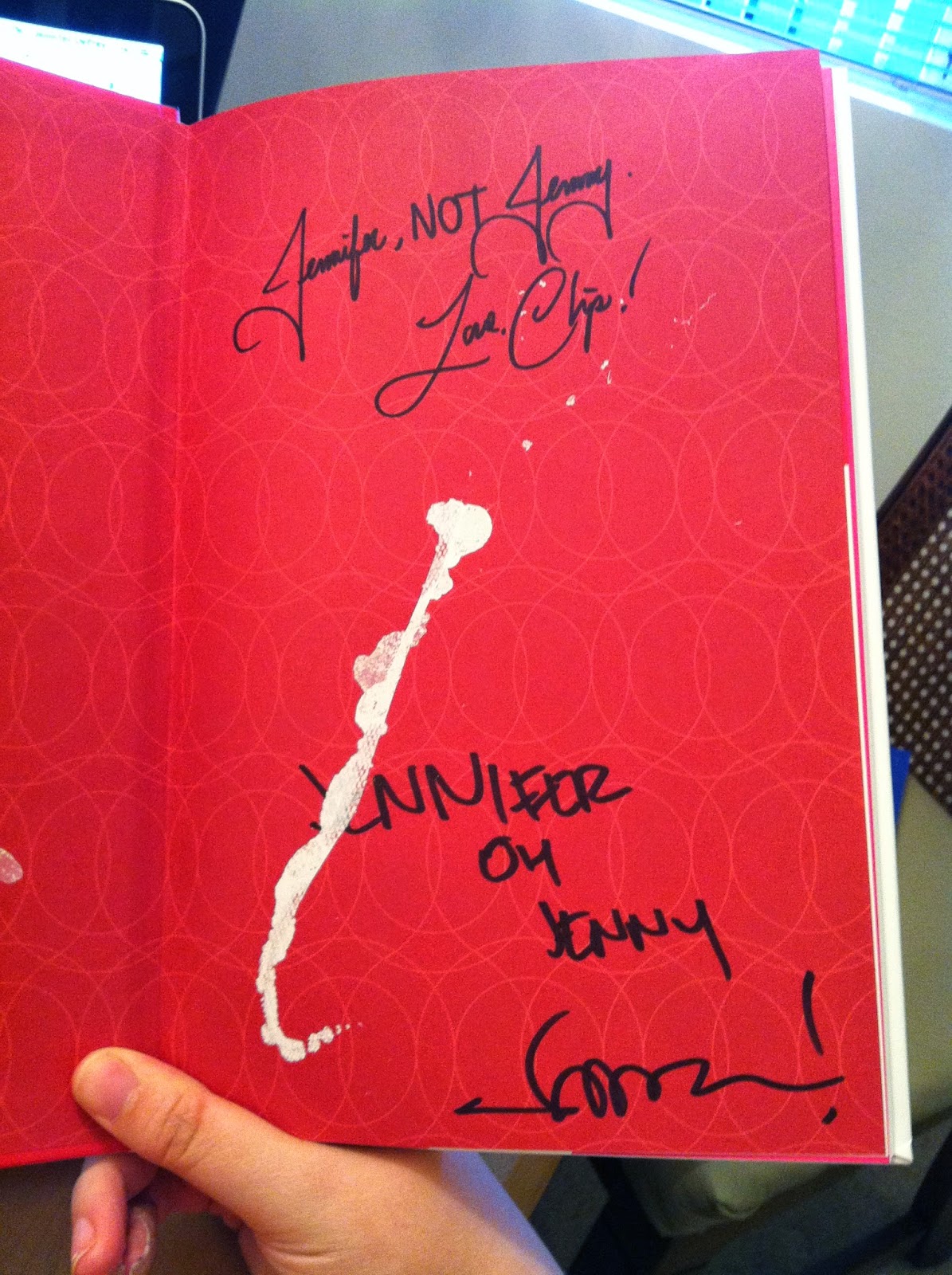
For me, the other truly remarkable thing about Sex Criminals is how much conversation it’s sparked in my life. After a friend read the first issue, she sent me a text absolutely floored about the remarkably realistic and grounded portrayal of female sexuality, and we agreed that it felt like a breath of fresh air.  At Emerald City Comicon 2014, it was clear that there was a rabid fanbase for the book—the lines to have Fraction and Zdarsky sign my freshly-purchased SEXclusive Convention HARDcover of Volume One was long all weekend.


(I did eventually get it signed, and uh, marked, by Fraction and Zdarsky—don’t worry, that’s whiteout)

 One of the advantages of reading Sex Criminals issue to issue was the letters column, where person after person related to the stories on the page, and shared their own experiences and questions. This book has sparked a conversation among readers, and that’s what I believe good media should do, not just entertain, but inspire us to seek some better understanding.  

The best thing about this book?


There’s so many more good things to talk about.  

Post by Jennifer DePrey

Previously: