Sunday, 15 July 2012

In Theory The Iceman Cometh


Or a Scientific Treaties on the Plausibility of Mr. Freeze

Mr. Freeze from Batman and Robin. Campy!
I think Mr. Freeze is one of the more interesting characters in Batman’s Rogues Gallery. He has a cool gimmick (ice powers, has to stay cold to live), a chilling and tragic backstory (gets powers from lab accident while trying to cure terminally ill wife),1 and like all of Batman’s best villains Mr. Freeze acts as a foil for the caped crusader (loss of loved one motivates revenge instead of heroism). He is also one of the few Batman villains who can contend with Batman both intellectually and physically making him a good candidate for being a major villain in a potential future Batman film. Unfortunately, due to his supernatural/sci-fi nature and his campy Batman’66 and Schumacher escapades, it is very unlikely we will ever see him in another movie.2


I’m here to tell you that Mr. Freeze does not have to be campy and unrealistic. In fact, with some relatively cosmetic changes, Mr. Freeze can be made into a serious and Scientifically plausible villain.

An extensive treatise follows after the cut:

Thursday, 12 July 2012

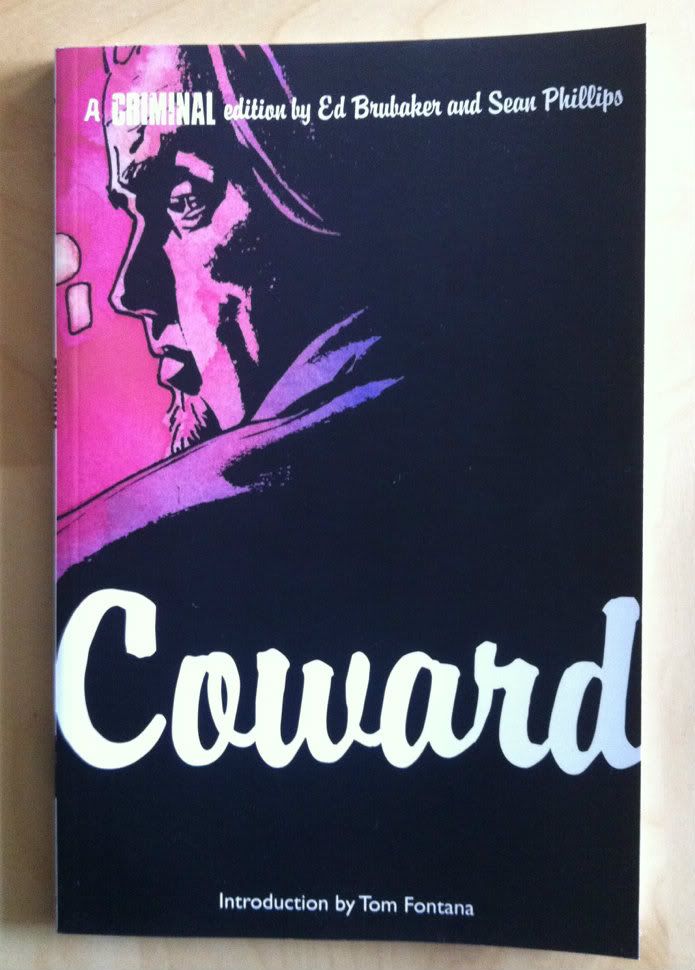
So I Read Coward

A 250 word (or less) review of the first Criminal collection
By Ed Brubaker and Sean Phillips, Icon Comics


Coward is Ed Brubaker and Sean Phillips’ first love letter to the genre of Crime Noir, it’s also superb comics. In Coward, Leo Patterson, a thief known for his planning acumen and caution, is offered a score too risky to try for but too good to pass up. What follows is a well executed Criminal tale rife with genre tropes: an elaborate caper, crooked cops, dangerous liaisons, violence and vengeance. The characters are vivid and likeable, the artwork atmospheric and dynamic, and the story suspenseful and well crafted, especially as circumstances in the story spin out of control.  The world of Criminal that Brubaker and Phillips create is very convincing and realized: you don’t so much read a Criminal collection as you temporarily inhabit it. That said, Coward is Ed Brubaker and Sean Phillips first Criminal collaboration, and to a certain extent it shows1: the distinctive colour palette of later Criminal volumes hasn’t been fully realized and the script is maybe less assured than later collections. This potential for improvement isn’t obvious though: Coward is a very well executed book by genuine comics superstars who clearly love the subject matter. Coward is a very easy book to recommend to any comics reader and if you at all enjoy Brubaker's mainstream comics work, the Criminal series is an absolute must read.

Word count: 220

1: I have had the pleasure of reading later Criminal stories (I started reading during Volume 3), I’ve come to Coward (and reviewed it) after the fact.

Tuesday, 10 July 2012

Amazing Spider-Man is neither Amazing nor Spider-Man


Or a brief discussion on the intrinsic flaws of Amazing Spider-Man

Amazing Spider-Man isn’t a bad movie. The broad strokes of the story can be followed, the character’s motivations are clear enough, and the actors do a pretty good job bringing the characters to life. There are a few great moments in the film and some of the departures from Spider-Man dogma they presented were pretty clever.  At no point in this movie was I infuriated.

Amazing Spider-Man also isn’t a particularly good movie. The plot overall felt very unoriginal. If you saw Spider-Man, the Sam Rami film, you pretty much saw a bigger, campier and Spider-Manier film adaptation of Spider-Man with a similar collection of plot beats.  In fact, much of Amazing Spider-Man is an origin retread so a third of the movie is almost literally the same as Rami's Spider-Man. It also felt very… by the numbers? Things happened because the genre demands it without a lot of substance or explanation. I’d go so far as to argue that whole plot threads of the movie rely on our prior knowledge and expectations to make sense.1 So, while Amazing Spider-Man never made me go all geek-hulk, it didn’t really illicit any positive emotional reactions either. I’ve heard the whole Spider-meh joke, and I buy into that.

But there is more to my apathetic reaction to this film than its kind of lackadaisical take on the character. In my opinion Amazing Spider-Man is further brought down by two key general problems: it gets the soul of Spider-Man wrong and it makes ham-fisted attempts to tell instead of show. My analysis after the cut.

It should be noted that after the cut is going to be *SPOILER* rich… so go on at your peril.

Monday, 9 July 2012

This is how you remind me… of so many belt pouches


Or how Nickelback is the Rob Liefeld of music.

I recently had… the experience of going to a Nickelback concert. In my defence, I was told it was a Bush concert and only later, after tickets had been bought, was it revealed that Nickelback was headlining. Also, I didn’t pay for my ticket. (Please don’t hate me.)

In a moment of profound realization during said concert, it occurred to me that Nickelback, with its brashness and absurdity, is the musical equivalent of Rob Liefeld. Also: Bush is a much better band than Nickelback.

I also realized that both The Rob and Nickelback, as aesthetically unappealing as I find them, deserve to exist because some people seem to really like them and both, occasionally, provide moments of sublime absurdity that transcend their origins.

An in depth comparison follows after the cut:

Thursday, 5 July 2012

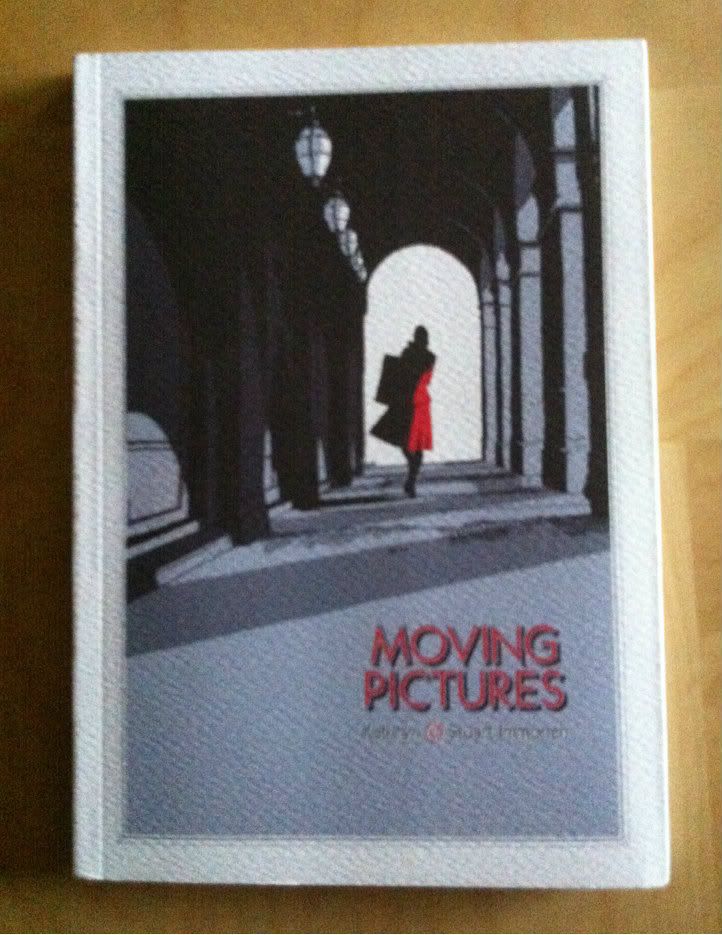
So I Read Moving Pictures


A 250 word (or less) review of Moving Pictures the graphic novel
By Kathryn and Stuart Immonen, Top Shelf Productions

"Comics are just words and pictures… You can do anything with words and pictures."1 Moving Pictures certainly argues to this thesis. The comic takes place during World War 2 in Nazi occupied France and is constructed around efforts by the French to hide their cultural treasures from Nazi art profiteers.2 Although, as the books dustcover synopsis helpfully points out: “this is (not) that story”. Rather the focus of Moving Pictures is Ila Gardner, a Canadian helping the French, who becomes embroiled in a dangerous affair with Rolf Hauptmann, a Nazi Art Commission officer. Kathryn Immonen’s script is constructed in an unorthodox manner, being built around the interrogation of Ila by Rolf interspersed with flashback sequences that serve as portraits3 of the events surrounding the interrogation. Stuart Immonen’s artwork uses this sketchy, minimalist cartoon line with heavy inks… kind of like a period film4 of a noir tintin. The result of the way the comic is structured leaves many key details happening off panel or implied.  To me this left some of the story open to interpretation, forcing me to revisit the flashback portraits to reach my own conclusions about the story. I think this ambiguity may have been a thematic choice: when looking at sculptures or paintings audiences use a single image and setting to construct their own meaning and narratives and I think Moving Pictures is commenting on this process. Of course I, like my interpretation of the book’s events, could be severely wrong. I’d highly recommend Moving Pictures.

Word Count: 250

1: Quoth Harvey Pekar via Warren Ellis…
2: Literally Moving Pictures to safety
3: Portraits that convey the emotionally resonate stakes of the story.  Moving Pictures.
4: A Film. A Moving Picture.

Okay, I kind of want to layout my interpretation of the ending of Moving Pictures on the off chance that someone who read the book reads this entry and wants to compare notes. This is going to be very SPOILER intensive, so I’m going to drop it after the cut.

*SPOILERS*

Wednesday, 4 July 2012

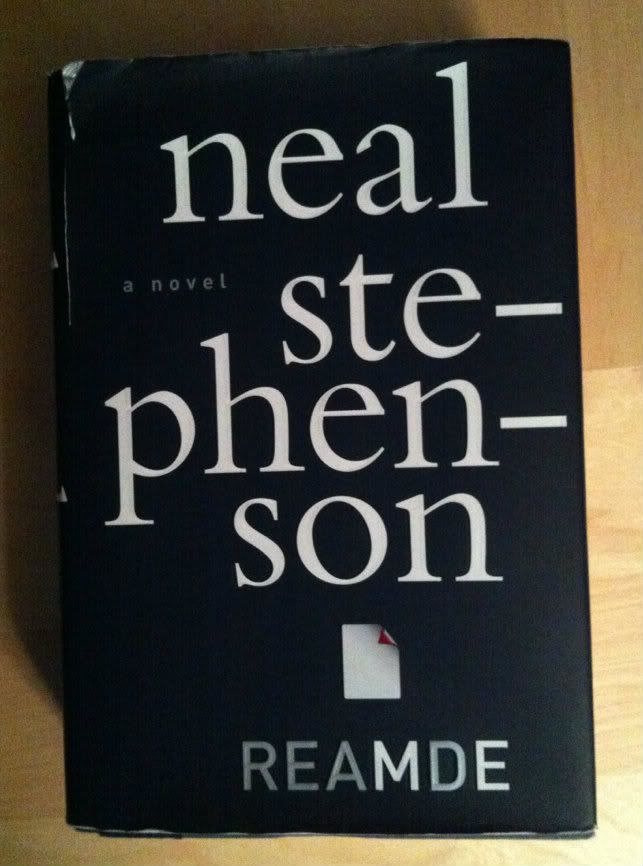
Reamde is a Pretty Good Book.


A review of the novel Reamde, by Neal Stephenson


Neal Stephenson is somewhat of an enigma to me. He has written some of my all time favourite works of Science Fiction: Snowcrash is easily a modern Sci-fi classic (if not a general landmark piece of fiction) and his next-most-recent novel Anathem was one of the most satisfying reads I've had in years. However, he has also written some books that are decidedly not my favourite books: from the punky missfire of Zodiac to the gargantuan, grinding, morass of his Baroque novel series. I mean, all of these are "good" books in the sense that they are thoughtful and interesting... it's just his best books are both keenly insightful and pleasantly engaging. His worst books are usually only one of these.

Reamde for me, falls somewhere in the middle.

Reamde follows the stories of Richard forthrast, millionaire MMORPG mogul and former marijuana smuggler, and his adopted niece Zula forthrast as they run afoul of the Russian mafia, Chinese hackers, b\British spies and Islamic terrorists in a globetrotting thriller. Reamde, therefore, is a kind of modern meta-thriller, designed around the tropes of Tom Clancy, Robert Ludlum and/or Dan Brown novels. And when I say designed around the tropes (plural) I am being literal: this novel is an aggregate of ALL thriller plots simultaneously. To a certain extent the book functions as a mediation on the genre and its conventions. In a certain sense Reamde succeeds, in that it builds this quintessentially modern thriller story in a highly textured and plausible way. Stephenson's eye for research and his penchant for grounding the over-the-top implausibility of events in the sheer real-world banality that would make them possible (ie. several page discursion on air traffic routing, airline fuel limitations and international radar deployment)really elevates the material. However, the doing-so of this is also Reamde’s greatest flaw. The problem with the novel is one of suspense logistics: it’s hard for a thriller to maintain the kind of tension that is the engine of the genre over 1000+ pages, especially pages that are rife with Stephenson’s particular brand of discursion. Don’t get me wrong: the tangential riffing is some of the best writing in the book and is insightful and interesting which I love (said as a guy who listens to educational podcasts for entertainment while setting up experiments for his graduate studies), but it does bog down the pace of the action. But then again, these tangents are among my favourite parts of Reamde as they act as a direct conduit to the Stephenson-sublime voice that is more prevalent in my favorite books by him. Also, these information rich, laborious discourses are often involved in the mechanics of getting separate plot threads aligned in ingenious ways. Seriously, the character logistics in this book are incredible. It’s technically a very well written book.

Overall, I'd say I enjoyed Reamde, and that I will likely revisit it in a few years. I wouldn't necessarily recommend it to a general reading audience (there are better, more accessible Stephenson novels to try first), but I would recommend the book to anyone who is a fan of Stephenson as an author or is serving a lengthy prison sentence.

Sunday, 1 July 2012

Death-toll Comics


Or ten comics that were cancelled that I really wished were not.

The premise of this blog is that I have decided, due to economics and preference, to read only ten on-going superhero comics titles. As a result I am interested in reading the best comics being published at any given time to maximize my reading experience.  However, it occurred to me (while doing my annual comics sort) that during the five or so years I’ve been reading comics some remarkably good comics have been cancelled or discontinued. Each one of these titles could easily have made my top-ten Atoll comics list if they were still being published. This post, then, is in remembrance of some terrific comics by talented creators.

My top ten cancelled titles after the cut: