Wednesday, 15 August 2012

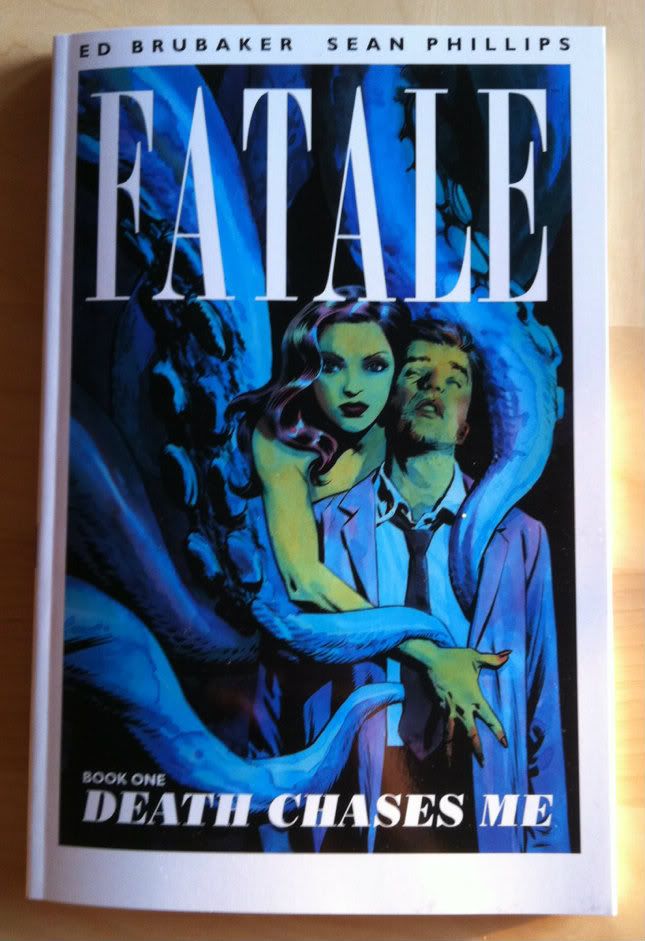
So I Read Fatale: Death Chases Me


A 250 word (or less) review of Fatale: Book 1
By Ed Brubaker and Sean Phillips, Image Comics


Fatale is the story of Nicolas Lash, the godson of dead crime novelist Dominic “Hank” Raines, who becomes ensnared in the Lovecraftian Horror world of the mysterious Jo, the titled femme fatale. Fatale is also the story of a young Hank Raines as his journalism brings him into contact with crooked cops, twisted cultists, and a dangerous dame named Josephine decades earlier. Like most of Burbaker and Phillips’ collaborations Fatale makes use of the conventions and motifs of Crime Noir to tell their story. However, Fatale also utilizes the mythos and some of the tropes of Lovecraftian horror fiction: generational guilt, madness, a sort of alien (weird alien, not ET alien) threat that exists on the margins of society/civilization, and tentacles. The result is basically Lovecraftian-Noir or Crime-Horror. I really like it: it’s well executed, sylish and fun. It’s also an effective and clever way to tell a Lovecraftian story. The two things that really stood out to me when reading some of HP Lovecraft’s fiction were the utter conviction of the authors voice (as seen through the narrator) and the way the supernatural is stretched out with all kinds of mundane little details, usually in the guise of an academic document, journal or correspondence. These make the horror elements tangible and create a dissonance with the ordinary world. By hanging Fatale on a Crime Noir skeleton, Brubaker and Phillips ground the story in something familiar and relatable to the audience which makes the supernatural elements all the more effective.1

Word Count: 250

1: Also: the idea of criminals as remote from society (as oppsed to rural, physical remoteness in Lovecrafts work) is pretty cool.


Previously:
So I Read Coward
So I Read Lawless
So I Read The Dead and the Dying

Sunday, 12 August 2012

Kicking In?

Or my mixed feelings for Kickstarter.

Kickstarter, at least in concept, is a really great idea.

When I first heard about it, it seemed like this great device for putting the power of publishing into the hands of people who seldom get to wield it. The idea of Kickstarter to my liberal-ish mind immediately leads to this notion of crowd funding creators, especially new and marginalized ones, to finance projects that wouldn't otherwise get off the ground and to get new voices heard. Kickstarter would help break the creation monoploy of big publishers which would bring more variety of content, diversity of creators and a bigger audience to the world of comics (all of which it sorely needs). It would be a creative revolution. Power to the people man!

Kickstarter is also nifty from the perspective of how art gets made. I'm sure I'm oversimplifying the crap out of this, but from what I understand there are two prevailing and competing paradigms for publishing. One, the kind you'd associate with Marvel or DC, is this profit driven Ayn Randian approach that is about maximising the money the author/publisher receives from a project. The object of the art is to make money, essentially. The other model is more about getting the art out while ensuring the artists make a sufficient amount of money to fund the production of the artwork and to, you know, keep them alive and off the street and such. It's a model that's more about breaking even and keeping creators fed than turning huge profits. Think public radio. Historically this model of publishing has gotten by laregly from government subsidies and arts grants but Kickstarter, at least in theory, provides a new avenue for creators interested in pursuing this kind of publishing model.

(One could also add a third publishing strategy with straight up patronage... but until I am an eccentric billionaire it isn't super relevant to me.) 

So yeah, Kickstarter at first glance seems pretty rad.

And sometimes it is.

There are certainly a wide variety of worthy projects that are Kickstarted by generous (and sometimes insane) people. The world is richer for these projects, the generosity/avarice of the crowdsourcers, and honestly for Kickstarter. Despite any of my misgivings, I'm genuinely glad Kickstarter exists and that there are people inclined to Kickstart wicked cool projects.


Hell, after I started writing this as a Kickstart is crazy essay, I saw news that Gail Simone and Jim Calafiore  announced Leaving Megalopolis, a comic about people trying to survive superheroes gone crazy that would be thematically similar to the beloved and departed Secret Six. And well, THIS IS A THING I NEED and it is available exclusively via Kickstarter. So yeah, I'm helping to Kickstart this one at the $20 level which will get me a print copy of the book sent to Canada. I love these creators, know that they will produce a quality product, and believe that they will deliver this comic in a reasonable time frame. Gail Simone also seems like one of the nicest people alive so I'm confident that my money will not be stolen or squandered. The project has since been Kickstarted into existence.

It's also important to note that my Kickstarter experience is a pre-purchase for something I would buy anyways and can only get through the Kickstarter as opposed to generosity, patronage, investment or, you know, choice.

However, despite my participation, I still have some substantial misgivings about Kickstarter and how it's being applied.

My misgivings after the cut:


Friday, 10 August 2012

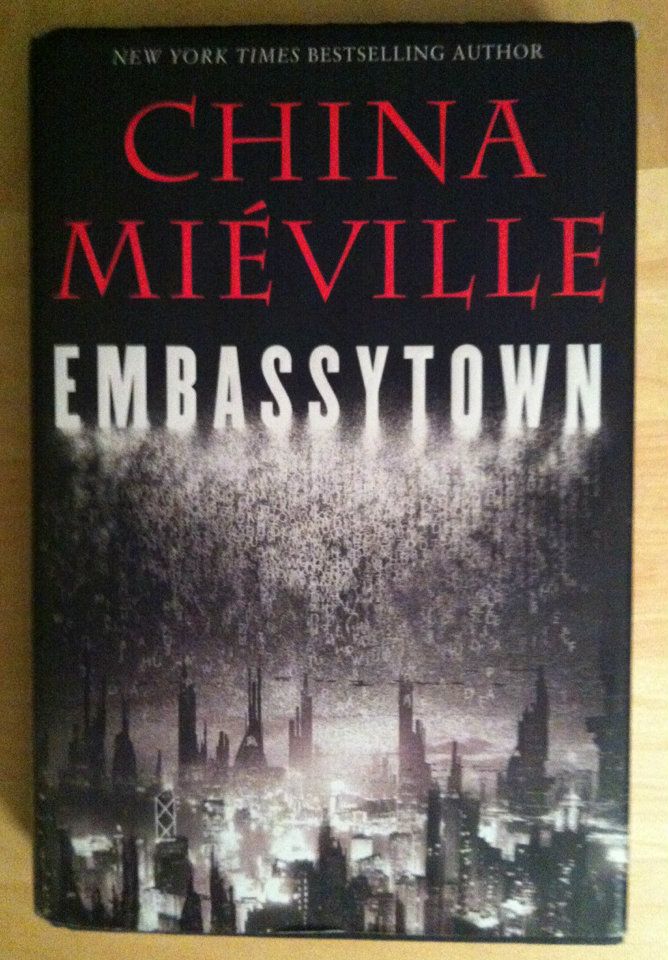
Embassytown is a Good Book.


Or why you should read Embassytown by China Mieville


Embassytown has a sort of poignancy that makes it a really beautiful and moving story. The book tells the story of Embassytown, a small human outpost colony/enclave on an inhospitable alien world populated by the tolerant Ariekei hosts, and the conflicts that arise between humans and their alien hosts based essentially on miscommunication. The story is told in the viewpoint of Avice Benner Cho, an Embassytown native who became a simile in the language of the Ariekei as a child, an “Immerser” interplanetary sailor, and finally a key observer and participant in the conflicts that unfold. Conflicts… that are deliberately referred to only vaguely.

Embassytown, though, is really a book about memes (in the idea that propagates through society sense instead of the cats that can haz things sense). Specifically it's a book about the intersection of memes and language and how language is a medium for propagating memes in both its capacity to convey ideas and in its capacity to inform identity. This whole discourse plays out through the novel’s collision of cultures, the Embassytowners and the Ariekei, and the way in which adaptations in language allow memetic cultural contamination between groups. As such Embassytown is also a commentary on Colonialism and the meeting of cultures in general. Mieville has some strong statements about the importance of communication and about the ways people on either side of a cultural collision react: specifically those that seek subjugation, those that seek to protect cultural purity and those that collaborate to share memes and create new understanding. This is a very smart book.

What might be under appreciated is that this is also a very exciting book. For being a book about memes and cultural contamination and language, it is a surprising page turner. The characters are well realized and sympathetic, the story is keenly focused, and the stakes of the story are dramatic and emotionally resonate. Mieville really makes you care about the Embassytown’s aliens and colonists and that, more than anything, makes for an engrossing read.

I would recommend Embassytown to most readers. It's very ambitious and smart, but also immensely readable and exciting. However, It can be a bit dense at times, and requires a certain amount of investment and engagement with the themes to work its magic. So if you like books that make you think and feel check it out. If you like to be spoon-fed your fiction.... I'd look elsewhere.

Wednesday, 8 August 2012

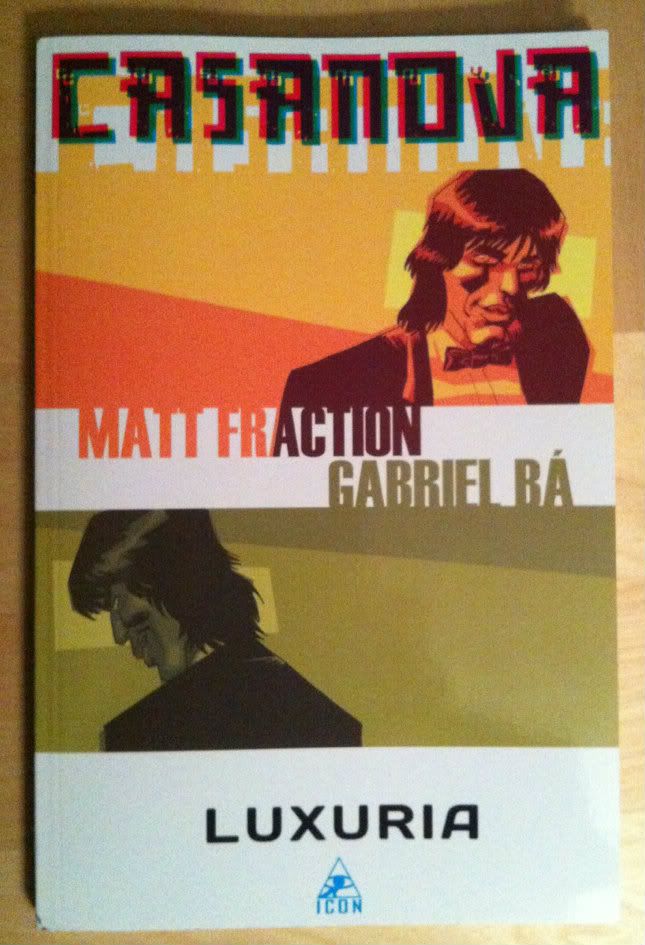
So I Read Casanova: Luxuria


A 250 word (or less) review of the first Casanova volume.
By Matt Fraction and Gabriel Ba, Icon Comics


Casanova luxuria, more than anything, reminds of a mango.1 Luxuria, like a mango, has this absolutely huge flavour that is simultaneously rich and sugary and tart. It's pulp, not in the comic sub-genre sense, but in the concentrated taste sense. Superficially, Casanova functions as a superhero spy comic... think James bond meets Steranko’s Nick Fury meets the Beatles experimenting with jazz in the '60s. It's as groovy, psychedelic, sexy and acronym laden as you'd expect (Because the genre demands it!). I say superficially a spy comic, though, because like a mango, Luxuria has a secretive hard kernel underneath all it's juicy flesh. I get the feeling the Fraction and Ba are sort of deconstructing comic books as a genre in Luxuria, but in a nice way that literally shouts "I love comic books!”. Maybe reconstruction would be a better word? Regardless, the book plays with genre tropes and expectations in way that is very self aware and slick. Luxuria, also manages to function on this intellectual level without sacrificing sexy good fun which makes it both stimulating and enjoyable to read. Fraction and Ba have written and drawn something daring and beautiful in luxuria and everyone should be reading this. Everyone.2,3


Word count: 201

1: Manila mango, to be specific. It's the best kind.
2: Procuring Luxuria actually proved to be somewhat difficult as my local comics shops (there are four conveniently close to where I work) barely stocked Casanova. Talking to the clerk at one of the smaller shops (mostly a used book store), I found out Casanova doesn't move well despite Fraction's visibility as a "Marvel Architect". This is a sin against comics.
3: Seriously, if we buy enough Casanova maybe Fraction will start doing more creator owned stuff and that can only be amazing.

Monday, 6 August 2012

Atoll Comics: Round 2

Or Changes to My Top-Ten Comics

Due to poverty and an urge to buy better comics, I have decided to be super-selective about which superhero comics I read. Harnessing the Awesome Power of Maths, I have determined that I can afford to read 10 ongoing titles. So I get to read 10, and only 10, titles published by either Marvel or DC as well as one trade paperback a week of my choosing.

A complication of this is that I am forced to drop an on-going title if I want to try reading a new on-going title, an act of very tough love. Being financially responsible is the worst.

I will be adding Hawkeye to my ten comic list and dropping The Flash.

Why after the cut:

Friday, 3 August 2012

Joe Abercrombie’s Fantasy Novels are Good Books.


Or why you should read The First Law Trilogy and semi-Sequels by Joe Abercrombie.

When I was in highschool (grades 8-12), I was pretty into the Fantasy genre of books. I had exhausted the supply of easy and moderately difficult to find Star Wars expanded universe novels and was looking for another epic and very geeky genre of books to read. I found that in Fantasy novels. Oddly enough, I think my first Fantasy Novels were a trilogy by Chris Claremont (of all people), which were imaginative, adventurous, and just that little bit sexier than a Star Wars novel. I later got me into some R A Salvatore, some Ed Greenwood, some Margaret Weis and Tracy Hickman. I loved the Dragon Crown War Cycle of novels by Michael A Stackpole (the author of my favourite Star Wars books), and still love them with the fires of nostalgia. I tackled The Lord of The Rings, and struggled through its (as I felt then) detached storytelling while still acknowledging its brilliance and influence. I read a lot of objectively terrible D&D tie-in novels in several universes.

I did not read Harry Potter.

Eventually though, my love affair with Fantasy waned. Part of it was the rapidly decreasing stock of unread fantasy novels at my library. Another part was that fantasy novels, particularly of the D&D spin-off ilk, had repetitive plots that were mostly just subtle variations of Tolkienian fiction which when it’s all you read gets pretty stale. The final nail in the coffin for me as a prolific fantasy reader was that most of the books I was reading were not particularly well written, and as I matured and gained other reading experiences, I started to want more sophisticated fiction. Of course, this also coincided with me rediscovering more literary and mature Science Fiction novels that wanted to discuss big ideas about society while still having awesome adventures and thrilling plots.

The net result was that I more or less stopped reading Fantasy novels, with a few remarkable exceptions: those few Fantasy novels that deliver well written, mature stories that, thematically, explore larger concepts.

Joe Abercrombie’s novels are just such exceptional Fantasy novels.

On The First Law Trilogy.
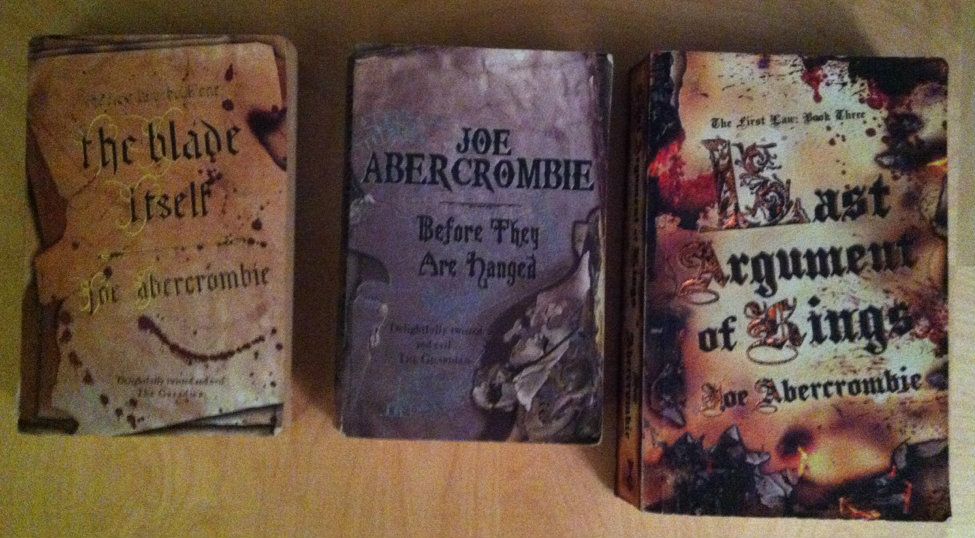


The First Law Trilogy, Abercrombie's debut novels, are essentially his take on Tolkienesque epic fantasy, with a genre appropriate amount of swords, sorcery and journeying. The story follows a thoughtful barbarian with a bloody past, Logen Ninefingers, a self centered nobleman fop, Jezal dan Luthar, and a crippled torturer, Sand dan Glotka as they, and their world, are embroiled in a war started centuries before by a schism between the Order of the Magi and the legendary Master Maker. So in a broad strokes way epically epic fantasy.

Except it's kind of not.

The key difference between The First Law Trilogy and other post-Tolkien epic fantasy, besides it's superbly crafted prose and it's fantastically vibrant characters, is that these novels add a layer of moral ambiguity to the Tolkien equation. Where most epic fantasy tends to boil down to good-verses-evil with clear, black-and-white distinctions, Abercrombie's novels exist in a much more murky and complex moral structure: no faction or character is completely good and no faction or character is completely wicked and where even the worst atrocities can be rationalized. This adds a layer of maturity to the story that is often lacking in Fantasy novels and makes for some truly shocking and thought provoking moments.

The first law trilogy also differentiates itself by its deconstructionist approach to the genre. Abercrombie is fully aware of the hero’s journey narrative structure and while he superficially crafts his novels around it, he gleefully and frequently subverts it. Beyond being a great way to generate plot twists, Abercrombie’s subversive breaks from genre conventions outline what makes Fantasy tick and really emphasizes how much a Fantasy audience relies on these genre conventions to inform their understanding of the narrative. Or at least to predict the shape of the story. While the moral ambiguity makes for a more mature and nuanced story, this deconstructionist aspect of the story adds an element of genre analysis to the Trilogy: what is Fantasy and how do we define it as a reader. It’s smart stuff.

Of course, when trying to convince friends to give The First Law Trilogy a try, saying things like “Fantasy deconstruction” and “challenging conventions by introducing immorality” don’t typically get people super excited. Instead I point out how funny these books are. Joe Abercrombie, despite the aforementioned academic aspects of his books, is a man who doesn’t take himself too seriously. His books are fully willing to acknowledge their internal absurdity and to basically satirize fantasy. Abercrombie is also adept at throwing a lot of jokes into his work, although, keeping with the morally challenging nature of the novels, a lot of the jokes approach gallows humour. Very funny, pretty dark. Still, one of the more funny series of books I’ve read, and easily the funniest Epic Fantasy series.

In a nutshell I’d say The First Law Trilogy is a mature, intelligent, and humourous take on the Epic Fantasy genre that manages to tell an exciting story with amazingly realized characters.

Okay, I want to discuss his other novels, but this is already kind of long… So I’ll continue it after the cut.
Wednesday, 1 August 2012

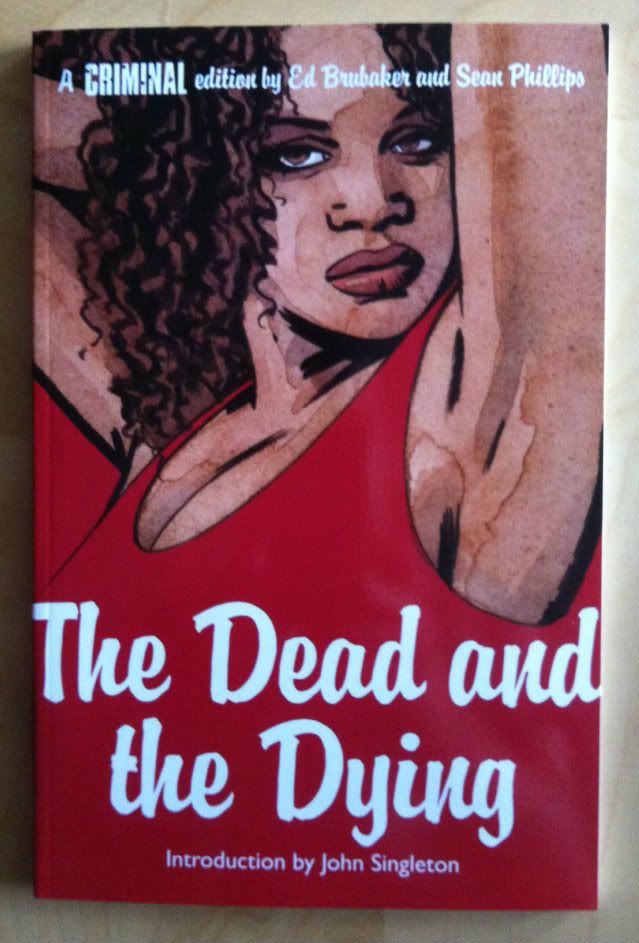
So I read The Dead and the Dying

A 250 word (or less) review of the third Criminal volume.
By Ed Brubaker and Sean Phillips, Icon Comics


The Dead and the Dying continues the strong collaboration between Brubaker and Phillips as seen in earlier criminal volumes. This time the story they create is set in the 1970s and is constructed around the backstories of Gnarly, the undertow bar proprietor; Teeg Lawless, father of Tracy Lawless; and Danica Briggs, a black woman with a troubled past. Actually, the way the story is told is pretty unique: The Dead and the Dying is really three separate character studies that contain within them the plot of the central story. It's a nifty device. I’m fascinated by the way this approach makes plot secondary to character, and the way that the larger story (which in a typical comic would be the only story) is just the collateral byproduct of the individual character’s stories. It’s kind of an interesting thing to consider in regard to how “real life” or historical narratives are created.1 This issue of Criminal maintains the noir trappings of the criminal series but with a distinct Blaxploitation and Grindhouse flavour (which is appropriate given the subject matter and the time period the story is set in). The writing and art as always are spot on and create this complete world to visit. Like all of the other Criminal books, I'd highly recommend The Dead and the Dying to any comics reader. Incidentally, part three of this book is the first creator owned comic I ever bought. Nostalgia!

Word count: 238

1: World War II as my generation is, perhaps, the aggregate of the byproduct from the individual stories of millions of people. 


Previously:
So I Read Coward
So I Read Lawless