Or why you should read The Severed Streets
by Paul Cornell
The Severed Streets is a direct sequel to London Falling by Paul Cornell (For a *SPOILER* free review go here). In London Falling an unlikely collection of London Metropolitan detectives are drawn into a supernatural murder spree when the target of their undercover operation is shockingly murdered. Detectives James Quill, Kevin Sefton, and Tony Costain, and their civilian analyst Lisa Ross, gain supernatural sight when they accidentally expose themselves to a powerful totem. Gifted with The Sight they find themselves in communication with a hidden and horrifying secret London. The coppers, using their new sensitivity, to find and destroy the murderous witch Mora Losley saving London children and footballers from future deaths. Except Losley wasn't acting alone, and the powerful Smiling Man has plans for London, plans only Quill and his team can hope to stop.
In The Severed Streets, London is on fire. Political dissidents and rioters run amok in a summer of unrest, burning the city and pressing the London metropolitan police to the breaking point. Between Toff masked protestors, looters, and political mismanagement, the beleaguered Met is even contemplating a policemen's strike. And then Michael Spatley MP, the chief secretary to the Treasury, a very high ranking member of Her Majesty's government is murdered in a manner that can only be described as "impossible". Quill and his team of supernaturally sensitive detectives are sent on the case which leads them on a hunt for an invisible serial killer able to strike the most powerful men in the country anywhere. A case that will force the team to travel further into London's supernatural underworld and which will place each of them in tremendous physical and existential danger.
The Severed Streets is a cracking good detective novel. The mystery is pleasantly convoluted and the journey to solving it is a smart exercise in deduction and dream-logic. With some vibrant, charismatically flawed coppers, lovely London-English prose, and some properly exciting action sequences The Severed Streets was a really enjoyable page turner of a novel. As a detective story with supernatural horror elements, I thought The Severed Streets was a really enjoyable novel.
As a pure horror novel though, I felt like The Severed Streets wasn't as good as its predecessor London Falling. The coppers of London Falling were completely out of their depth and overwhelmed by forces with alien motivations and irresistible power; the universe was dangerously, ferociously inexplicable and the coppers seemed powerless in the face of it. Add in a few moments of truly mind-fucking dread (one moment in particular still gives me the chills) and London Falling is one completely horrifying book. The Severed Streets features a team of coppers who have more experience and are pursuing a criminal with much more mundane goals. The supernatural felt less mysterious and big and scary and more quirky, whimsical, and creepy. Less Lovecraft and more Gaiman. I found Severed Streets a far less dreadful a book and therefore a less successful work of horror.
I don't think this is necessarily a bad thing. It makes sense for the coppers of The Severed Streets to be more experienced and knowledgeable about the unseen world and for them to be more active participants and less reactive victims in this novel. And this growth in competence makes the police procedural elements work better: it is more compelling to read about detectives who can directly engage with their adversary than only react to it in fear. Besides, The Severed Streets still delivers some very disturbing moments, the way the novel depicts the cost of magic, for instance, is chilling. I just found The Severed Streets more interesting as a law enforcement novel with supernatural elements than as a horror novel starring police, which is a different experience than London Falling.
I would recommend this book to anyone looking for something to read. It is a really well written mixture of diverse genre elements that I think makes The Severed Streets an accessible novel to a wide audience. I think if you haven't read a Paul Cornell novel than you should read London Falling first, since The Severed Streets is a direct sequel and because I found London Falling the more original and scary story. The Severed Streets is still a properly exciting and engrossing read, and is the better detective story so it is still worth checking out on its own. Honestly, I think you should find time in your reading schedule for both these novels, and if you've read London Falling and enjoyed it, you absolutely need to check out The Severed Streets too.
Post by Michael Bround
Previously:
London Falling
Showing posts with label Paul Cornell. Show all posts
Tuesday, 17 March 2015
Monday, 6 January 2014
Novels Year In Review 2013
Or a look at the novels I've read in 2013 and some
I went into the year with goal of reading a book a week and hitting the very DC comics number of 52 novels for the year. I managed to read 56 novels in 2014. (The trick, if you are curious, is to work in a place surrounded by very expensive housing that is really inconvenient to get to and reading on the lengthy metro/bus commute.)
The books in a particular order are:
Mind of My Mind by Octavia E Butler
Clay's Arc by Octavia E Butler
Patternmaster by Octavia E Butler
The Amazing Adventures of Kavalier and Clay by Michael Chabon
The Yiddish Policemen's Union by Michael Chabon
London Falling by Paul Cornell
The Rapture of the Nerds by Cory Doctorow and Charles Stross
Incandescence by Greg Egan
Gun Machine by Warren Ellis
The Ocean at the End of the Lane by Neil Gaiman
You by Austin by Grossman
The Moon is a Harsh Mistress by Robert A Heinlein
Brave New World by Aldous Huxley
The Dispossessed by Ursula K Le Guin
The Rook by Bryan O'Malley
1984 by George Orwell
Gravity's Rainbow by Thomas Pynchon
The Quantum Thief by Hannu Rajaniemi
The Fractal Prince by Hannu Rajaniemi
Finder by Greg Rucka
Smoker by Greg Rucka
Shooting at Midnight by Greg Rucka
A Fistful of Rain by Greg Rucka
Alpha by Greg Rucka
Mindscan by Robert J Sawyer
Red Planet Blues by Robert J Sawyer
The Dark Glory War by Michael A Stackpole
Fortress Draconis by Michael A Stackpole
When Dragons Rage by Michael A Stackpole
The Grand Crusade by Michael A Stackpole
Snow Crash by Neal Stephenson
The Diamond Age by Neal Stephenson
Accelerando by Charles Stross
Glasshouse by Charles Stross
The Family Trade by Charles Stross
The Hidden Family by Charles Stross
The Clan Corporate by Charles Stross
The Merchant's War by Charles Stross
The Revolution Business by Charles Stross
The Trade of Queens by Charles Stross
Saturn's Children by Charles Stross
Neptune's Brood by Charles Stross
The Sirens of Titan by Kurt Vonnegut
Cat's Cradle by Kurt Vonnegut
Slaughter House Five by Kurt Vonnegut
Breakfast of Champions by Kurt Vonnegut
We by Yevgeny Zamyatin
In my comics year end post I take a survey of genre to point out that Mainstream comics are overwhelmingly comprised of one genre which is weird and reflective of some pretty bizarre market forces/publishing decisions. So I thought I would put together a genre distribution of novels, which have a much broader range of genre (books can be literally anything!). And this is what I got:
So... it seems that like Mainstream comics I am all about the one genre because I am a fantastic nerd. (Maybe my issues with Mainstream comics being overwhelmingly Superheroic is just based on the fact I want more Science Fiction?)
So I thought I would do the normal New Years thing and actually make some sweeping recommendations for novels, since my reading habits are basically powered by suggestions.
Before I get to my recommendations, I feel like pointing out that all of the books I read this year were pretty great and the experience of finding the perfect book is super personal. If I knew you, dear internet reader, I would recommend a specific book tailored to your interests. But since I have no idea who you are or what you like, I'm going to suggest some books that I think could be enjoyed by basically anyone.
If you like Science Fiction
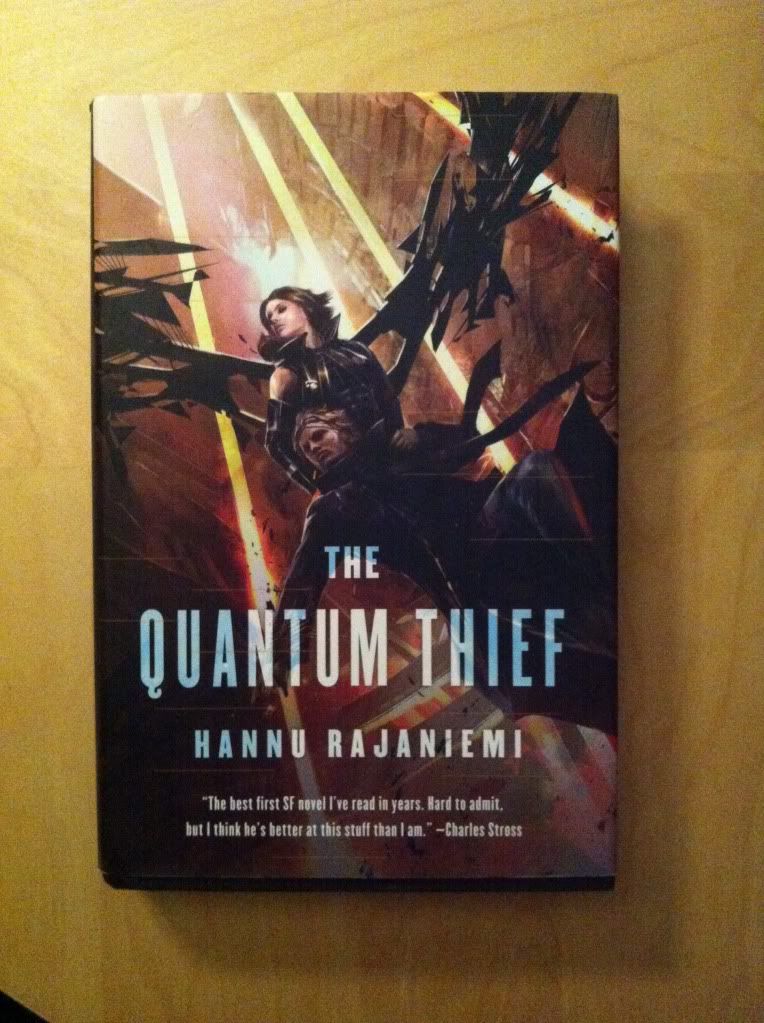
I would recommend The Quantum Thief by Hannu Rajaniemi. This is a book I saw on a bookshelf a bunch of times but, due to a cover and title that could go either way and dust cover copy that sounded pretty schlocky, I gave it a pass. But the thing is, The Quantum Thief is kind of perfect: it's whip crack smart, beautifully written, and an elaborate jigsaw of wildly different literary elements all perfectly balanced in a story about a gentleman thief in a post singularity future. If you are into Science Fiction you really ought to try this book. And also don't judge books by their cover and copy....
(Honestly, if you are into Sci-fi, Accelerando, a modern classic, or The Accord a very, very underrated novel would also be ace choices. They were rereads this year, and The Quantum Thief was just such a fantastic surprise.)
If you like Fantasy
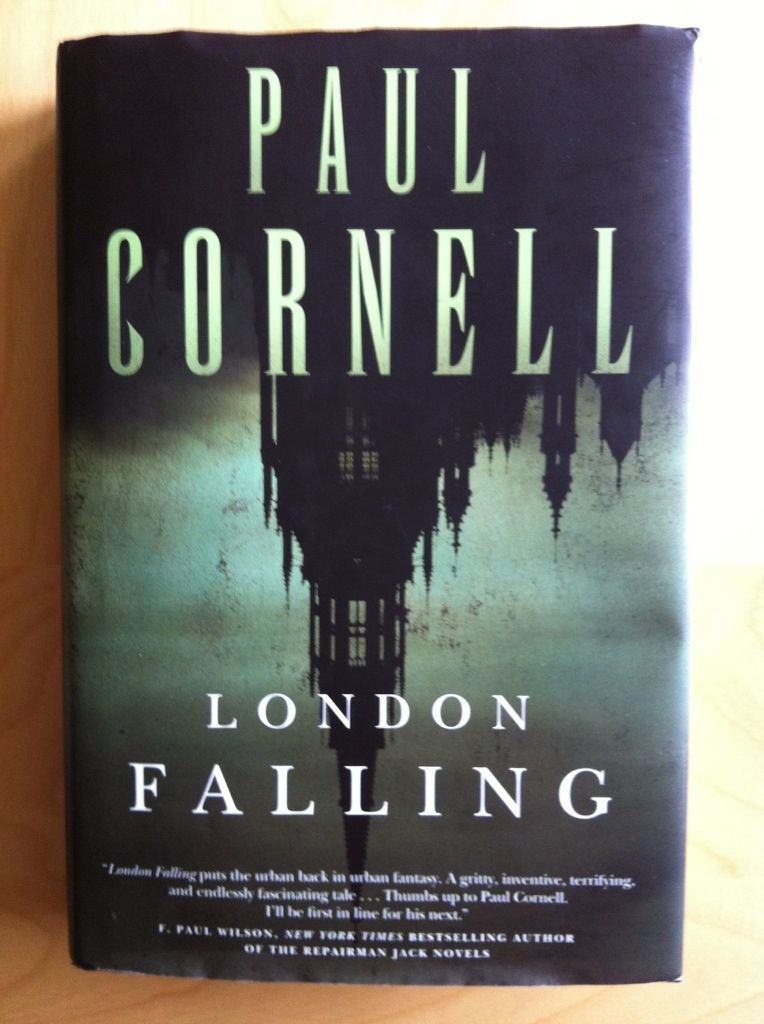
I would recommend London Falling by Paul Cornell. Fantasy is a genre that often leaves me a little cold: it can frequently be very formulaic and Tolkien derivative, too deeply, deeply creative, or kind of silly and unconvincing. London Falling is original, mature, and brilliantly, horrifically convincing. London Falling is about a misfit group of Police tasked with solving a horrific murder which brings them into contact with the terrifying shadow world of Supernatural London. It's fantasy that I think diehard fans of the genre will like but should also appeal lapsed Fantasy fans looking for something more substantiative.
If you like Mystery/Suspense
I would recommend Gun Machine by Warren Ellis. In Gunmachine a New York detective stumbles into a room full of guns, infamous guns, each tied to an unsolved murder launching a hunt for New York's most elusive serial killer. It's a novel that is chilling, properly tense, inappropriately hilarious, and written in a beautifully evocative style. It's a satisfyingly intricate read that is still quite accessible and is maybe the book with the most universal appeal that I'm recommending here. Check it out.
If you like Superhero comics
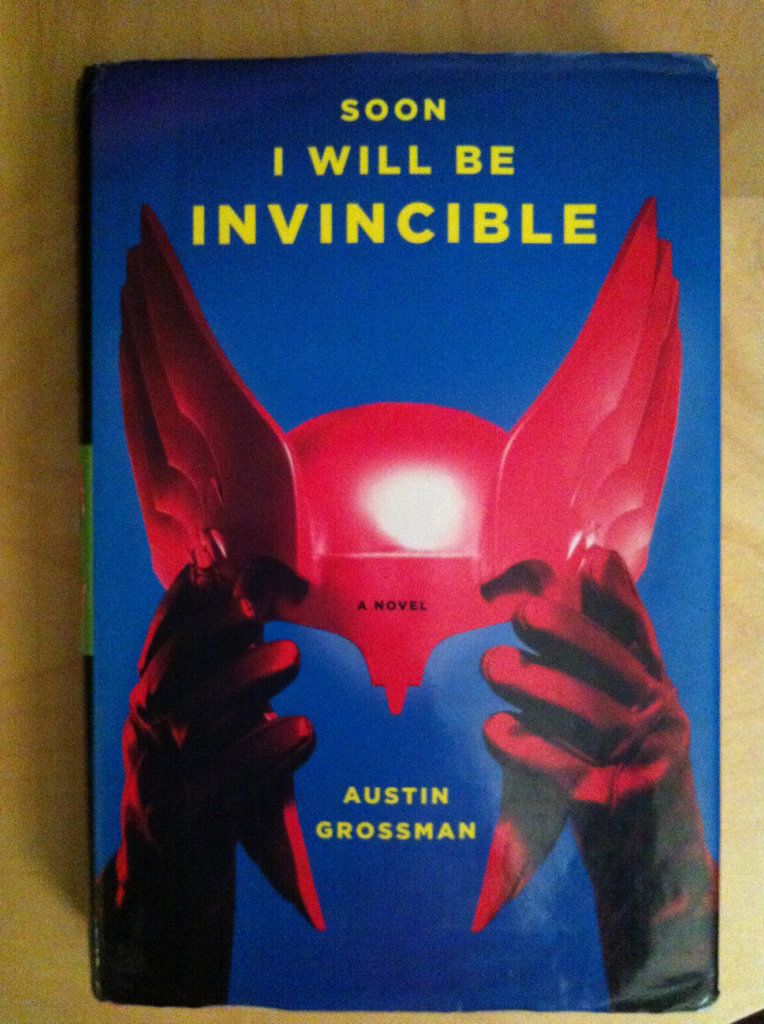
I would recommend Soon I Will Be Invincible by Austin Grossman. Although I didn't technically read this book during 2013 (I did review it), it is pretty much the perfect book for comics fans. It tells the story of Doctor Impossible an evil supergenius that will take over the world, for real this time, and Fatale an outsider cyborg who suddenly finds herself among Earth's mightiest heroes. It's a super fun story that works both as a grand sendup of the Superhero genre and a loving, detailed analysis of how the genre ticks. It's an essential novel for any Superhero fan and also, in my experience, a book that even non-geeks can really enjoy.
If you like Thrillers
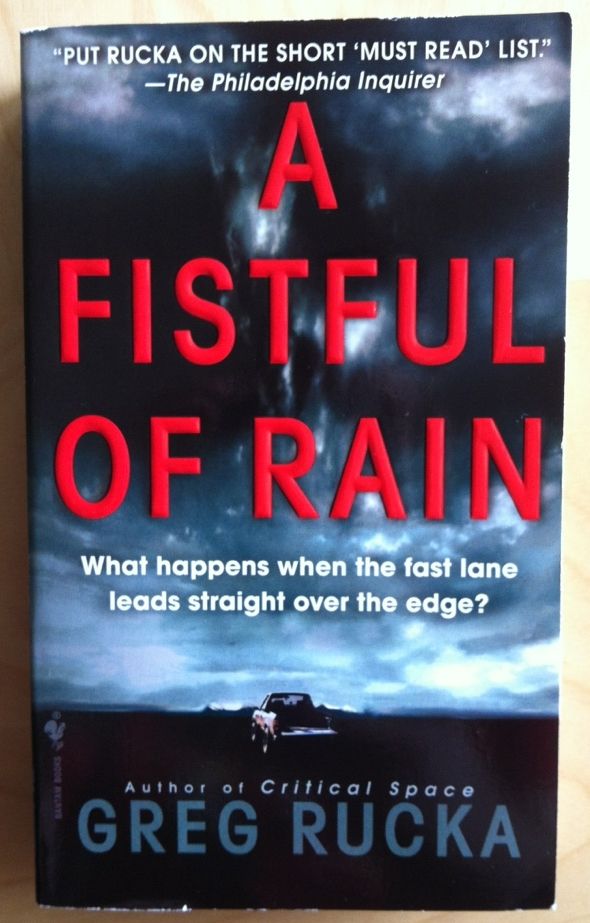
I would recommend A Fistful of Rain by Greg Rucka. Thrillers are another genre I have had my ups and downs with, what with the might-makes-right attitudes and frequently formulaic plots. If you are a reader who likes nuance and quality writing than Greg Rucka is the Thriller writer for you. The man is a craftsman, building efficient, exciting stories that are clockwork machines of action, suspense, and intellectually mature stories. A Fistful of Rain is, I think, my favourite of the many Rucka novels I've read this year. It tells the story of Mim Bracca, the lead guitarist of the rockband Tailhook, as she finds her life crumbling as her alcoholism and broken past converge with a blackmailer's plot to ruin her. As Bracca hits rock bottom, she will do anything to protect what's left of her life. It's a properly tense novel with a great mystery and a really intimate, really brutal character study at the story's core. A Fistful of Rain, beyond being a good book is a really surprising and non-formulaic approach to a Thriller. That said, pick any Rucka novel and you will not be disappointed.
So I thought I would do the normal New Years thing and actually make some sweeping recommendations for novels, since my reading habits are basically powered by suggestions.
Before I get to my recommendations, I feel like pointing out that all of the books I read this year were pretty great and the experience of finding the perfect book is super personal. If I knew you, dear internet reader, I would recommend a specific book tailored to your interests. But since I have no idea who you are or what you like, I'm going to suggest some books that I think could be enjoyed by basically anyone.
If you like Science Fiction
I would recommend The Quantum Thief by Hannu Rajaniemi. This is a book I saw on a bookshelf a bunch of times but, due to a cover and title that could go either way and dust cover copy that sounded pretty schlocky, I gave it a pass. But the thing is, The Quantum Thief is kind of perfect: it's whip crack smart, beautifully written, and an elaborate jigsaw of wildly different literary elements all perfectly balanced in a story about a gentleman thief in a post singularity future. If you are into Science Fiction you really ought to try this book. And also don't judge books by their cover and copy....
(Honestly, if you are into Sci-fi, Accelerando, a modern classic, or The Accord a very, very underrated novel would also be ace choices. They were rereads this year, and The Quantum Thief was just such a fantastic surprise.)
If you like Fantasy
I would recommend London Falling by Paul Cornell. Fantasy is a genre that often leaves me a little cold: it can frequently be very formulaic and Tolkien derivative, too deeply, deeply creative, or kind of silly and unconvincing. London Falling is original, mature, and brilliantly, horrifically convincing. London Falling is about a misfit group of Police tasked with solving a horrific murder which brings them into contact with the terrifying shadow world of Supernatural London. It's fantasy that I think diehard fans of the genre will like but should also appeal lapsed Fantasy fans looking for something more substantiative.
If you like Mystery/Suspense
I would recommend Gun Machine by Warren Ellis. In Gunmachine a New York detective stumbles into a room full of guns, infamous guns, each tied to an unsolved murder launching a hunt for New York's most elusive serial killer. It's a novel that is chilling, properly tense, inappropriately hilarious, and written in a beautifully evocative style. It's a satisfyingly intricate read that is still quite accessible and is maybe the book with the most universal appeal that I'm recommending here. Check it out.
If you like Superhero comics
I would recommend Soon I Will Be Invincible by Austin Grossman. Although I didn't technically read this book during 2013 (I did review it), it is pretty much the perfect book for comics fans. It tells the story of Doctor Impossible an evil supergenius that will take over the world, for real this time, and Fatale an outsider cyborg who suddenly finds herself among Earth's mightiest heroes. It's a super fun story that works both as a grand sendup of the Superhero genre and a loving, detailed analysis of how the genre ticks. It's an essential novel for any Superhero fan and also, in my experience, a book that even non-geeks can really enjoy.
If you like Thrillers
I would recommend A Fistful of Rain by Greg Rucka. Thrillers are another genre I have had my ups and downs with, what with the might-makes-right attitudes and frequently formulaic plots. If you are a reader who likes nuance and quality writing than Greg Rucka is the Thriller writer for you. The man is a craftsman, building efficient, exciting stories that are clockwork machines of action, suspense, and intellectually mature stories. A Fistful of Rain is, I think, my favourite of the many Rucka novels I've read this year. It tells the story of Mim Bracca, the lead guitarist of the rockband Tailhook, as she finds her life crumbling as her alcoholism and broken past converge with a blackmailer's plot to ruin her. As Bracca hits rock bottom, she will do anything to protect what's left of her life. It's a properly tense novel with a great mystery and a really intimate, really brutal character study at the story's core. A Fistful of Rain, beyond being a good book is a really surprising and non-formulaic approach to a Thriller. That said, pick any Rucka novel and you will not be disappointed.
Or if you just like books
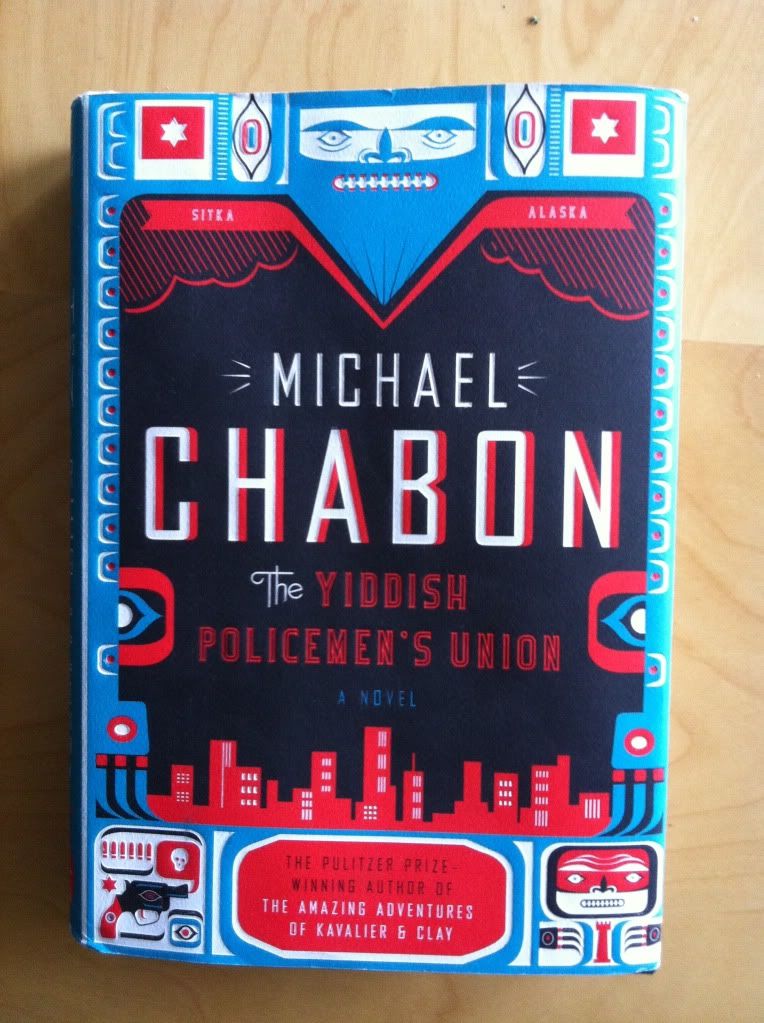
I would recommend The Yiddish Policemen's Union by Michael Chabon. The Yiddish Policemen's Union is a book with a lot of literary elements: it's a hardboiled detective story set in an alternate universe where the Jews of Europe were evacuated to Alaska told in a voice that is equal parts pulp and grandfatherly excess. It's a book that is at once exciting genre fun and beautifully constructed literary fiction. The Yiddish Policemen's Union is everything I love about stories. The Yiddish Policemen's Union has down-on-his-luck detective Meyer Landsman becoming involved in the murder investigation of a dead transient with a chess interest that will uncover a conspiracy with consequences for all of the Alaskan Jews. It's a great book that I would recommend to anyone.
So there they are, the novels I've read in 2013 and my recommendations for your 2014.
Have any recommendations for me?
I would recommend The Yiddish Policemen's Union by Michael Chabon. The Yiddish Policemen's Union is a book with a lot of literary elements: it's a hardboiled detective story set in an alternate universe where the Jews of Europe were evacuated to Alaska told in a voice that is equal parts pulp and grandfatherly excess. It's a book that is at once exciting genre fun and beautifully constructed literary fiction. The Yiddish Policemen's Union is everything I love about stories. The Yiddish Policemen's Union has down-on-his-luck detective Meyer Landsman becoming involved in the murder investigation of a dead transient with a chess interest that will uncover a conspiracy with consequences for all of the Alaskan Jews. It's a great book that I would recommend to anyone.
So there they are, the novels I've read in 2013 and my recommendations for your 2014.
Have any recommendations for me?
Wednesday, 18 December 2013
So I Read Saucer Country: The Reticulan Candidate
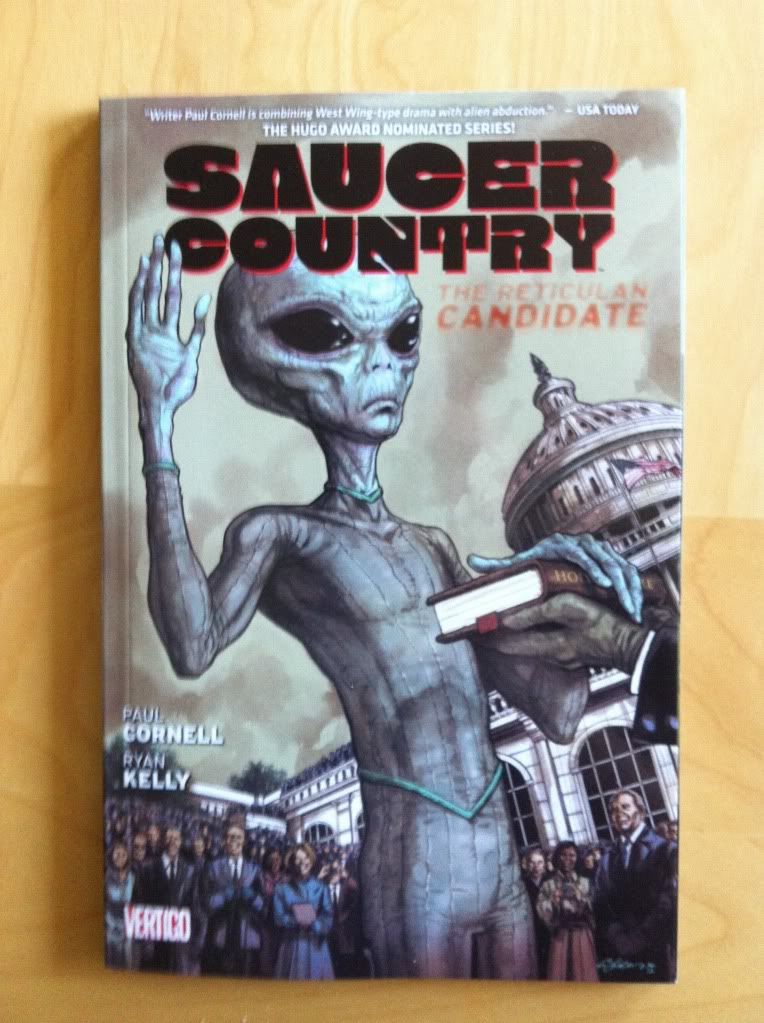
A 250 word (or less) review of Saucer Country: Volume 2
By Paul Cornell, Ryan Kelly, David Lapham, Mirko Colak, and Andrea Mutti; Vertigo Comics
This review will contain mild *SPOILERS*. For a *SPOILER* free review of Saucer Country please go here.
By Paul Cornell, Ryan Kelly, David Lapham, Mirko Colak, and Andrea Mutti; Vertigo Comics
This review will contain mild *SPOILERS*. For a *SPOILER* free review of Saucer Country please go here.
Saucer
Country is a comic series designed to prey specifically on my childhood fear of
extraterrestrials, and it is pretty great. The Series follows Arcadia Alvarado,
a democratic nominee for President of The United States, as she searches for
the truth behind her alien abduction experiences. The Reticulan Candidate picks
up well into the election cycle, with Alvarado and her supporters running the
gauntlet of debates and primaries and campaigning in the public spotlight.
Against this scrutiny the group is also continuing their search to uncover the
truth about Alvarado's abduction and the broader truth about extraterrestrial
visitors to Earth. The Reticulan Candidate adds some really compelling layers
of complexity to an already very elaborate conspiracy and smacks us with some
pretty great revelations and surprises about the ongoing story. It’s a
fantastic second chapter. One of the greatest strengths of The Reticulan
Candidate, and Saucer Country in general, is how well it manipulates its audience’s
relationship with conspiracy. The comic is very aware that we are
simultaneously skeptical of the most fantastic elements of the comic and demand
rational explanations, while also deeply invested in the existence and story of
the supernatural elements. The way The Reticulan Candidate walks the tight rope
between disappointing us with mundane reality or disappointing us by embracing
pure fantasy is brilliant. And in doing so, the comic really becomes this
exploration of what conspiracy is, and how it preys on the belief of its
faithful to exist. The Reticulan Candidate is great comics.
Word count: 250
Friday, 31 May 2013
London Falling Is A Good Book
Or why you should read London Falling by Paul Cornell
London Falling begins with the capture of Rob Toshack, a preternaturally successful London crime boss. However, rather than being a triumph for the Police whose longterm operation nicked the druglord, things go horribly and bizarrely awry as the hidden powers behind Toshack enact a terrible revenge. A terrible revenge that sees Detective Inspecter James Quill, a Copper of the old school; undercover officers Tony Costain, a man comfortable living beyond the law, and Kevin Sefton, an alienated man who feels split between two worlds; and civilian analyst Lisa Ross, a woman with a zealot's drive and a secret; confronted with the occult underbelly of London and gifted with a terrible Sight. Together these Police must investigate the uncanny and apprehend the ancient power behind Toshack's success.
Functionally, London Falling is a genre bending blend of Detective story, Urban Fantasy, and Horror. It is a beautifully written novel with vivid, complicated characters, a satisfying mystery, and some really clever and creative takes on the included genres. London Falling also very much makes good on the promises of its various genres by being properly suspenseful, engrossingly mysterious, queasingly creepy, and confoundingly mad. It is a very complete and superbly crafted book.
Incidentally, it also has one of the most satisfying and effective sentences I have ever read in a novel. I mean, holy shit, Paul Cornell, you magnificent bastard. You will know it when you see it.
But, all that said, the real magic of London Falling is its conviction in the uncanny. I find the quality of Urban Fantasy and Supernatural Horror experiences is largely tied to how well the author negotiates the strange to sell the magic of the story. Done well, things seem profound and uncanny and massive and tangibly intangible and like, well, magic. But, steer too far into the uncanny, or be injudiciously creative, and things can seem more silly than compelling. It's... the difference between the magic of Neil Gaiman's American Gods and Anansi Boys and the less-than-it-could-have-been China Mieville novel Kraken. London Falling pulls off the uncanny brilliantly and with utter sincerity.
London Falling sells the supernatural of its story by constructing a truly remarkable system of dream logic. Every reality defying thing in the novel, no matter how creative, feels valid because of the elaborate set of rules which contextualize them. Rules, of course, that use a completely demented set of values and are presented with the ferver and faith of the most unmedicated schizophrenic. Which, in and of itself, carries a frightening, compelling, instability: London Calling is belief and madness in equal measure. And all of this uncanny is brilliantly contrasted with the logical, lawful, and familiar world of the Police Procedural story elements which grounds, contextualizes, and emphasizes all of the supernatural. As a result, London Falling completely sells its uncanny elements, and at the end of the day this is the lifeblood that truly animates the suspense, the mystery, the horror, and the madness of the story. It's really, really well done.
So, I think it's safe to say I'd recommend London Falling to just about anyone. It's a bit challenging at times, particularly the most daft and spectacular blocks of dream logic, and takes a bit of patience and effort up front (especially sussing some of the English-English if you are, like me, a colonial), but the investment is easily worth it. I'd also like to especially recommend this book to any Science Graduate Student studying for their Comprehenssive/Qualifying Exam, because the juxtaposition of Cornell's madness and the grinding formal logic of Scientific literature is a proper mind fuck. So yeah, absolutely go out and try London Falling.
(Fair warning though, the novel itself might be a magical artifact, as my copy ate my Berlin-transit-stub-turned-bookmark, did not yield it back despite intensive searching, and then regurgitated it to me most of a week later from a region of book I had already read. It was uncanny.)
London Falling begins with the capture of Rob Toshack, a preternaturally successful London crime boss. However, rather than being a triumph for the Police whose longterm operation nicked the druglord, things go horribly and bizarrely awry as the hidden powers behind Toshack enact a terrible revenge. A terrible revenge that sees Detective Inspecter James Quill, a Copper of the old school; undercover officers Tony Costain, a man comfortable living beyond the law, and Kevin Sefton, an alienated man who feels split between two worlds; and civilian analyst Lisa Ross, a woman with a zealot's drive and a secret; confronted with the occult underbelly of London and gifted with a terrible Sight. Together these Police must investigate the uncanny and apprehend the ancient power behind Toshack's success.
Functionally, London Falling is a genre bending blend of Detective story, Urban Fantasy, and Horror. It is a beautifully written novel with vivid, complicated characters, a satisfying mystery, and some really clever and creative takes on the included genres. London Falling also very much makes good on the promises of its various genres by being properly suspenseful, engrossingly mysterious, queasingly creepy, and confoundingly mad. It is a very complete and superbly crafted book.
Incidentally, it also has one of the most satisfying and effective sentences I have ever read in a novel. I mean, holy shit, Paul Cornell, you magnificent bastard. You will know it when you see it.
But, all that said, the real magic of London Falling is its conviction in the uncanny. I find the quality of Urban Fantasy and Supernatural Horror experiences is largely tied to how well the author negotiates the strange to sell the magic of the story. Done well, things seem profound and uncanny and massive and tangibly intangible and like, well, magic. But, steer too far into the uncanny, or be injudiciously creative, and things can seem more silly than compelling. It's... the difference between the magic of Neil Gaiman's American Gods and Anansi Boys and the less-than-it-could-have-been China Mieville novel Kraken. London Falling pulls off the uncanny brilliantly and with utter sincerity.
London Falling sells the supernatural of its story by constructing a truly remarkable system of dream logic. Every reality defying thing in the novel, no matter how creative, feels valid because of the elaborate set of rules which contextualize them. Rules, of course, that use a completely demented set of values and are presented with the ferver and faith of the most unmedicated schizophrenic. Which, in and of itself, carries a frightening, compelling, instability: London Calling is belief and madness in equal measure. And all of this uncanny is brilliantly contrasted with the logical, lawful, and familiar world of the Police Procedural story elements which grounds, contextualizes, and emphasizes all of the supernatural. As a result, London Falling completely sells its uncanny elements, and at the end of the day this is the lifeblood that truly animates the suspense, the mystery, the horror, and the madness of the story. It's really, really well done.
So, I think it's safe to say I'd recommend London Falling to just about anyone. It's a bit challenging at times, particularly the most daft and spectacular blocks of dream logic, and takes a bit of patience and effort up front (especially sussing some of the English-English if you are, like me, a colonial), but the investment is easily worth it. I'd also like to especially recommend this book to any Science Graduate Student studying for their Comprehenssive/Qualifying Exam, because the juxtaposition of Cornell's madness and the grinding formal logic of Scientific literature is a proper mind fuck. So yeah, absolutely go out and try London Falling.
(Fair warning though, the novel itself might be a magical artifact, as my copy ate my Berlin-transit-stub-turned-bookmark, did not yield it back despite intensive searching, and then regurgitated it to me most of a week later from a region of book I had already read. It was uncanny.)
Wednesday, 8 May 2013
So I Read Saucer Country: Run
A 250 word (or less) review of Saucer Country Volume
1
By Paul Cornell, Ryan Kelly, Jimmy Braxton, and Goran Sudzuka, Vertigo Comics
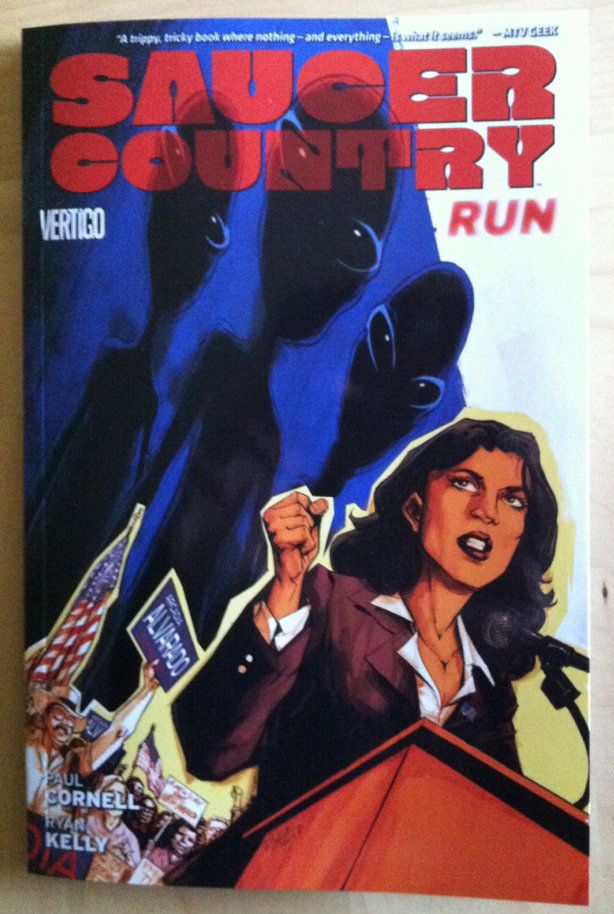
My biggest childhood fear was aliens visiting earth and abducting people. I used to lay awake in bed staring out the window imagining creative and worrying providence for all the moving lights in the sky. ET scared the shit out of me and I can't watch that creepy little space monster to this day. So reading Saucer Country was a fraught decision for me. Saucer Country is a comic exploring the mythology/culture/phenomenon of alien abductions. This exploration is built into a narrative about Arcadia Alvarado, the Governer of New Mexico who has an alien abduction experience just before announcing her candidacy for President of the United States. To determine the truth of what happened to her she recruits the assistance of her Chief of Staff, her dubious campaign manager, a UFO researcher of questionable sanity, and her fellow abductee and ex-husband. Saucer Country is a starkly mature, informative, exciting and creepy comic that maintains its central mystery with a perfect balance of belief, skepticism, and ambiguity. It's a solidly good book. I was actually somewhat surprised by it; Cornell's superhero work usually has a trademark sense of fun and goofiness about it that really isn't present in Saucer Country's mature and dark landscape. I was also impressed by the strength of Kelly's pencils: the acting and storytelling chops on display in this comic are incredible. Saucer Country is really a fantastically crafted comic. The adult me enjoyed the comic immensely and the 12-year-old boy in me was terrified by it.
Word count: 250
Subscribe to:
Posts (Atom)