Or a look at nuance, restraint, and sexiness in Casanova: Acedia Vol. 1
by Matt Fraction, Fabio Moon, Michael Chabon, Gabriel Ba, Dustin Harbin, and Cris Peter; Image Comics
Casanova is a sexy comic. And... I wrote 2000+ words of a thesis draft today and marked lab reports, so my ability to write a cogent preamble on demand is kind of lacking. So, uh, without further ado, there is a panel in Casanova: Acedia Vol. 1 that I think really highlights why I find Casanova such a clever, sexy comic.
There will be mild *SPOILERS* for Casanova: Acedia pt. 1
This page, actually really just the bottom panel on this page, absolutely encapsulates why I find Casanova such a fundamentally sexy comic. The key of which is, I think, the inherent restraint of the utilized perspective: rather than show a nude, or semi-nude woman in a more conventionally provocative pose, this panel leaves most of the woman out of view, giving us a tantalizing peek and allowing our imaginations to impart a potentially infinite amount of seductiveness just out of view. Another great aspect of this panel is that it puts the focus on the woman's high heal shoes. Now, I recognize that heels are somewhat problematic, but when worn with agency and intention, I think they are pretty sexy. I'm kind of interested in fashion as like, a form of communication lately (semaphore you can wear!) and high heels can send a message that the person wearing them wants to feel and look sexy. Which given the broader context of the above scene (and some earlier flirtation) definitely communicates the woman's sexy intentions in this scene. The other thing that makes the heels shot so great is the way the woman dangles her toes into the pool. This gesture is just... perfect: dipping expensive pumps like that in water would almost certainly ruin them. This conveys a certain... disregard for consequences and propriety (fuck the cost, fuck the people who designed and made the shoes) on the part of the mysterious woman. Which lends the woman a certain naughty, dangerous air that manages to give her a certain power and the scene a decidedly transgressive air. And all of this is built into a single nuanced, restrained panel of comics that completely establishes a sense of seduction. Which is great comics and just, sexy as hell.
(Also, while we are comics wonking, the relative size of the woman and Casanova in the panel also does a great job establishing the power differential between the two and that fact we are being told that, in this moment at least, the woman is control of the situation.)
Previously:
Deep Sequencing: Imposter Syndrome and Casanova
So I Read Casanova: Luxuria
So I Read Casanova: Gula
So I Read Casanova: Avaritia
Showing posts with label Michael Chabon. Show all posts
Wednesday, 16 December 2015
Tuesday, 6 January 2015
Novels Year In Review 2014
Or a look at the novels I've reviewed in 2014 and my top recommendations
2014 was kind of an odd year for novels on Atoll Comics. I only put up 13 novel review posts this year as opposed to the previous two years on the site where novel reviews were a major component of the site. There are a few reasons for this including the fact I've gotten better at finding comics things to write about, am a lot better at working ahead (novel reviews were often my buffer against vacations or laziness), and that I wanted to focus more on writing critically about comics in 2014. Add to that my new Atoll Comics collaborator Jennifer DePrey, and well, I don't NEED novel posts to hit my updates anymore. But I still read a lot of novels and really like writing about them, so starting in 2015 there will be regular prose novel reviews on the site every Tuesday. And to kick off this new segment, I thought we'd take a look back at the novels of 2014.
Despite the smaller sample size of books this year, I still read some great books that you may want to check out in 2015. Specifically I reviewed:
Breakfast of Champions, by Kurt Vonnegut
Cat's Cradle, by Kurt Vonnegut
Slautherhouse Five, by Kurt Vonnegut
The Sirens of Titan, by Kurt Vonnegut
Alif The Unseen, by G Willow Wilson
Also, since it's traditional, I'd like to do an abbreviated version of my annual top picks for certain genres.
If You Like Science Fiction:
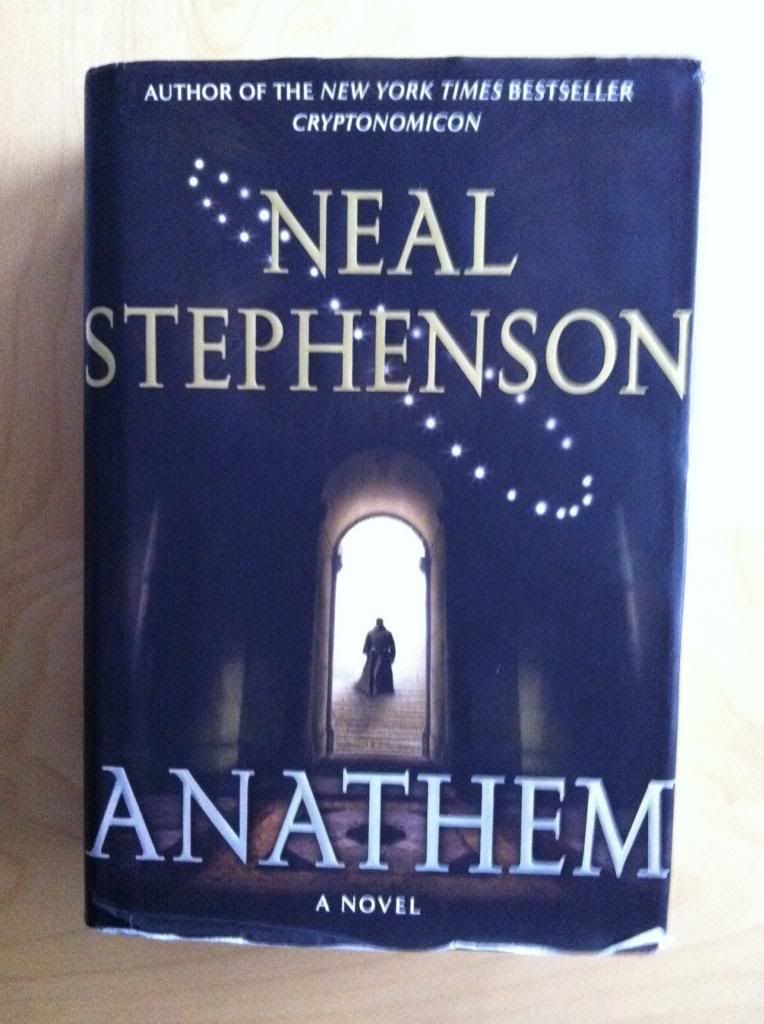
I would recommend Anathem by Neal Stephenson. This might be one of my very favourite novels. It tells the story of Fra Erasmus, a young Science-monk in a society where the academic world lives apart from the Secular world in ascetic monasteries. During a particularly momentous time in Erasmus' life, a startling observation throws his world into disarray and sets off a chain of events with worldwide consequences. Anathem is a sprawling novel about coming of age and personal growth filled with adventure and romance and camaraderie and Science Fiction. It is also a novel that works as a thematic analysis of the philosophy of Science and the relationship between the academic and non-academic portions of our society. It is super insightful and one of the most emotionally true portrayals of Science academia and the act of discovery I have ever seen. I love this book.
If You Like Fantasy:
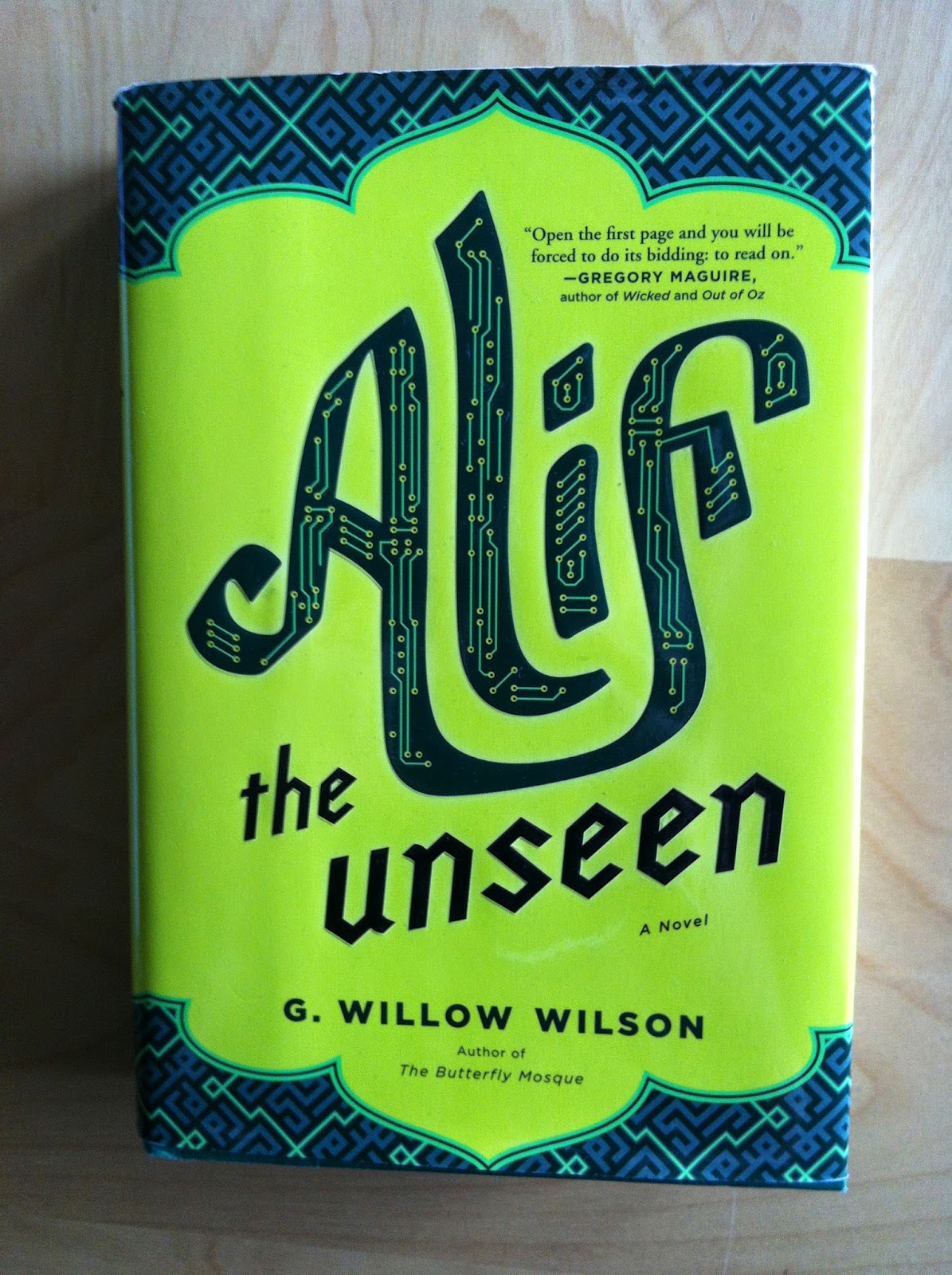
I would recommend Alif The Unseen by G Willow Wilson. Alife The Unseen is a novel that explores what if the more mythical-seeming portions of the Quran were literally true; what if humanity lived along an unseen world of supernatural beings. The novel stars Alif a young hacker living in an Arab Emirate who makes his living by helping dissident voices and staying one step ahead from the ruthless government censors. When Insitar, the wealthy daughter of a powerful man, spurns him, Alif writes a powerful software program that threatens to deliver him into the hands of the state censors. Alif flees, inadvertently dragging along his neighbour Dinah, and finds himself lost in a world of mythical monsters and spirits. Alif The Unseen is a book that mixes an exciting technothriller premise with romance, discovery, and the boundless imagination of a wonderfully realized fantasy world. As a pure work of fiction Alif The Unseen is a great read. This novel is also pretty special in that it portrays young people living in the arabic world and explores the collision of modern and tradition that confronts them. Which is really interesting. Also, Alif The Unseen contains one of the most 'shippable romances ever!
If You Like Superhero Comics:
I would recommend The Amazing Adventure of Kavalier & Clay by Michael Chabon. While not directly a superhero novel, Kavalier & Clay is a novel about the cultural primordial soup and people who first invented Superheroes and produced the comics of the Golden Age. The novel features Joe Kavalier, an young jewish artist and refugee, and Sam Clay, a plucky Jewish kid from Brooklyn a they form a partnership and invent The Escapist, a comic book hero who frees people from the shackles of injustice. The novel really illuminates the way social forces, the spectre of Nazi Germany, Vaudeville magicians and strongmen, all fermented in the imaginations of scrappy young people to create the amazing fantasy worlds we all love today. Kavalier and Clay is also constructed out of all the adventure, romance, and bombast of comic books, but applied to the believable lives of its heroes. It's basically a beautifully written novel about comics that tells a great story. Also, serious points for depicting the best first kiss in fiction.
Or If You Just Like Books:
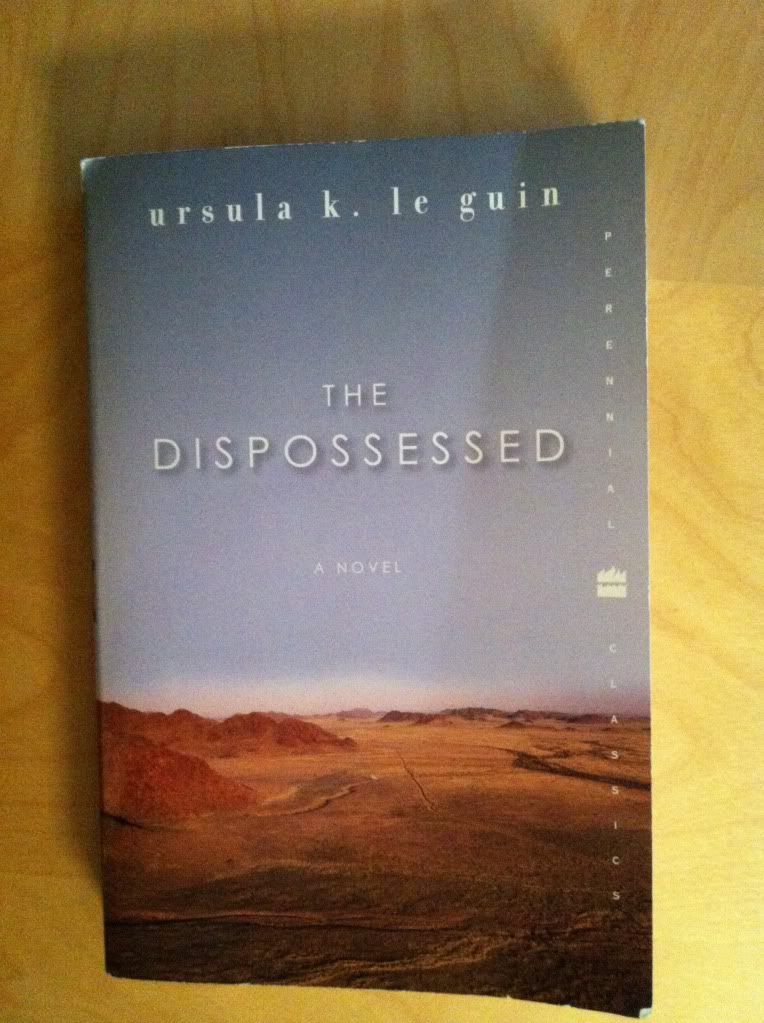
I would recommend The Dispossessed by Ursula K Le Guin. You know when you read books that are clearly Important and Classic and Timeless and yet you never really hear about them? Well The Dispossessed is completely one of these books. The novel is one of the best works of social speculative fiction I have ever read. In the book twin planets, Urras and Anarras, orbit each other in close proximity. Yet, despite this proximity, the inhabitants of these planets could not be more isolated from one another. The Urrasti live on a lush world and live in a capitalistic society of wealth and inequality. The Anarresti however, live on a barren, arid planet and live an ascetic life of anarchic communism to survive. In The Dispossessed, an Anarresti theoretical physicist Shevek travels to Urras to develop and share his theories, breaking the isolation and bringing the two societies into idealogical conflict. The Dispossessed is an absolutely unflinching examination of two societies: western capitalism and an idealized anarchic communism. The novel really shows the strengths and ugliness of both societies and showcases the underlying humanity of people regardless of where they are from. The Dispossessed is a novel that deserves to be held up with the greatest works of social fiction and so I really think you should read it.
Post by Michael Bround
Jennifer DePrey's top pick from 2014:
Insert by Jennifer DePrey
Previously:
Novel Reviews 2013
2014 was kind of an odd year for novels on Atoll Comics. I only put up 13 novel review posts this year as opposed to the previous two years on the site where novel reviews were a major component of the site. There are a few reasons for this including the fact I've gotten better at finding comics things to write about, am a lot better at working ahead (novel reviews were often my buffer against vacations or laziness), and that I wanted to focus more on writing critically about comics in 2014. Add to that my new Atoll Comics collaborator Jennifer DePrey, and well, I don't NEED novel posts to hit my updates anymore. But I still read a lot of novels and really like writing about them, so starting in 2015 there will be regular prose novel reviews on the site every Tuesday. And to kick off this new segment, I thought we'd take a look back at the novels of 2014.
Despite the smaller sample size of books this year, I still read some great books that you may want to check out in 2015. Specifically I reviewed:
Genetopia, by Keith Brooke
Seed To Harvest Omnibus, by Octavia Butler
Gentlemen Of The Road, by Michael Chabon
Telegraph Avenue, by Michael Chabon
The Amazing Adventures of Kavalier and Clay, by Michael Chabon
Wonder Boys, by Michael Chabon
The Man In The High Castle, by Philip K Dick
Judas Unchained, by Peter F Hamilton
Pandora's Star, by Peter F Hamilton
The Dispossessed, by Ursula K Le Guin
Motherless Brooklyn, by Jonathan Lethem
Anathem, by Neal Stephenson Breakfast of Champions, by Kurt Vonnegut
Cat's Cradle, by Kurt Vonnegut
Slautherhouse Five, by Kurt Vonnegut
The Sirens of Titan, by Kurt Vonnegut
Alif The Unseen, by G Willow Wilson
Also, since it's traditional, I'd like to do an abbreviated version of my annual top picks for certain genres.
If You Like Science Fiction:
I would recommend Anathem by Neal Stephenson. This might be one of my very favourite novels. It tells the story of Fra Erasmus, a young Science-monk in a society where the academic world lives apart from the Secular world in ascetic monasteries. During a particularly momentous time in Erasmus' life, a startling observation throws his world into disarray and sets off a chain of events with worldwide consequences. Anathem is a sprawling novel about coming of age and personal growth filled with adventure and romance and camaraderie and Science Fiction. It is also a novel that works as a thematic analysis of the philosophy of Science and the relationship between the academic and non-academic portions of our society. It is super insightful and one of the most emotionally true portrayals of Science academia and the act of discovery I have ever seen. I love this book.
If You Like Fantasy:
I would recommend Alif The Unseen by G Willow Wilson. Alife The Unseen is a novel that explores what if the more mythical-seeming portions of the Quran were literally true; what if humanity lived along an unseen world of supernatural beings. The novel stars Alif a young hacker living in an Arab Emirate who makes his living by helping dissident voices and staying one step ahead from the ruthless government censors. When Insitar, the wealthy daughter of a powerful man, spurns him, Alif writes a powerful software program that threatens to deliver him into the hands of the state censors. Alif flees, inadvertently dragging along his neighbour Dinah, and finds himself lost in a world of mythical monsters and spirits. Alif The Unseen is a book that mixes an exciting technothriller premise with romance, discovery, and the boundless imagination of a wonderfully realized fantasy world. As a pure work of fiction Alif The Unseen is a great read. This novel is also pretty special in that it portrays young people living in the arabic world and explores the collision of modern and tradition that confronts them. Which is really interesting. Also, Alif The Unseen contains one of the most 'shippable romances ever!
If You Like Superhero Comics:
I would recommend The Amazing Adventure of Kavalier & Clay by Michael Chabon. While not directly a superhero novel, Kavalier & Clay is a novel about the cultural primordial soup and people who first invented Superheroes and produced the comics of the Golden Age. The novel features Joe Kavalier, an young jewish artist and refugee, and Sam Clay, a plucky Jewish kid from Brooklyn a they form a partnership and invent The Escapist, a comic book hero who frees people from the shackles of injustice. The novel really illuminates the way social forces, the spectre of Nazi Germany, Vaudeville magicians and strongmen, all fermented in the imaginations of scrappy young people to create the amazing fantasy worlds we all love today. Kavalier and Clay is also constructed out of all the adventure, romance, and bombast of comic books, but applied to the believable lives of its heroes. It's basically a beautifully written novel about comics that tells a great story. Also, serious points for depicting the best first kiss in fiction.
Or If You Just Like Books:
I would recommend The Dispossessed by Ursula K Le Guin. You know when you read books that are clearly Important and Classic and Timeless and yet you never really hear about them? Well The Dispossessed is completely one of these books. The novel is one of the best works of social speculative fiction I have ever read. In the book twin planets, Urras and Anarras, orbit each other in close proximity. Yet, despite this proximity, the inhabitants of these planets could not be more isolated from one another. The Urrasti live on a lush world and live in a capitalistic society of wealth and inequality. The Anarresti however, live on a barren, arid planet and live an ascetic life of anarchic communism to survive. In The Dispossessed, an Anarresti theoretical physicist Shevek travels to Urras to develop and share his theories, breaking the isolation and bringing the two societies into idealogical conflict. The Dispossessed is an absolutely unflinching examination of two societies: western capitalism and an idealized anarchic communism. The novel really shows the strengths and ugliness of both societies and showcases the underlying humanity of people regardless of where they are from. The Dispossessed is a novel that deserves to be held up with the greatest works of social fiction and so I really think you should read it.
Post by Michael Bround
Jennifer DePrey's top pick from 2014:
I would recommend Fangirl by Rainbow Rowell. Fangirl is about Cath, a teenager facing her first year of college. She’s
worried about making new friends, leaving home and her father, and finishing
her Simon Snow fanfiction before the release of the final book. This coming of
age story asks the question of how to begin the process of growing up and still
hold onto the interests other people might not understand, but from which we
gain strength. Rainbow Rowell’s style is engaging, her dialogue is snappy, and
her characters feel like old friends. I was rooting for Cath from page one.
Insert by Jennifer DePrey
Previously:
Novel Reviews 2013
Monday, 18 August 2014
Gentlemen Of The Road Is A Good Book
Or why you should read Gentlemen of the Road by Michael Chabon
One of my favourite parts of vacation, particularly a beach one, is vacation reading. You get to spend time stretched out in the sun, a cool drink in hand, and read something fun and exciting and maybe a little breezy. More important though is the airplane book. Airplanes are basically my least favourite things in existence: squeezed into a too small seat with not enough legroom in an aluminum tube full of smelly, loud, sick strangers all while hurtling through the air. Between my fear of flying, my dislike for touching strangers, and the discomfort of contorting into an airplane seat, I'm DESPERATELY in need of powerful and fun distractions. A good airplane book has a bunch of characteristics: it needs to be a page turner, written in an accessible way (I once tried to read Gravity's Rainbow on a plane and... it was a bad choice), and it needs to be short enough to read entirely within the time of the flight. Gentlemen of the Road by Michael Chabon is a great book for either purpose.
Gentlemen of the Road is set in the Middle Ages and follows a pair of Jewish bandits as they travel along the Silk Road. These bandits, Amram, a hulking Abyssinian axeman, and Zelikman, a gangly Frankish Jew fleeing the pogroms of his homeland, find themselves entrusted with the safety of a refugee Khazar Prince and thrust into a civil war for control of the throne of Khazaria, a middle ages Jewish kingdom. The novel is functionally a beautifully written swashbuckling adventure novel and travelogue.
I would recommend Gentlemen of the Road for anyone looking for a fun, exciting, beautifully written novel to enjoy on a sunny beach. I would also recommend the novel for anyone in need of an easy to read, page turning novel that can be enjoyed in a 3-5 hour flight. It is just about the perfect vacation novel. It's also just a great story and would be well worth checking out even if you aren't currently a gentle person of the road yourself.
Previously:
Telegraph Avenue
Wonder Boys
The Amazing Adventure of Kavalier and Clay
The Yiddish Policemen's Union
One of my favourite parts of vacation, particularly a beach one, is vacation reading. You get to spend time stretched out in the sun, a cool drink in hand, and read something fun and exciting and maybe a little breezy. More important though is the airplane book. Airplanes are basically my least favourite things in existence: squeezed into a too small seat with not enough legroom in an aluminum tube full of smelly, loud, sick strangers all while hurtling through the air. Between my fear of flying, my dislike for touching strangers, and the discomfort of contorting into an airplane seat, I'm DESPERATELY in need of powerful and fun distractions. A good airplane book has a bunch of characteristics: it needs to be a page turner, written in an accessible way (I once tried to read Gravity's Rainbow on a plane and... it was a bad choice), and it needs to be short enough to read entirely within the time of the flight. Gentlemen of the Road by Michael Chabon is a great book for either purpose.
Gentlemen of the Road is set in the Middle Ages and follows a pair of Jewish bandits as they travel along the Silk Road. These bandits, Amram, a hulking Abyssinian axeman, and Zelikman, a gangly Frankish Jew fleeing the pogroms of his homeland, find themselves entrusted with the safety of a refugee Khazar Prince and thrust into a civil war for control of the throne of Khazaria, a middle ages Jewish kingdom. The novel is functionally a beautifully written swashbuckling adventure novel and travelogue.
I would recommend Gentlemen of the Road for anyone looking for a fun, exciting, beautifully written novel to enjoy on a sunny beach. I would also recommend the novel for anyone in need of an easy to read, page turning novel that can be enjoyed in a 3-5 hour flight. It is just about the perfect vacation novel. It's also just a great story and would be well worth checking out even if you aren't currently a gentle person of the road yourself.
Previously:
Telegraph Avenue
Wonder Boys
The Amazing Adventure of Kavalier and Clay
The Yiddish Policemen's Union
Monday, 28 July 2014
Telegraph Avenue Is A Good Book
Or why you should read Telegraph Avenue by Michael Chabon
Telegraph Avenue is, at its heart, a novel about two interconnected families trying to make it in America. Archie Stallings and Nat Jaffe run Brokeland Records, a struggling used record store on Telegraph Avenue in Oakland, that is threatened by the extensive vinyl section of a new chain-store. Gwen Shanks and Aviva Roth-Jaffe, the very pregnant and not-pregnant respective wives of Archie and Nat, are a team of midwives whose livelihood are threatened by an asshole doctor and birthing mishap. Julius Jaffe, the son of Nat and Aviva, is realizing that he is maybe probably gay and in love with his new friend Titus Joyner, who in turn has a strange fascination with Archie Stallings. And against all of this struggle, Luther Stallings, Archie's good for nothing, kung fu master, frequent junkie, former blaxploitation film star father, blows into town with a plan and secret leverage from the past that threatens and promises to change everything or blow it all to hell.
Telegraph Avenue is a pretty thematically dense novel. Beyond the wealthy, elegant prose of Chabon and the essentially human stories of familial complexity, this novel his novel has a lot to say about black and white America, growing up, and Oakland. It delves deeply into the lore of a million things: from blaxploitation and kung fu film and retro African American music, to parrot ownership and the art and politics of midwifery. And the nostalgia of these things: that encompassing tension between the romance of the culture of the past and the requirements of living in the present and looking to the future is a major force in Telegraph Avenue. As a guy trying to find a way to negotiate being an actual human grown up who still has his hobbies and nostalgic passions, I found this aspect of the book pretty resonate.
I think, though, that my favourite aspect of Telegraph Avenue is its fraught relationship with genre and literary fiction. Many of Michael Chabon novels are in some way, great or small, genre fiction. There is almost always some spark of Sci-fi, some flourish of Pulpy detection, or a thunderbolt of superheroics in my favourite Chabon novels. I mean, they are all gorgeous works of literary fiction with prose that just hangs, heavy with artistic truth. But they still mostly play with genre. I feel that Telegraph Avenue is deliberately trying to tell a very classic literary fiction story, of character and relationship and family, while playing with genre elements like blaxploitation and kung fu, while still not itself being genre. And the tension between these two forces is awesome: I found myself frequently wishing for Telegraph Avenue to turn into the skid and have Archie and Nat shotgun up and rob banks to save their store or Gwen full on chop some jive turkey doctor in the neck, but at the same time was always relieved when the story pulled back and stuck to its great family-focused narrative. I found this to be a really cool way of exploring the Telegraph Avenues theme of nostalgia and moving on.
(And, as someone trying to reverse engineer himself from child-geek to functional-adult-with-geeky-overtones this story tension really got me at the moment.)
Telegraph Avenue is another easy to recommend book. I think it's universal enough in it's appeal and core story for most people to engage with and the quality of the writing should impress anyone. I feel like the novel's breadth makes it hard to specifically recommend it to anyone (except fans of Chabon's other books), but if you are looking for something to read, Telegraph Avenue would be a great choice.
Telegraph Avenue is, at its heart, a novel about two interconnected families trying to make it in America. Archie Stallings and Nat Jaffe run Brokeland Records, a struggling used record store on Telegraph Avenue in Oakland, that is threatened by the extensive vinyl section of a new chain-store. Gwen Shanks and Aviva Roth-Jaffe, the very pregnant and not-pregnant respective wives of Archie and Nat, are a team of midwives whose livelihood are threatened by an asshole doctor and birthing mishap. Julius Jaffe, the son of Nat and Aviva, is realizing that he is maybe probably gay and in love with his new friend Titus Joyner, who in turn has a strange fascination with Archie Stallings. And against all of this struggle, Luther Stallings, Archie's good for nothing, kung fu master, frequent junkie, former blaxploitation film star father, blows into town with a plan and secret leverage from the past that threatens and promises to change everything or blow it all to hell.
Telegraph Avenue is a pretty thematically dense novel. Beyond the wealthy, elegant prose of Chabon and the essentially human stories of familial complexity, this novel his novel has a lot to say about black and white America, growing up, and Oakland. It delves deeply into the lore of a million things: from blaxploitation and kung fu film and retro African American music, to parrot ownership and the art and politics of midwifery. And the nostalgia of these things: that encompassing tension between the romance of the culture of the past and the requirements of living in the present and looking to the future is a major force in Telegraph Avenue. As a guy trying to find a way to negotiate being an actual human grown up who still has his hobbies and nostalgic passions, I found this aspect of the book pretty resonate.
I think, though, that my favourite aspect of Telegraph Avenue is its fraught relationship with genre and literary fiction. Many of Michael Chabon novels are in some way, great or small, genre fiction. There is almost always some spark of Sci-fi, some flourish of Pulpy detection, or a thunderbolt of superheroics in my favourite Chabon novels. I mean, they are all gorgeous works of literary fiction with prose that just hangs, heavy with artistic truth. But they still mostly play with genre. I feel that Telegraph Avenue is deliberately trying to tell a very classic literary fiction story, of character and relationship and family, while playing with genre elements like blaxploitation and kung fu, while still not itself being genre. And the tension between these two forces is awesome: I found myself frequently wishing for Telegraph Avenue to turn into the skid and have Archie and Nat shotgun up and rob banks to save their store or Gwen full on chop some jive turkey doctor in the neck, but at the same time was always relieved when the story pulled back and stuck to its great family-focused narrative. I found this to be a really cool way of exploring the Telegraph Avenues theme of nostalgia and moving on.
(And, as someone trying to reverse engineer himself from child-geek to functional-adult-with-geeky-overtones this story tension really got me at the moment.)
Telegraph Avenue is another easy to recommend book. I think it's universal enough in it's appeal and core story for most people to engage with and the quality of the writing should impress anyone. I feel like the novel's breadth makes it hard to specifically recommend it to anyone (except fans of Chabon's other books), but if you are looking for something to read, Telegraph Avenue would be a great choice.
Monday, 26 May 2014
Wonder Boys Is A Good Book
Or why you should read Wonder Boys by Michael Chabon
I think a lot of people who read novels as a hobby feel like they too will one day sit down and write a book. As a person who is always reading a book, I know I sometimes wonder if I have a novel in me. (And if I ever do, I will write in secret, dump it on my most read-dy and kind friends and then hide it from the world because it probably will be kind of terrible!) As an avid reader I'm pretty fascinated by what makes writers tick, what drives someone to not just entertain the notion of spending hours and hours creating an artificial world but to actually do it.
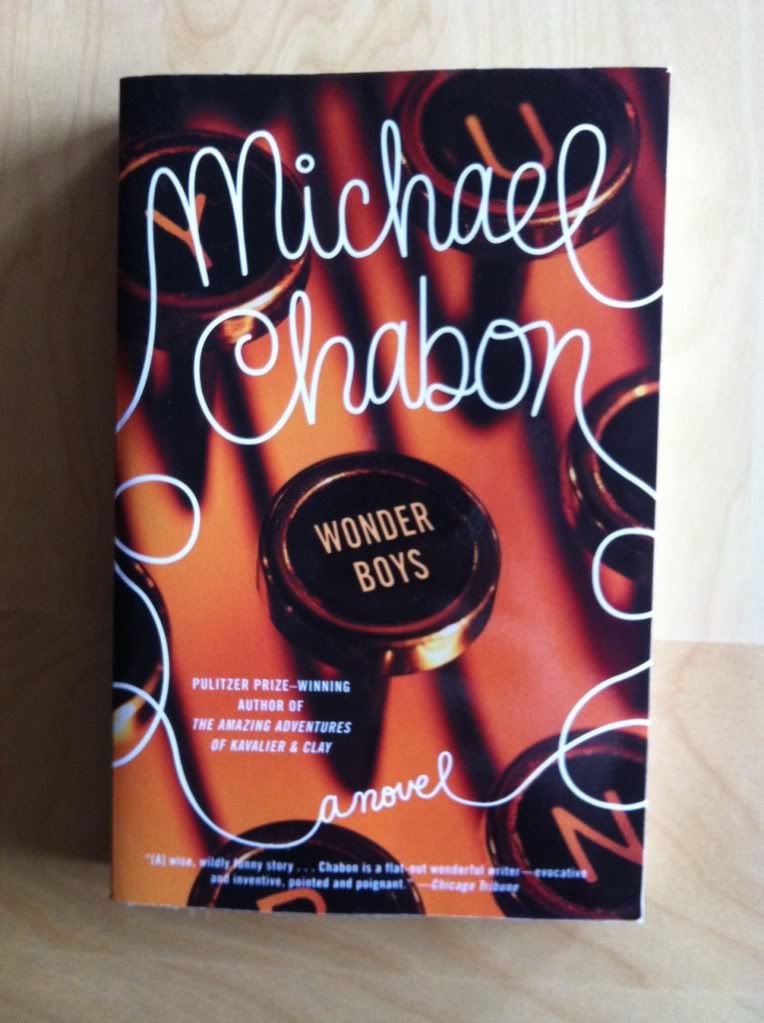
Wonder Boys is a novel that examines why someone might be driven to be a writer.
The kernel the Wonder Boys is constructed around is that the desire to write fiction novels stems from a kind of personal defect, some kind of internal hole in the author's life that needs to be filled. Maybe it's fiction is the family the author never had, or the lies that are preferable to the author's life. Or perhaps its some perverse need for chaos or excitement that isn't satisfied by real life. Or maybe a need to connect to something larger than mundane life. Regardless, the result is the Midnight Disease where a person is compelled to write even if it is to the detriment of the author's health or sanity or relationships. This is the theme upon which Wonder Boys hangs.
From a plot perspective Wonder Boys is about struggling author Grady Tripp as his life basically falls apart. His marriage is in trouble, the woman he is having an affair with has important news, his talented, attractive student has a crush on him, he smokes too much marihuana, and worse, his editor is coming to town. But Tripp's biggest problem is his next novel, Wonder Boys, a sprawling behemoth of a manuscript nowhere near an ending that is criminally overdue. And so Tripp, along with gawky, film-obsessed, aspiring novelist James Leer, go on a belligerent misadventure of ever increasing complexity that threatens to save them both and promises their ultimate undoing. It's a darkly hilarious story packed full of social awkwardness, emotional complexity, and the Midnight Disease.
I really enjoyed this book.... it's not exactly fun, since its comedy is so fraught and it stabs me, as many dark comedies do, right in the barely-under-control-social-anxiety organ. So reading Wonder Boys was kind of this wonderful borderline panic attack for me. It makes recommending this book a little tough for me, because "Here, try this book, it's really well written and really great and made me want to crawl out of my skin and die while riding the bus," is kind of an accurate summary of my thoughts on this book. But Wonder Boys is beautifully written and provides this fascinating insight into why some people at least are driven to make fiction. If you are not an especially socially anxious person (and maybe if you are) you should maybe try Wonder Boys. That said, if you want to try a Michael Chabon novel that won't make you want to take up being a hermit in the mountains but will still make you feel feels and show you amazing, insightful prose, I 100% recommend you try either The Yiddish Policemen's Union or The Amazing Adventures of Kavalier and Clay.
Previously:
The Amazing Adventure of Kavalier and Clay
The Yiddish Policemen's Union
I think a lot of people who read novels as a hobby feel like they too will one day sit down and write a book. As a person who is always reading a book, I know I sometimes wonder if I have a novel in me. (And if I ever do, I will write in secret, dump it on my most read-dy and kind friends and then hide it from the world because it probably will be kind of terrible!) As an avid reader I'm pretty fascinated by what makes writers tick, what drives someone to not just entertain the notion of spending hours and hours creating an artificial world but to actually do it.
Wonder Boys is a novel that examines why someone might be driven to be a writer.
The kernel the Wonder Boys is constructed around is that the desire to write fiction novels stems from a kind of personal defect, some kind of internal hole in the author's life that needs to be filled. Maybe it's fiction is the family the author never had, or the lies that are preferable to the author's life. Or perhaps its some perverse need for chaos or excitement that isn't satisfied by real life. Or maybe a need to connect to something larger than mundane life. Regardless, the result is the Midnight Disease where a person is compelled to write even if it is to the detriment of the author's health or sanity or relationships. This is the theme upon which Wonder Boys hangs.
From a plot perspective Wonder Boys is about struggling author Grady Tripp as his life basically falls apart. His marriage is in trouble, the woman he is having an affair with has important news, his talented, attractive student has a crush on him, he smokes too much marihuana, and worse, his editor is coming to town. But Tripp's biggest problem is his next novel, Wonder Boys, a sprawling behemoth of a manuscript nowhere near an ending that is criminally overdue. And so Tripp, along with gawky, film-obsessed, aspiring novelist James Leer, go on a belligerent misadventure of ever increasing complexity that threatens to save them both and promises their ultimate undoing. It's a darkly hilarious story packed full of social awkwardness, emotional complexity, and the Midnight Disease.
I really enjoyed this book.... it's not exactly fun, since its comedy is so fraught and it stabs me, as many dark comedies do, right in the barely-under-control-social-anxiety organ. So reading Wonder Boys was kind of this wonderful borderline panic attack for me. It makes recommending this book a little tough for me, because "Here, try this book, it's really well written and really great and made me want to crawl out of my skin and die while riding the bus," is kind of an accurate summary of my thoughts on this book. But Wonder Boys is beautifully written and provides this fascinating insight into why some people at least are driven to make fiction. If you are not an especially socially anxious person (and maybe if you are) you should maybe try Wonder Boys. That said, if you want to try a Michael Chabon novel that won't make you want to take up being a hermit in the mountains but will still make you feel feels and show you amazing, insightful prose, I 100% recommend you try either The Yiddish Policemen's Union or The Amazing Adventures of Kavalier and Clay.
Previously:
The Amazing Adventure of Kavalier and Clay
The Yiddish Policemen's Union
Monday, 27 January 2014
The Amazing Adventures of Kavalier and Clay is a Good Book
Or why you should read The Amazing Adventures of Kavalier and Clay by Michael Chabon
The Amazing Adventures of Kavalier and Clay is the story of a legendary pair of comic book creators and their amazing adventures in the Golden Age of comics. It's the story of Joe Kavalier, a young Jewish artist and refugee, burdened with saving his family also from the Nazi menace. It's also the story of Sam Clay, a plucky Jewish kid from Brooklyn with big dreams and a plan to help his cousin bring his family to America. The Amazing Adventures of Kavalier and Clay follows the pair as they form a partnership and create The Escapist, a comic book hero who frees people from the shackles of injustice. Their hero proves popular and the pair find success and a kind of fame, meeting the beautiful debutante Rosa Saks (herself inspiration for the comic hero Luna Moth), Tracy Bacon, star actor of The Escapist Radio Show, and many of the creative forces of their day. The novel asks if Kavalier and Clay can leverage their notoriety and wealth to save Joe's family, whether they can maintain their Golden Age in the face of global tragedy, and if they can escape when things fall apart.
The Amazing Adventures of Kavalier and Clay is very much about the history of comic books. Through the lens of Sam Clay and Joe Kavalier the novel explores the larger than life, amazing story of the kind of young dreamers who created our most enduring and beloved superhero creations. We see the escapist and vaudeville cultural roots of the caped crusader, the crappy business deals, and the genesis of a new American artform. We see comics evolve from their earliest experiments to a mature art while also developing as a business and cultural force. Basically, as we read the very engaging, beautifully written story of Kavalier and Clay, we get to learn all about comics in this very researched, very organic way. It's really great.
Thematically The Amazing Adventures of Kavalier and Clay deals with Escapism in all kinds of literal and metaphorical ways. The real dramatic drivers of the novel are the bonds, subterfuges, and lengths the characters of the book will go to escape. From Joe Kavaliers incredible escape from Czechoslovakia, to the bonds of his obligation to free his loved ones. From the escape of comic book fiction, to the bonds of financial success, and the misdirection of the significance of that success. It's the bonds of family and love and desire and revenge. It's the misdirection of the lies characters tell themselves and the lies they tell the world to hide their bonds or intentions. And it's the escape, both good and bad, that characters enact for their freedom. It's beautiful and tragic and a magic worthy of the comic book Escapist.
This is a book that I think anyone could enjoy. It's literary and beautifully written, but still full of action and genre conventions. The story inside of it is universal and funny, exciting, tragic, sad, and wonderful. It's the kind of book I can hand to my mother who like's nice, emotionally involving stories, and my brother who reads books with axes on the cover. But I think more than anything it's a book that I can recommend to anyone who visits this website that loves novels and comics: this is a novel that builds a really incredible story out of the history of superhero comics. And in doing so it becomes this great new thing constructed out of a thing I love. If you like my taste in novels and my taste in comics this book is almost certainly something you will enjoy.
Previously:
The Yiddish Policemen's Union
The Amazing Adventures of Kavalier and Clay is the story of a legendary pair of comic book creators and their amazing adventures in the Golden Age of comics. It's the story of Joe Kavalier, a young Jewish artist and refugee, burdened with saving his family also from the Nazi menace. It's also the story of Sam Clay, a plucky Jewish kid from Brooklyn with big dreams and a plan to help his cousin bring his family to America. The Amazing Adventures of Kavalier and Clay follows the pair as they form a partnership and create The Escapist, a comic book hero who frees people from the shackles of injustice. Their hero proves popular and the pair find success and a kind of fame, meeting the beautiful debutante Rosa Saks (herself inspiration for the comic hero Luna Moth), Tracy Bacon, star actor of The Escapist Radio Show, and many of the creative forces of their day. The novel asks if Kavalier and Clay can leverage their notoriety and wealth to save Joe's family, whether they can maintain their Golden Age in the face of global tragedy, and if they can escape when things fall apart.
The Amazing Adventures of Kavalier and Clay is very much about the history of comic books. Through the lens of Sam Clay and Joe Kavalier the novel explores the larger than life, amazing story of the kind of young dreamers who created our most enduring and beloved superhero creations. We see the escapist and vaudeville cultural roots of the caped crusader, the crappy business deals, and the genesis of a new American artform. We see comics evolve from their earliest experiments to a mature art while also developing as a business and cultural force. Basically, as we read the very engaging, beautifully written story of Kavalier and Clay, we get to learn all about comics in this very researched, very organic way. It's really great.
Thematically The Amazing Adventures of Kavalier and Clay deals with Escapism in all kinds of literal and metaphorical ways. The real dramatic drivers of the novel are the bonds, subterfuges, and lengths the characters of the book will go to escape. From Joe Kavaliers incredible escape from Czechoslovakia, to the bonds of his obligation to free his loved ones. From the escape of comic book fiction, to the bonds of financial success, and the misdirection of the significance of that success. It's the bonds of family and love and desire and revenge. It's the misdirection of the lies characters tell themselves and the lies they tell the world to hide their bonds or intentions. And it's the escape, both good and bad, that characters enact for their freedom. It's beautiful and tragic and a magic worthy of the comic book Escapist.
This is a book that I think anyone could enjoy. It's literary and beautifully written, but still full of action and genre conventions. The story inside of it is universal and funny, exciting, tragic, sad, and wonderful. It's the kind of book I can hand to my mother who like's nice, emotionally involving stories, and my brother who reads books with axes on the cover. But I think more than anything it's a book that I can recommend to anyone who visits this website that loves novels and comics: this is a novel that builds a really incredible story out of the history of superhero comics. And in doing so it becomes this great new thing constructed out of a thing I love. If you like my taste in novels and my taste in comics this book is almost certainly something you will enjoy.
Previously:
The Yiddish Policemen's Union
Monday, 6 January 2014
Novels Year In Review 2013
Or a look at the novels I've read in 2013 and some
I went into the year with goal of reading a book a week and hitting the very DC comics number of 52 novels for the year. I managed to read 56 novels in 2014. (The trick, if you are curious, is to work in a place surrounded by very expensive housing that is really inconvenient to get to and reading on the lengthy metro/bus commute.)
The books in a particular order are:
Mind of My Mind by Octavia E Butler
Clay's Arc by Octavia E Butler
Patternmaster by Octavia E Butler
The Amazing Adventures of Kavalier and Clay by Michael Chabon
The Yiddish Policemen's Union by Michael Chabon
London Falling by Paul Cornell
The Rapture of the Nerds by Cory Doctorow and Charles Stross
Incandescence by Greg Egan
Gun Machine by Warren Ellis
The Ocean at the End of the Lane by Neil Gaiman
You by Austin by Grossman
The Moon is a Harsh Mistress by Robert A Heinlein
Brave New World by Aldous Huxley
The Dispossessed by Ursula K Le Guin
The Rook by Bryan O'Malley
1984 by George Orwell
Gravity's Rainbow by Thomas Pynchon
The Quantum Thief by Hannu Rajaniemi
The Fractal Prince by Hannu Rajaniemi
Finder by Greg Rucka
Smoker by Greg Rucka
Shooting at Midnight by Greg Rucka
A Fistful of Rain by Greg Rucka
Alpha by Greg Rucka
Mindscan by Robert J Sawyer
Red Planet Blues by Robert J Sawyer
The Dark Glory War by Michael A Stackpole
Fortress Draconis by Michael A Stackpole
When Dragons Rage by Michael A Stackpole
The Grand Crusade by Michael A Stackpole
Snow Crash by Neal Stephenson
The Diamond Age by Neal Stephenson
Accelerando by Charles Stross
Glasshouse by Charles Stross
The Family Trade by Charles Stross
The Hidden Family by Charles Stross
The Clan Corporate by Charles Stross
The Merchant's War by Charles Stross
The Revolution Business by Charles Stross
The Trade of Queens by Charles Stross
Saturn's Children by Charles Stross
Neptune's Brood by Charles Stross
The Sirens of Titan by Kurt Vonnegut
Cat's Cradle by Kurt Vonnegut
Slaughter House Five by Kurt Vonnegut
Breakfast of Champions by Kurt Vonnegut
We by Yevgeny Zamyatin
In my comics year end post I take a survey of genre to point out that Mainstream comics are overwhelmingly comprised of one genre which is weird and reflective of some pretty bizarre market forces/publishing decisions. So I thought I would put together a genre distribution of novels, which have a much broader range of genre (books can be literally anything!). And this is what I got:
So... it seems that like Mainstream comics I am all about the one genre because I am a fantastic nerd. (Maybe my issues with Mainstream comics being overwhelmingly Superheroic is just based on the fact I want more Science Fiction?)
So I thought I would do the normal New Years thing and actually make some sweeping recommendations for novels, since my reading habits are basically powered by suggestions.
Before I get to my recommendations, I feel like pointing out that all of the books I read this year were pretty great and the experience of finding the perfect book is super personal. If I knew you, dear internet reader, I would recommend a specific book tailored to your interests. But since I have no idea who you are or what you like, I'm going to suggest some books that I think could be enjoyed by basically anyone.
If you like Science Fiction
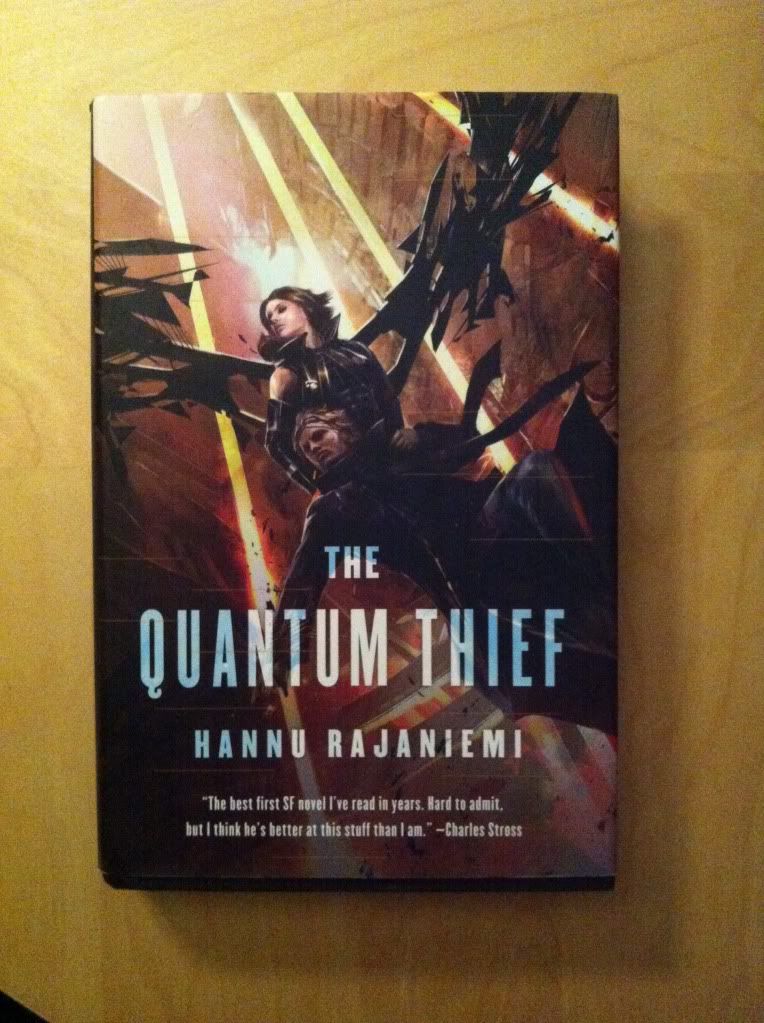
I would recommend The Quantum Thief by Hannu Rajaniemi. This is a book I saw on a bookshelf a bunch of times but, due to a cover and title that could go either way and dust cover copy that sounded pretty schlocky, I gave it a pass. But the thing is, The Quantum Thief is kind of perfect: it's whip crack smart, beautifully written, and an elaborate jigsaw of wildly different literary elements all perfectly balanced in a story about a gentleman thief in a post singularity future. If you are into Science Fiction you really ought to try this book. And also don't judge books by their cover and copy....
(Honestly, if you are into Sci-fi, Accelerando, a modern classic, or The Accord a very, very underrated novel would also be ace choices. They were rereads this year, and The Quantum Thief was just such a fantastic surprise.)
If you like Fantasy
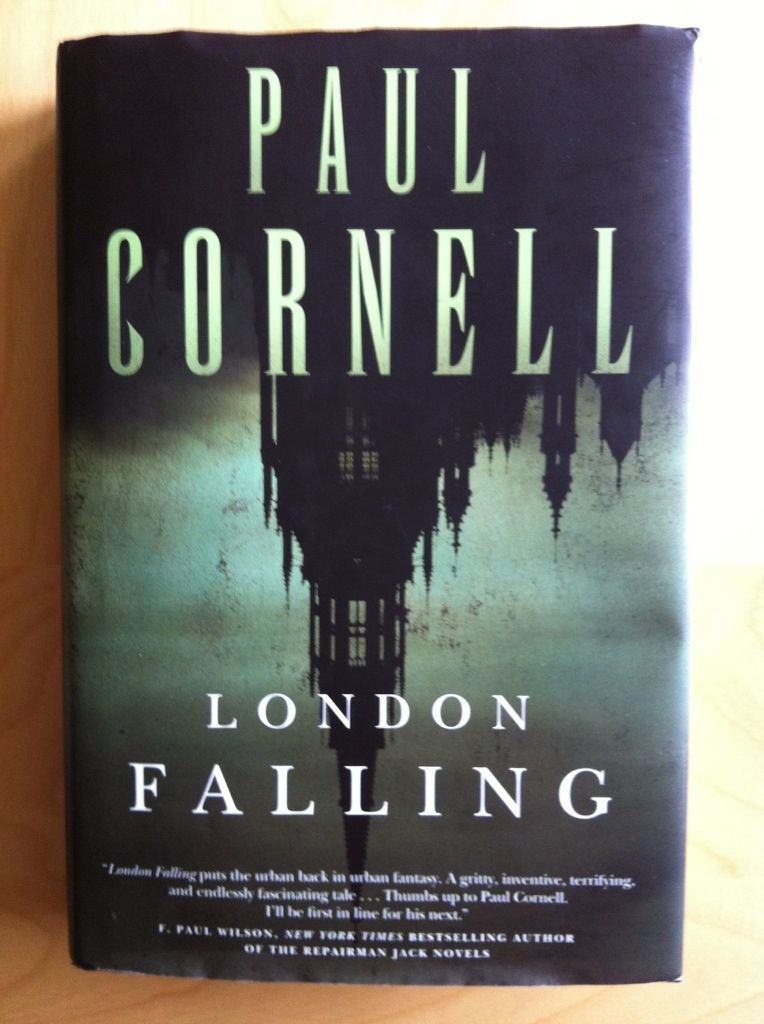
I would recommend London Falling by Paul Cornell. Fantasy is a genre that often leaves me a little cold: it can frequently be very formulaic and Tolkien derivative, too deeply, deeply creative, or kind of silly and unconvincing. London Falling is original, mature, and brilliantly, horrifically convincing. London Falling is about a misfit group of Police tasked with solving a horrific murder which brings them into contact with the terrifying shadow world of Supernatural London. It's fantasy that I think diehard fans of the genre will like but should also appeal lapsed Fantasy fans looking for something more substantiative.
If you like Mystery/Suspense
I would recommend Gun Machine by Warren Ellis. In Gunmachine a New York detective stumbles into a room full of guns, infamous guns, each tied to an unsolved murder launching a hunt for New York's most elusive serial killer. It's a novel that is chilling, properly tense, inappropriately hilarious, and written in a beautifully evocative style. It's a satisfyingly intricate read that is still quite accessible and is maybe the book with the most universal appeal that I'm recommending here. Check it out.
If you like Superhero comics
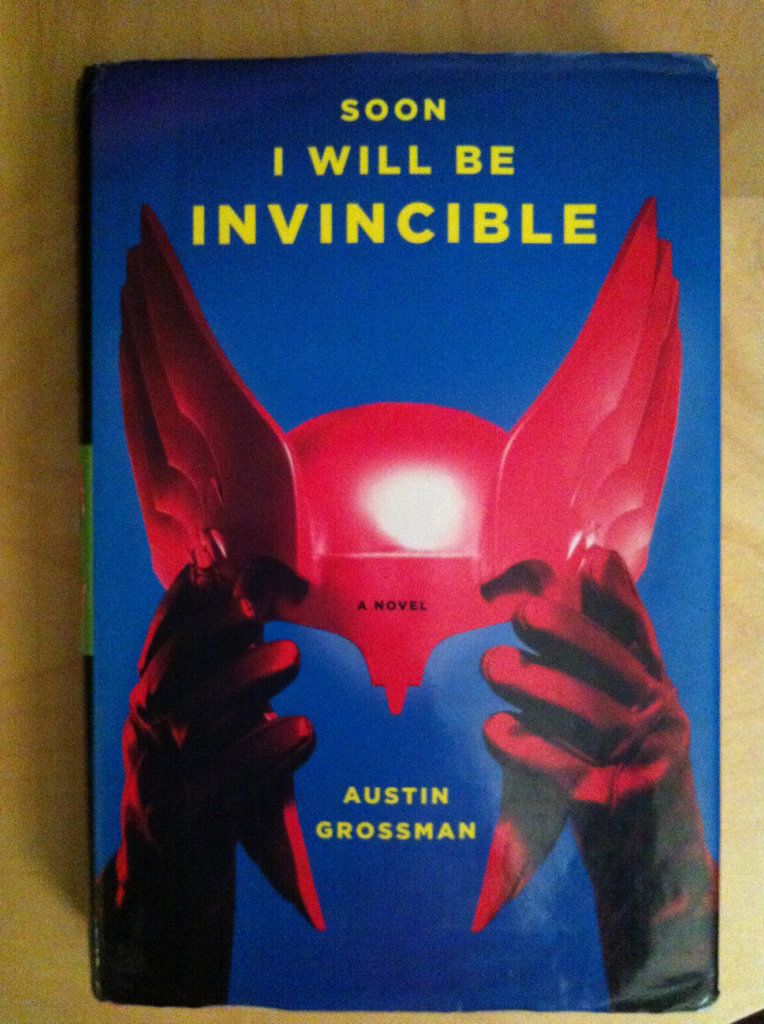
I would recommend Soon I Will Be Invincible by Austin Grossman. Although I didn't technically read this book during 2013 (I did review it), it is pretty much the perfect book for comics fans. It tells the story of Doctor Impossible an evil supergenius that will take over the world, for real this time, and Fatale an outsider cyborg who suddenly finds herself among Earth's mightiest heroes. It's a super fun story that works both as a grand sendup of the Superhero genre and a loving, detailed analysis of how the genre ticks. It's an essential novel for any Superhero fan and also, in my experience, a book that even non-geeks can really enjoy.
If you like Thrillers
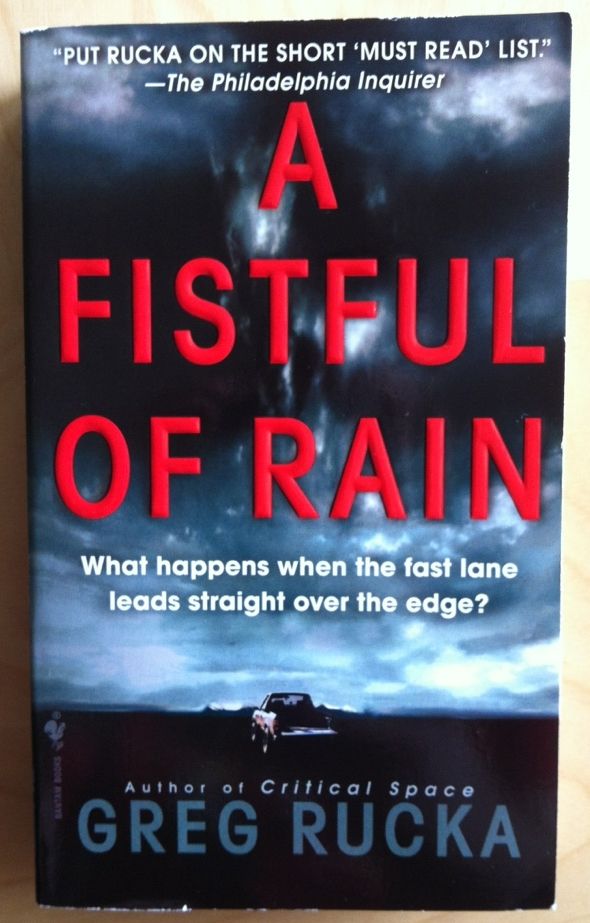
I would recommend A Fistful of Rain by Greg Rucka. Thrillers are another genre I have had my ups and downs with, what with the might-makes-right attitudes and frequently formulaic plots. If you are a reader who likes nuance and quality writing than Greg Rucka is the Thriller writer for you. The man is a craftsman, building efficient, exciting stories that are clockwork machines of action, suspense, and intellectually mature stories. A Fistful of Rain is, I think, my favourite of the many Rucka novels I've read this year. It tells the story of Mim Bracca, the lead guitarist of the rockband Tailhook, as she finds her life crumbling as her alcoholism and broken past converge with a blackmailer's plot to ruin her. As Bracca hits rock bottom, she will do anything to protect what's left of her life. It's a properly tense novel with a great mystery and a really intimate, really brutal character study at the story's core. A Fistful of Rain, beyond being a good book is a really surprising and non-formulaic approach to a Thriller. That said, pick any Rucka novel and you will not be disappointed.
So I thought I would do the normal New Years thing and actually make some sweeping recommendations for novels, since my reading habits are basically powered by suggestions.
Before I get to my recommendations, I feel like pointing out that all of the books I read this year were pretty great and the experience of finding the perfect book is super personal. If I knew you, dear internet reader, I would recommend a specific book tailored to your interests. But since I have no idea who you are or what you like, I'm going to suggest some books that I think could be enjoyed by basically anyone.
If you like Science Fiction
I would recommend The Quantum Thief by Hannu Rajaniemi. This is a book I saw on a bookshelf a bunch of times but, due to a cover and title that could go either way and dust cover copy that sounded pretty schlocky, I gave it a pass. But the thing is, The Quantum Thief is kind of perfect: it's whip crack smart, beautifully written, and an elaborate jigsaw of wildly different literary elements all perfectly balanced in a story about a gentleman thief in a post singularity future. If you are into Science Fiction you really ought to try this book. And also don't judge books by their cover and copy....
(Honestly, if you are into Sci-fi, Accelerando, a modern classic, or The Accord a very, very underrated novel would also be ace choices. They were rereads this year, and The Quantum Thief was just such a fantastic surprise.)
If you like Fantasy
I would recommend London Falling by Paul Cornell. Fantasy is a genre that often leaves me a little cold: it can frequently be very formulaic and Tolkien derivative, too deeply, deeply creative, or kind of silly and unconvincing. London Falling is original, mature, and brilliantly, horrifically convincing. London Falling is about a misfit group of Police tasked with solving a horrific murder which brings them into contact with the terrifying shadow world of Supernatural London. It's fantasy that I think diehard fans of the genre will like but should also appeal lapsed Fantasy fans looking for something more substantiative.
If you like Mystery/Suspense
I would recommend Gun Machine by Warren Ellis. In Gunmachine a New York detective stumbles into a room full of guns, infamous guns, each tied to an unsolved murder launching a hunt for New York's most elusive serial killer. It's a novel that is chilling, properly tense, inappropriately hilarious, and written in a beautifully evocative style. It's a satisfyingly intricate read that is still quite accessible and is maybe the book with the most universal appeal that I'm recommending here. Check it out.
If you like Superhero comics
I would recommend Soon I Will Be Invincible by Austin Grossman. Although I didn't technically read this book during 2013 (I did review it), it is pretty much the perfect book for comics fans. It tells the story of Doctor Impossible an evil supergenius that will take over the world, for real this time, and Fatale an outsider cyborg who suddenly finds herself among Earth's mightiest heroes. It's a super fun story that works both as a grand sendup of the Superhero genre and a loving, detailed analysis of how the genre ticks. It's an essential novel for any Superhero fan and also, in my experience, a book that even non-geeks can really enjoy.
If you like Thrillers
I would recommend A Fistful of Rain by Greg Rucka. Thrillers are another genre I have had my ups and downs with, what with the might-makes-right attitudes and frequently formulaic plots. If you are a reader who likes nuance and quality writing than Greg Rucka is the Thriller writer for you. The man is a craftsman, building efficient, exciting stories that are clockwork machines of action, suspense, and intellectually mature stories. A Fistful of Rain is, I think, my favourite of the many Rucka novels I've read this year. It tells the story of Mim Bracca, the lead guitarist of the rockband Tailhook, as she finds her life crumbling as her alcoholism and broken past converge with a blackmailer's plot to ruin her. As Bracca hits rock bottom, she will do anything to protect what's left of her life. It's a properly tense novel with a great mystery and a really intimate, really brutal character study at the story's core. A Fistful of Rain, beyond being a good book is a really surprising and non-formulaic approach to a Thriller. That said, pick any Rucka novel and you will not be disappointed.
Or if you just like books
I would recommend The Yiddish Policemen's Union by Michael Chabon. The Yiddish Policemen's Union is a book with a lot of literary elements: it's a hardboiled detective story set in an alternate universe where the Jews of Europe were evacuated to Alaska told in a voice that is equal parts pulp and grandfatherly excess. It's a book that is at once exciting genre fun and beautifully constructed literary fiction. The Yiddish Policemen's Union is everything I love about stories. The Yiddish Policemen's Union has down-on-his-luck detective Meyer Landsman becoming involved in the murder investigation of a dead transient with a chess interest that will uncover a conspiracy with consequences for all of the Alaskan Jews. It's a great book that I would recommend to anyone.
So there they are, the novels I've read in 2013 and my recommendations for your 2014.
Have any recommendations for me?
I would recommend The Yiddish Policemen's Union by Michael Chabon. The Yiddish Policemen's Union is a book with a lot of literary elements: it's a hardboiled detective story set in an alternate universe where the Jews of Europe were evacuated to Alaska told in a voice that is equal parts pulp and grandfatherly excess. It's a book that is at once exciting genre fun and beautifully constructed literary fiction. The Yiddish Policemen's Union is everything I love about stories. The Yiddish Policemen's Union has down-on-his-luck detective Meyer Landsman becoming involved in the murder investigation of a dead transient with a chess interest that will uncover a conspiracy with consequences for all of the Alaskan Jews. It's a great book that I would recommend to anyone.
So there they are, the novels I've read in 2013 and my recommendations for your 2014.
Have any recommendations for me?
Monday, 23 September 2013
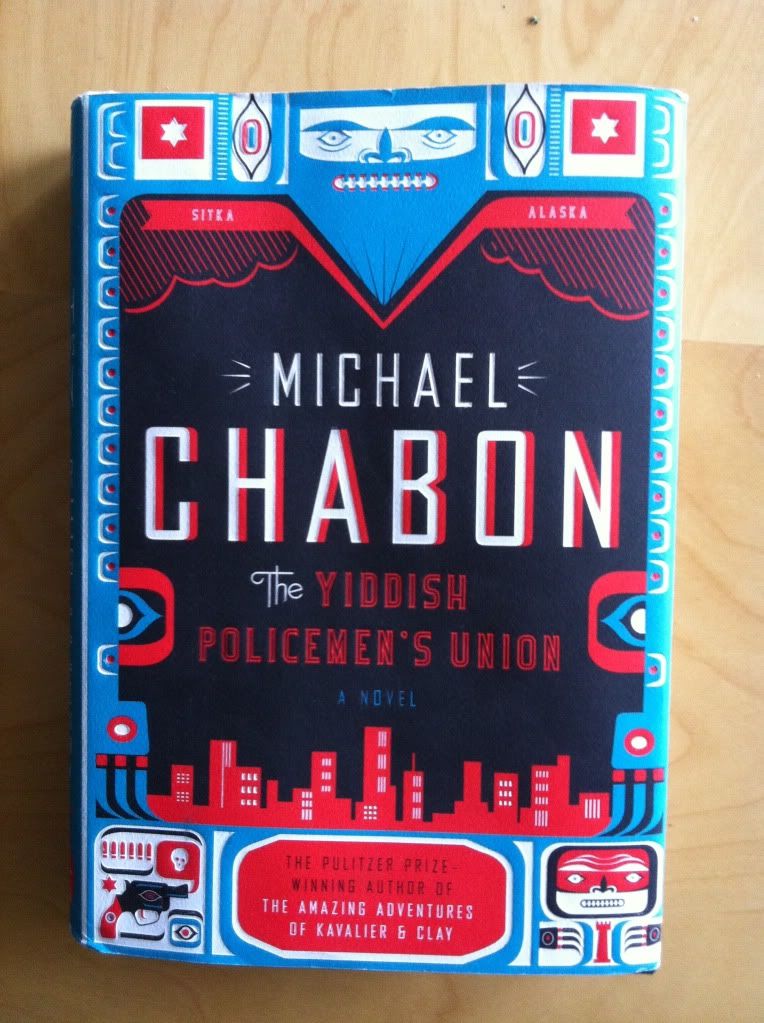
The Yiddish Policemen's Union Is A Good Book
Or why you should read The Yiddish Policemen's Union by Michael Chabon
The Yiddish Policeman's Union is a novel constructed with many discrete components, pilfered and lovingly repurposed from many different genres to create this remarkable new whole.
The underpinnings of the story are pure speculative fiction. The Yiddish Policemen's Union changes a single moment in time, killing Anthony Dimond, an Alaskan delegate to the US Congress. As a result of this man's death, the novel presents an alternate history where the United States took up the Slattery Report of 1940 and created a temporary settlement for European Jewish refugees in Alaska. As a result the Holocaust kills two million jews (instead of the six million murdered in reality) with millions of jewish refugees resettling in Sitka, Alaska. In addition to this, and perhaps indirectly as a result, the establishment of Israel in 1948 is followed almost immediately by its complete destruction in an alternate version of the Israeli-Arab war. The Yiddish Policemen's Union, then, portrays a modern world where the majority of Jewish people live in Sitka Alaska, a defacto Israel of exiles whose ownership of the land is only temporary and tentative.
Plotwise, The Yiddish Policemen's Union is constructed out of the pulpiest bits of detective fiction. In the book, down-on-his-luck detective Meyer Landsman is drawn into solving the murder of a junkie in the flop hotel in which they both live. Landsman and his half-Tlingit, half-Jewish partner and cousin Berko Shemets try to decipher the apparently professional assassination of a man with only a partially solved chess game as a clue to go on. Along the way Landsman must contend with his alcoholism, his self-destructive depression, his grief over his sister's death in an airplane accident, his hatred of chess, the internecine and elaborate relationship between subdivisions of the Jewish community, and his feelings for his superior officer and ex-wife Bina Gelbfish. And Landsman must solve all of this with the looming deadline of Revision because the outcome of this case will have ramifications for the very future of the Jews of Sitka.
The novel thematically, is almost a treatise on the Jewish diaspora experience told in that great, rich, Jewish storytelling tradition. The Yiddish Policeman's Union begins just before Revision, the end of the sixty year land grant given to the Sitka Jews. As a result the characters of the novel are living on borrowed time, in a nation that does not want them surrounded by a displaced Tlingit nation that would see them gone. As a result, Landsman and his fellow Sitka Jews don't really have a home, no Israel with its Right of Return, no continuation or normalization of their temporary homeland. They are unwanted and adrift in a way that seems to resonate with Jewish history in this fundamental way. (And of course, Landsman himself is homeless in this whole other way, adrift within his community and cutoff from his relationships.) So really, as much as the Yiddish Policeman's Union is a work of Science Fiction and a detective tale, it is more than anything a parable about the search for a home.
The way in which The Yiddish Policemen's Union combines these radically different elements makes for a startlingly detailed, uncanny new thing. It's a novel with the richness of language and embellished complexity of a Jewish grandfather's story paired with the broad swashbuckling action and eyebrow shrugging smarm of the best detective serials. It's at once new with the frontiers of Alaska and ageless as the Torah. It has the well researched air of the meticulous speculation but also the effortless sense of a story being told, casually, in the moment. The Yiddish Policemen's Union is weird and heartfelt and tense and a glorious mulatto of ideas and genres.
I would recommend the Yiddish Policemen's Union to a pretty wide swath of readers. It's an excellent detective story that should appeal to any fan of the genre. It has an inherent pulpiness that, I think, has a common genetic element with Superhero comics, which should make this a novel that comic fans will enjoy. It's Science Fiction elements are quietly brilliant and worth a look by anyone who enjoys a good alternate history book (your Man in The High Tower, for instance). The sheer story-ness, the way the tale is woven, I think would also appeal to fans of oral storytelling and the most NPR of radioshows. The Yiddish Policemen's Union also a very literary novel, with an elegance and profoundness to its prose that should appeal to even the most picky of critical readers. Basically, the very hybrid nature of The Yiddish Policemen's Union, should make it accessible to pretty much anyone. I highly recommend it.
The Yiddish Policeman's Union is a novel constructed with many discrete components, pilfered and lovingly repurposed from many different genres to create this remarkable new whole.
The underpinnings of the story are pure speculative fiction. The Yiddish Policemen's Union changes a single moment in time, killing Anthony Dimond, an Alaskan delegate to the US Congress. As a result of this man's death, the novel presents an alternate history where the United States took up the Slattery Report of 1940 and created a temporary settlement for European Jewish refugees in Alaska. As a result the Holocaust kills two million jews (instead of the six million murdered in reality) with millions of jewish refugees resettling in Sitka, Alaska. In addition to this, and perhaps indirectly as a result, the establishment of Israel in 1948 is followed almost immediately by its complete destruction in an alternate version of the Israeli-Arab war. The Yiddish Policemen's Union, then, portrays a modern world where the majority of Jewish people live in Sitka Alaska, a defacto Israel of exiles whose ownership of the land is only temporary and tentative.
Plotwise, The Yiddish Policemen's Union is constructed out of the pulpiest bits of detective fiction. In the book, down-on-his-luck detective Meyer Landsman is drawn into solving the murder of a junkie in the flop hotel in which they both live. Landsman and his half-Tlingit, half-Jewish partner and cousin Berko Shemets try to decipher the apparently professional assassination of a man with only a partially solved chess game as a clue to go on. Along the way Landsman must contend with his alcoholism, his self-destructive depression, his grief over his sister's death in an airplane accident, his hatred of chess, the internecine and elaborate relationship between subdivisions of the Jewish community, and his feelings for his superior officer and ex-wife Bina Gelbfish. And Landsman must solve all of this with the looming deadline of Revision because the outcome of this case will have ramifications for the very future of the Jews of Sitka.
The novel thematically, is almost a treatise on the Jewish diaspora experience told in that great, rich, Jewish storytelling tradition. The Yiddish Policeman's Union begins just before Revision, the end of the sixty year land grant given to the Sitka Jews. As a result the characters of the novel are living on borrowed time, in a nation that does not want them surrounded by a displaced Tlingit nation that would see them gone. As a result, Landsman and his fellow Sitka Jews don't really have a home, no Israel with its Right of Return, no continuation or normalization of their temporary homeland. They are unwanted and adrift in a way that seems to resonate with Jewish history in this fundamental way. (And of course, Landsman himself is homeless in this whole other way, adrift within his community and cutoff from his relationships.) So really, as much as the Yiddish Policeman's Union is a work of Science Fiction and a detective tale, it is more than anything a parable about the search for a home.
The way in which The Yiddish Policemen's Union combines these radically different elements makes for a startlingly detailed, uncanny new thing. It's a novel with the richness of language and embellished complexity of a Jewish grandfather's story paired with the broad swashbuckling action and eyebrow shrugging smarm of the best detective serials. It's at once new with the frontiers of Alaska and ageless as the Torah. It has the well researched air of the meticulous speculation but also the effortless sense of a story being told, casually, in the moment. The Yiddish Policemen's Union is weird and heartfelt and tense and a glorious mulatto of ideas and genres.
I would recommend the Yiddish Policemen's Union to a pretty wide swath of readers. It's an excellent detective story that should appeal to any fan of the genre. It has an inherent pulpiness that, I think, has a common genetic element with Superhero comics, which should make this a novel that comic fans will enjoy. It's Science Fiction elements are quietly brilliant and worth a look by anyone who enjoys a good alternate history book (your Man in The High Tower, for instance). The sheer story-ness, the way the tale is woven, I think would also appeal to fans of oral storytelling and the most NPR of radioshows. The Yiddish Policemen's Union also a very literary novel, with an elegance and profoundness to its prose that should appeal to even the most picky of critical readers. Basically, the very hybrid nature of The Yiddish Policemen's Union, should make it accessible to pretty much anyone. I highly recommend it.
Subscribe to:
Posts (Atom)