Showing posts with label Atomic Robo and the Dogs of War. Show all posts

Friday, 12 July 2013

Deep Sequencing: An Atomic Robo Timeline pt. 1

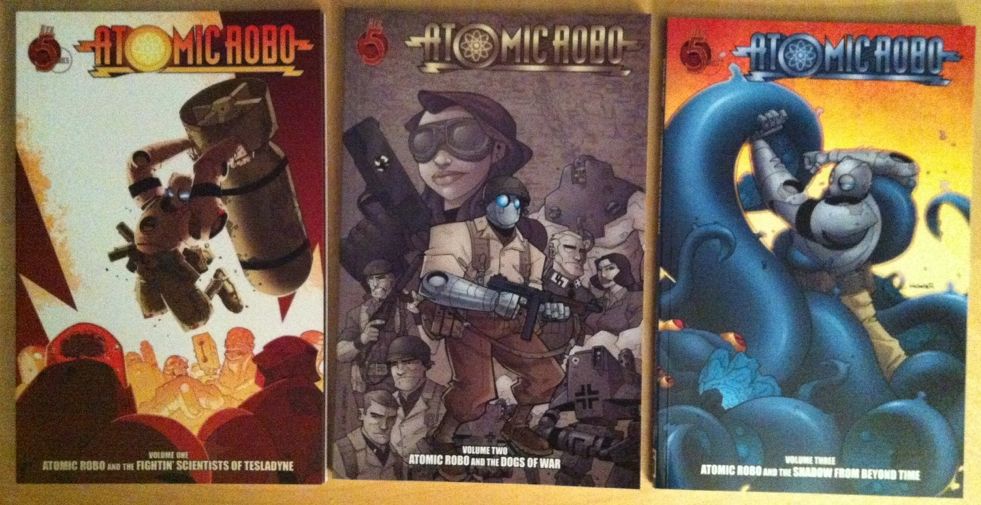
Or a graphical timeline of the first 3 collected volumes of Atomic Robo


Atomic Robo is the fantastic, funny comic about, well, Atomic Robo, the adventuring Action Scientist invented by Nicola Tesla. It's an infectiously fun to read comic that is also constructed in really smart, really unorthodox ways. One of these interesting creative decisions is how Atomic Robo uses time.

A lot of comics, particularly the more superhero-y comics have a weird relationship with time. For the most part time in these comics time is squishy, where publication order does not equate to narrative order and Batman is perpetually in his early thirties (or I guess mid-twenties in the new52). In these comics time is less about an exact measure of time than a... kind of inconvenient medium that events pass through.

Atomic Robo, which is a comic about an ageless robot going on Science Fantasy adventures, has really rigorously annotated time settings. Nearly every story not only has the year it is set in, but even the month and day. As a result, the Atomic Robo comic works like a kind of time capsule of human history during the century (and counting) of Robo's life. It makes for neat settings for stories and a fun look at cultural differences through time. 

But beyond being a nifty setting device, this thorough chronicling of time demands a 100 year long giant graphical timeline. So, I've made one, and will update it whenever I finish another Atomic Robo comic.

There will be mild *SPOILERS* in the timeline. Also, there is an up-to-date text based timeline on the Atomic Robo website. So this might be kind of redundant.

Timeline legend:
Vol. 1: Atomic Robo and The Fightin' Scientists of Tesladyne
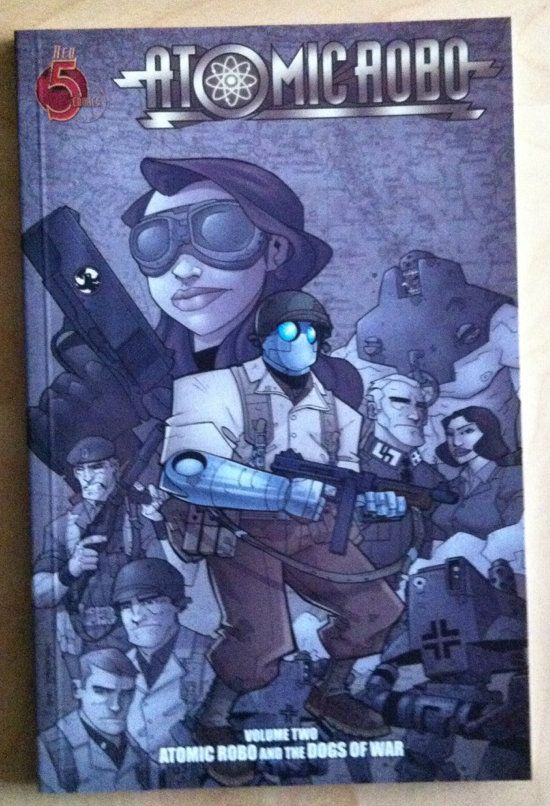
Vol. 2: Atomic Robo and The Dogs of War
Vol. 3: Atomic Robo and The Shadow From Beyond Time


Previously:

Friday, 15 February 2013

Deep Sequencing: Atomic Robo And The Dogs Of War

Or a closer look at Atomic Robo And The Dogs Of War
By Brian Clevinger and Scott Wegener, Red 5 Comics

Comics are essentially words and pictures arranged to sequentially convey a story narrative. As such they have a kind of visual language. In North America the sequence of art and events flows from left to right and from top to bottom. Like the words in this blog, but, you know, beautiful pictures that tell a story instead of barely articulate prose.

Typically this visual language manifests as some variation of grid or grid-like layout punctuated by the odd full page image for impact or double page splash for double-impact. This is, in a hugely oversimplified sense, the default storytelling approach. And as such, it's a big comfortable pipeline for narrative information flow for people who are used to sequential art in comics.

The thing is there are some pretty spectacular and interesting things that happen when creators ignore the standard approach and try something else.


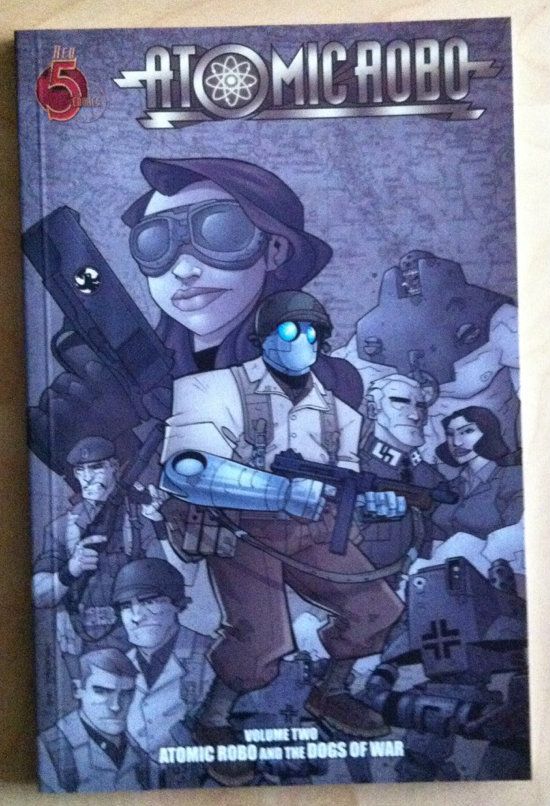
Atomic Robo And The Dogs Of War, by Brian Clevinger and Scott Wegener, is a fun adventure comic about a sass mouthed Robot fighting evil Nazi Science during World War II. It's a pleasant comic to look at throughout, but it's especially interesting in chapter 3 which sees Atomic Robo and British agent the Sparrow collide in their attempt to capture evil Nazi Scientists aboard a train.

Mild *SPOILERS* exist beyond this point.

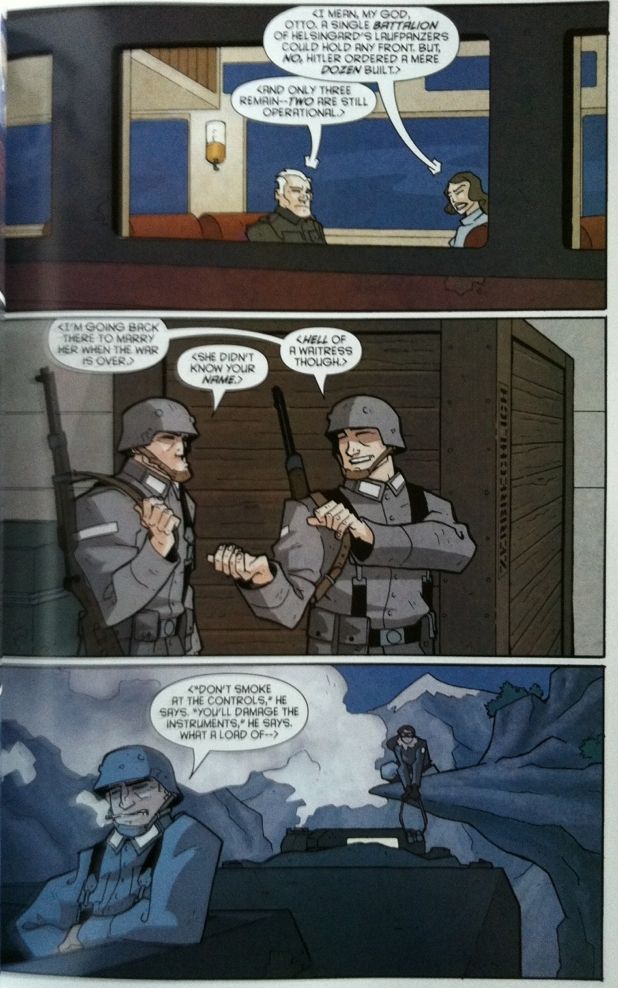
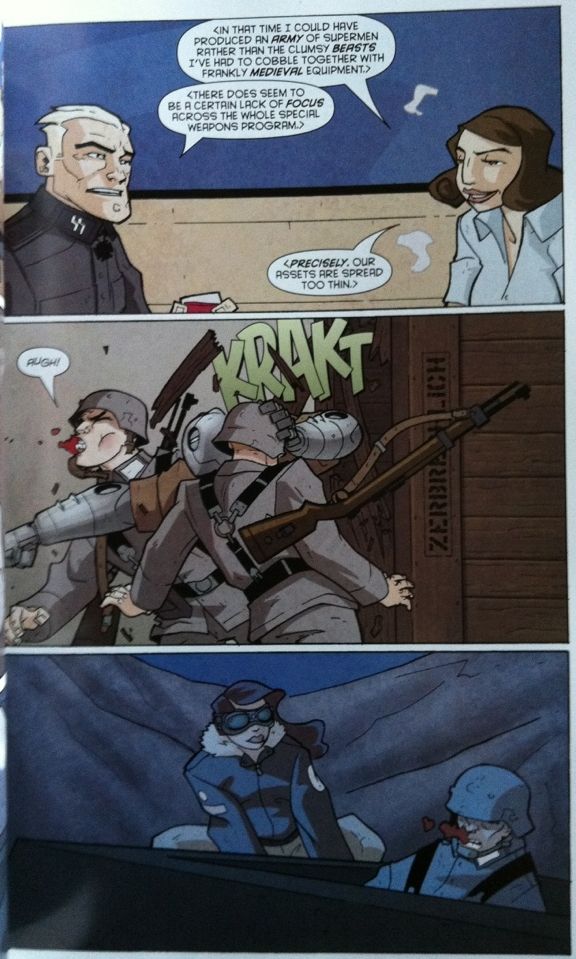
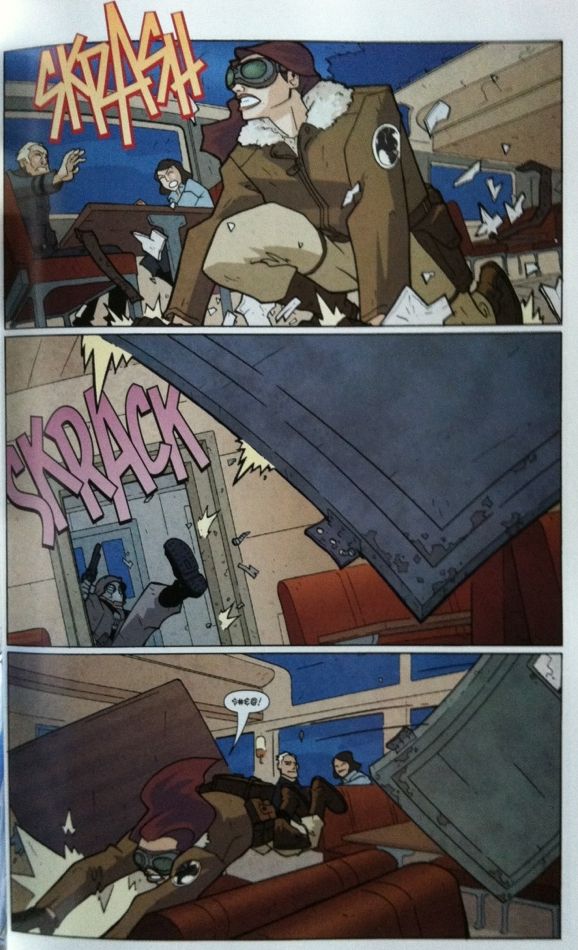
See, rather than use the standard left-to-right top-down grid, Clevinger and Wegener tell the first half of this chapter by breaking the page into thirds that are happening concurrently. That is to say on any given page the top panel occurs at about the same time that the second panel and third panel occur. Each third of the page has its own character focus, and from page to page tells a discrete sequential story that follows the Nazi Scientists, Robo, and Agent Sparrow respectively. It's a fairly simple seeming approach for telling separate simultaneous storylines, but its super effective.


And of course, this all gets even more clever as the three simultaneous, and yet separate story lines, collide with characters and elements from previously isolated narratives barge into the other narratives. It's a really clever and great way to pay off the separated storyline approach before returning to more conventional comic storytelling.


Which I guess is all my way of saying that Clevinger and Wegener are good at comics. I think Atomic Robo is a remarkable comic that manages to be an accessible, all ages friendly adventure comic that also manages to be funny. And I think that, in a way that maybe doesn't get its due, Atomic Robo is remarkable in execution, in both the conventional and unconventional craft the creators display in telling their stories about a sass mouthed Robot fighting Nazis.

Wednesday, 13 February 2013

So I Read Atomic Robo and The Dogs Of War


A 250 word (or less) review of the second Atomic Robo trade paperback
By Brian Clevinger and Scott Wegener, Red 5 Comics


Atomic Robo is a terrifically fun adventure comic that manages to strike this perfect balance between comicky action and comedy that is just super delightful and fun to read. If you are unfamiliar with the series, the comic tells stories about the adventures of Atomic Robo, the Nicola Tesla invented robot, set in one of the many decades of his life. Atomic Robo and The Dogs Of War focuses exclusively on Robo's involvement in the Second World War fighting evil Nazi scientists and their gruesome super soldiers and Laufpanzer robot tanks. This trade feels very Indianna Jonesy, both in the swashbuckling adventure mixed with comedy sense, but also in the WW2, Nazi fighting setting. It's tremendously fun. Atomic Robo and The Dogs Of War is a much more complete narrative than the first Atomic Robo collected volume, being more thematically and narratively integrated. It's also a pretty young audience friendly book (some dudes get not-so-graphically killed) and is exactly the kind of book a young version of myself would have loved: action packed, funny, and not at all condescending. I’d recommend this book to virtually anyone (of any age) who likes a funny adventure story that won’t insult your intelligence. Also: one of the chapters in the book is a tribute to how awesome Scott Wegeners grandfather is, which is pretty great.

Word count: 222

Previously: